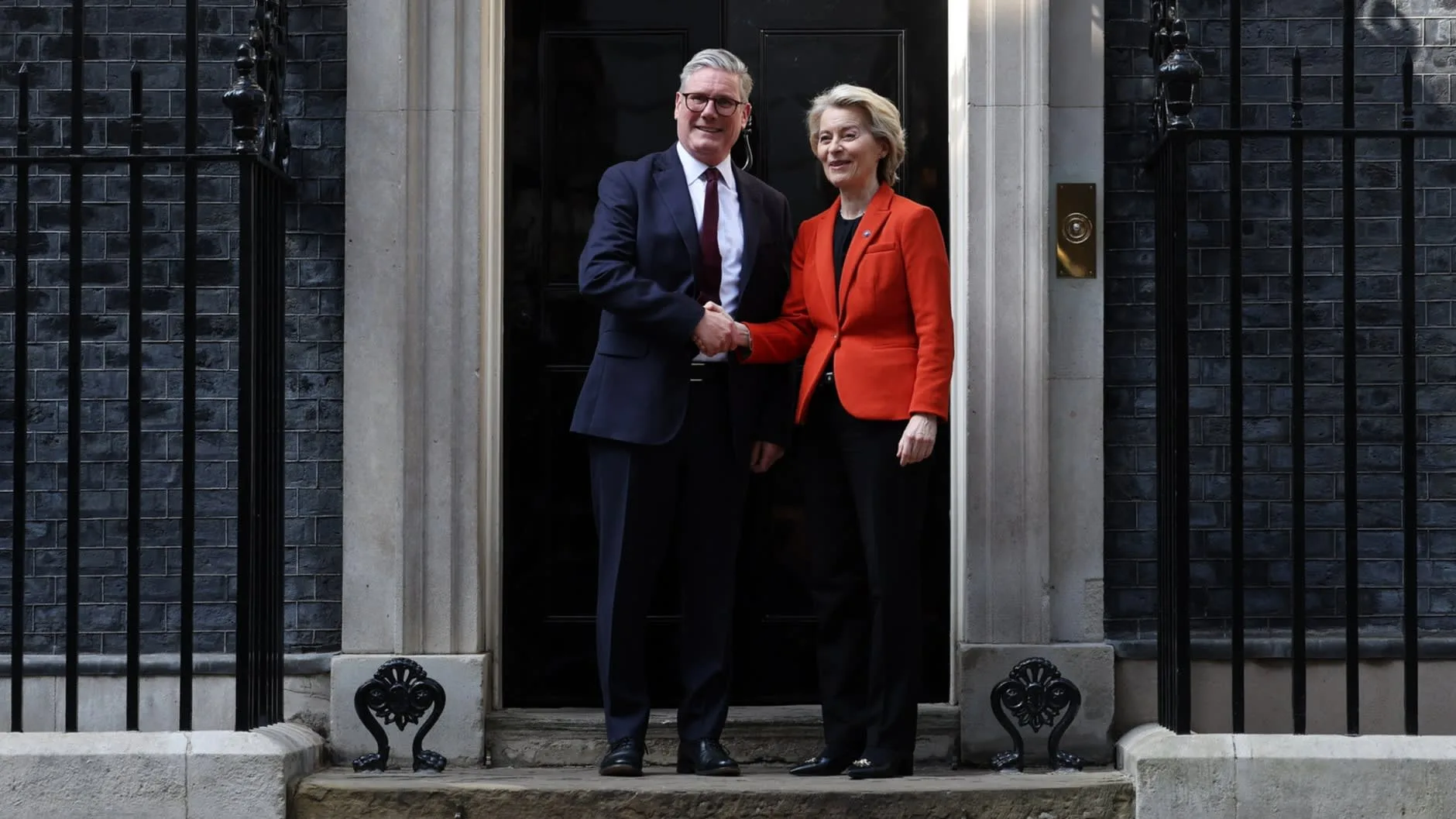
The landslide victory of the Labour Party in the recent UK general election was predicated on a promise of national renewal and a "mission-led" government focused primarily on jump-starting a stagnant economy. However, as the honeymoon period of the new administration transitions into the gritty reality of governance, Prime Minister Keir Starmer finds himself caught between a pragmatic need for economic growth and the rigid political constraints he set for himself during the campaign. At the heart of this tension lies the United Kingdom’s relationship with the European Union. Despite Starmer’s insistence that there will be no return to the Single Market, the Customs Union, or the restoration of Free Movement—his so-called "red lines"—a chorus of voices from the business community, diplomatic circles, and his own backbenches is growing louder, urging a more radical "reset" than he initially envisioned.
The economic backdrop to this pressure is stark. The Office for Budget Responsibility (OBR) continues to maintain its forecast that Brexit will reduce the UK’s potential GDP by approximately 4% over the long term compared to remaining in the bloc. While the UK has avoided a technical recession in recent quarters, growth remains anaemic, hampered by low productivity and a significant drop-off in business investment that has persisted since the 2016 referendum. For a Prime Minister who has staked his reputation on achieving the highest sustained growth in the G7, the trade barriers inherent in the current Trade and Cooperation Agreement (TCA) represent a formidable structural headwind. Business leaders argue that "incremental improvements" to the TCA—Starmer’s preferred path—may be insufficient to move the needle on national prosperity.
Industry groups, led by the Confederation of British Industry (CBI) and the British Chambers of Commerce (BCC), have been increasingly vocal about the costs of regulatory divergence. In the automotive sector, complex "Rules of Origin" requirements threaten the viability of electric vehicle production, while the chemical industry faces billions of pounds in additional costs to replicate the EU’s REACH registration system. Small and medium-sized enterprises (SMEs), which form the backbone of the British economy, have been particularly hard hit by the administrative burden of customs declarations and VAT complexities. To these stakeholders, the "red lines" are not just political symbols; they are economic barriers that prevent British firms from competing on a level playing field with their continental neighbors.
The pressure is not merely domestic. In Brussels, the mood is one of cautious openness mixed with a firm refusal to allow "cherry-picking." European officials have signaled that while they welcome a more constructive tone from London, any significant deepening of the economic relationship will require a "quid pro quo." A primary example of this is the proposed Youth Mobility Scheme. The European Commission has suggested a reciprocal arrangement that would allow young citizens to work and study across borders for limited periods. For Starmer, this touches the third rail of British politics: Free Movement. While the proposed scheme is not a return to full free movement, the Prime Minister’s initial rejection of the offer was seen by many diplomats as a missed opportunity to build goodwill. Critics argue that by adhering too strictly to campaign-era slogans, the government risks being sidelined in a rapidly changing global landscape.
Furthermore, the geopolitical environment is adding a layer of urgency to the debate. With the ongoing conflict in Ukraine and the potential for a more isolationist United States following future elections, the strategic necessity of a closer security and defense pact with Europe has never been clearer. Starmer has proactively sought a new "Security Pact" with the EU, but experts suggest that security and economics cannot be entirely decoupled. The EU often views cooperation through a holistic lens; a government that remains distant on trade and migration may find it more difficult to secure the deep intelligence-sharing and defense procurement agreements it desires.
Within the Labour Party itself, a burgeoning pro-European wing is beginning to find its voice. While the leadership is terrified of alienating "Red Wall" voters who supported Leave in 2016, many newly elected MPs represent urban constituencies where the desire for a closer relationship with Europe is overwhelming. These lawmakers point to the fact that public opinion has shifted significantly. Recent polling suggests a "Bregret" phenomenon, with a consistent majority of the British public now believing that leaving the EU was a mistake. This shift in the electorate provides Starmer with more political cover than his predecessors enjoyed, yet he remains hesitant to expend his hard-won political capital on a topic that remains deeply polarizing.
The upcoming 2026 review of the Trade and Cooperation Agreement is being circled on calendars in both London and Brussels as a pivotal moment. Starmer’s strategy appears to be one of "managed alignment"—selectively adopting EU standards in areas like veterinary checks (SPS measures) to reduce friction at the border without formally rejoining the Single Market. However, trade experts warn that a "Swiss-style" patchwork of agreements is notoriously difficult to manage and often requires the very thing Starmer has ruled out: a role for the European Court of Justice (ECJ) in resolving disputes.
The financial services sector, which contributes roughly 10% of the UK’s GDP, also remains in a state of limbo. Since the UK lost its "passporting" rights, the City of London has relied on a precarious "equivalence" framework. While London remains a preeminent global financial hub, the gradual drift of capital and talent to Paris, Frankfurt, and Amsterdam is a trend the government can ill afford to ignore. Dropping certain red lines regarding regulatory cooperation could stabilize the sector, but it would require the UK to become a "rule-taker" in specific areas—a concept that remains anathema to the hardline Brexiteer elements of the media and the political opposition.
As Starmer prepares for high-level summits in the coming months, the tension between his "red lines" and the demands of economic reality will only intensify. The Prime Minister is attempting a delicate balancing act: he must satisfy a business community desperate for stability and growth, a European Union that demands consistency and commitment, and a domestic electorate that is exhausted by the Brexit wars but remains sensitive to issues of sovereignty and migration.
The economic impact analysis is clear: the current trajectory of "thin" trade is a drag on the UK’s long-term potential. If the Labour government is to deliver on its promise of a "decade of national renewal," it may eventually have to confront the reality that the "red lines" drawn to win an election are the very obstacles preventing the successful governance of a modern, mid-sized European power. The question is no longer whether Starmer will seek a closer relationship with Europe, but how much of his political identity he is willing to sacrifice to achieve it. In the high-stakes game of international diplomacy and global economics, the "red lines" of today may well become the "starting points" of tomorrow’s negotiations. The pressure is mounting, the data is compelling, and the clock is ticking toward the 2026 review—a moment that will define not just Starmer’s premiership, but the UK’s economic standing for a generation.