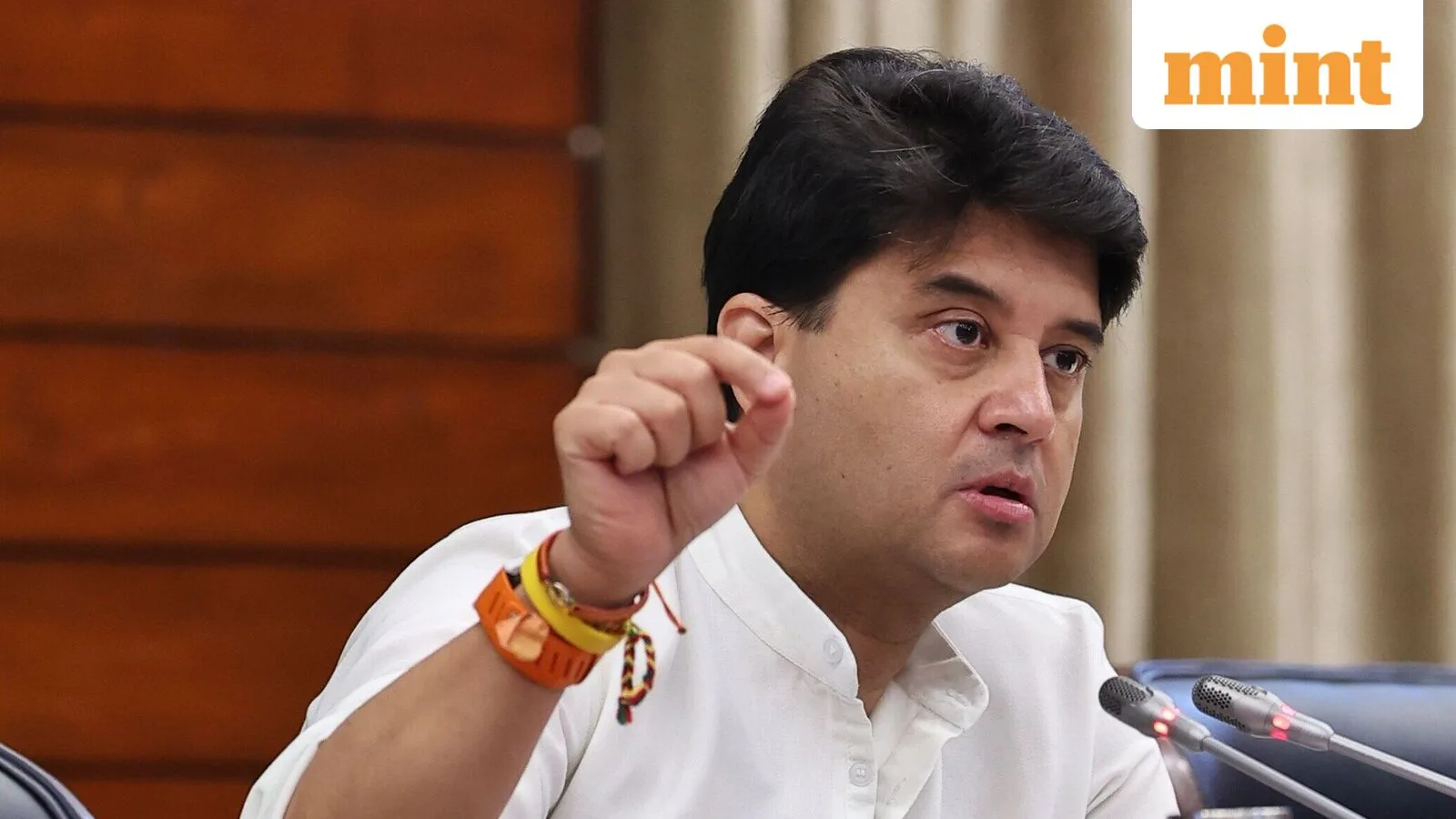
India’s Union Communications Minister, Jyotiraditya Scindia, has affirmed the government’s unwavering commitment to its 49% equity stake in Vodafone Idea Ltd. (Vi), dispelling any speculation regarding an exit or dilution. This declaration underscores a strategic, non-interventionist approach by the Centre, even as it champions the domestic telecom sector as one of the healthiest and most dynamic globally. The government’s broader vision involves not only nurturing a robust digital infrastructure but also fostering indigenous manufacturing capabilities through evolving policy frameworks like the Production-Linked Incentive (PLI) scheme for telecom equipment.
The government’s significant shareholding in Vodafone Idea originated from the conversion of adjusted gross revenue (AGR) and spectrum auction dues into equity in early 2022, a measure designed to provide much-needed financial relief to the embattled operator. This move, while stabilizing Vi’s immediate future, positioned the government as its largest single shareholder, albeit without direct management control. Minister Scindia explicitly stated, "We are not aware, and we have had no discussions on exiting or diluting our equity stake at this point in time," further clarifying that the Department of Telecommunications (DoT) does not intend to interfere with the company’s operational management. This stance aims to reassure the market that the government’s role is that of a supportive shareholder, not an active participant in business strategy, thereby encouraging private investment to lead Vi’s revival. Analysts suggest this clarity, while preventing a full state-led takeover, still leaves Vi’s long-term capital raising initiatives heavily dependent on securing private investors to counter the dominance of Bharti Airtel and Reliance Jio in what is increasingly a two-player market. The lack of a similar relief package for Bharti Airtel, based on a specific Supreme Court order for Vodafone Idea, highlights the nuanced regulatory approach to distressed assets within the sector.
Beyond the specifics of Vodafone Idea, the Minister painted an overwhelmingly positive picture of the broader Indian telecom landscape. He asserted that Indian telecom operators stand among the healthiest worldwide, a claim supported by impressive metrics and sustained growth trajectories. With approximately 1.2 billion subscribers from a population of 1.4 billion, the market demonstrates significant penetration, though opportunities remain in deepening engagement and expanding geographical coverage, particularly in rural and remote areas. The sector’s vibrancy is further evidenced by its consistent growth, which outpaces many global counterparts, delivering superior value to consumers. India’s average monthly data consumption, at an astounding 32GB per user, is one of the highest globally, a testament to affordable data tariffs and widespread 4G, and now 5G, network availability. This high data usage fuels the digital economy, enabling a wide array of services from e-commerce and digital payments to online education and healthcare, significantly contributing to the nation’s GDP and fostering financial inclusion.
This robust demand environment has spurred substantial capital expenditure (capex) by telecom service providers (TSPs). Over the past few years, Indian telcos have collectively invested billions of dollars in network expansion and upgrading to 5G technology, positioning India as a global leader in rapid 5G deployment. The Minister highlighted this unprecedented capex, which dwarfs investments in many mature markets, as a key indicator of the sector’s health and future potential. This investment is crucial not only for widening the network’s reach but also for deepening its density, ensuring high-quality connectivity across diverse geographies and user segments. The upcoming spectrum auctions are anticipated to further capitalize on this market appetite, allowing operators to acquire crucial airwaves to enhance service quality, expand 5G coverage, and prepare for future technological advancements like 6G. The government’s proactive approach to spectrum management and allocation is seen as critical for maintaining the industry’s competitive edge and facilitating innovation.
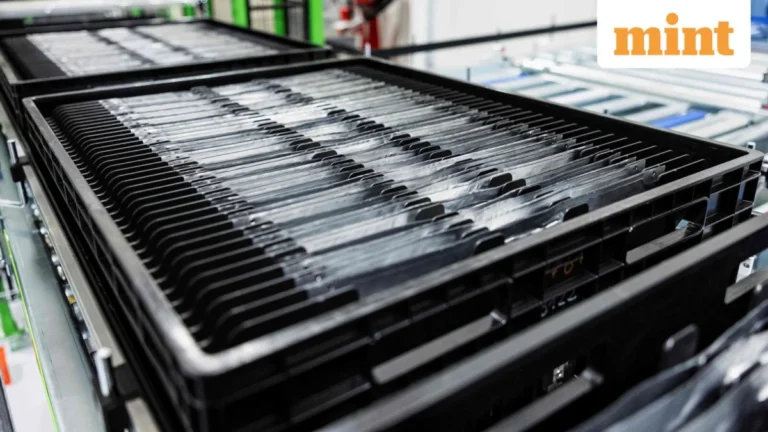
Central to India’s strategy for a self-reliant digital future is the Production-Linked Incentive (PLI) scheme for telecom and networking products. Initiated to boost domestic manufacturing, reduce import dependence, and create a robust local supply chain, the scheme offers incentives on incremental sales over a base year. The Minister acknowledged that while the scheme has seen substantial sales figures, exceeding ₹1 trillion (approximately $12 billion) up to fiscal year 2024-25, incentive disbursements have historically appeared lower. He clarified this apparent discrepancy, explaining that disbursements align with sales from the preceding fiscal year and follow a standard process where companies submit claims by December or March of the subsequent year. As of December, approximately ₹2,200 crore (around $265 million) had been disbursed, with projections to reach ₹2,700-2,800 crore by March, aligning closely with expectations based on a 4% average disbursement rate on eligible sales.
Looking ahead, the government is actively evaluating the "next leg" of the telecom PLI scheme, signaling its intent to further evolve and deepen its impact. The initial phase successfully encouraged companies to invest and commence manufacturing operations in India. The subsequent phases are envisioned to push beyond mere assembly towards greater value addition, design, and intellectual property creation within the country. This strategic progression includes incentivizing research and development (R&D) and product design, with a 1% additional incentive already in place for design-led manufacturing. This phased approach aims to build confidence among global and domestic manufacturers in India’s ecosystem, human resources, and policy stability, eventually transforming India into a global hub for telecom equipment design and innovation, not just manufacturing. This aligns perfectly with the broader ‘Make in India’ and ‘Atmanirbhar Bharat’ (self-reliant India) initiatives, aiming to create a complete value chain from raw materials to advanced product design and export.
While the telecom sector’s trajectory is largely positive, the government remains vigilant about emerging issues. A proposal from the Prime Minister’s Office (PMO) to study the feasibility of taxing data usage was acknowledged by the Minister, who deemed it "way too premature to even comment on something like this." Such a measure, if implemented, could have significant implications for consumer data costs, operator revenue models, and the overall digital adoption curve, and would require careful consideration of its economic and social impact. Globally, few countries have successfully implemented direct data usage taxes without facing public pushback or adverse effects on digital inclusion.
Furthermore, geopolitical events, such as the crisis in West Asia, have raised concerns within some sectors, including tower companies worried about potential LPG shortages impacting remote tower operations. However, the Minister dismissed these concerns, stating, "It is business as usual. Absolutely no impact and no worry." This confidence likely stems from India’s diversified supply chains, strategic energy reserves, and the inherent resilience built into its critical infrastructure.
In conclusion, India’s telecom sector is in a phase of dynamic expansion, underpinned by strong domestic demand, substantial private investment, and a supportive yet strategic governmental framework. The government’s steadfast commitment to Vodafone Idea, coupled with the ambitious evolution of the PLI scheme, signals a clear intent to foster both a competitive service market and a self-reliant manufacturing ecosystem. As India continues to leverage its digital highway for economic growth, the focus remains on widening geographical access, deepening service penetration, and driving indigenous innovation, solidifying its position as a global telecom powerhouse.