India’s vast agricultural landscape, characterized by millions of small and marginal farmers, has long grappled with systemic challenges ranging from fragmented landholdings and monsoon dependency to opaque market mechanisms and exploitative middlemen. For generations, farmers have largely remained price-takers, at the mercy of volatile market forces and intermediary power structures. However, a quiet revolution is underway, driven by the emergence and strategic growth of Farmer Producer Organizations (FPOs). These farmer-run companies are flipping the script, transforming individual cultivators into collective entrepreneurs and carving out a significant economic edge in the national and international markets.
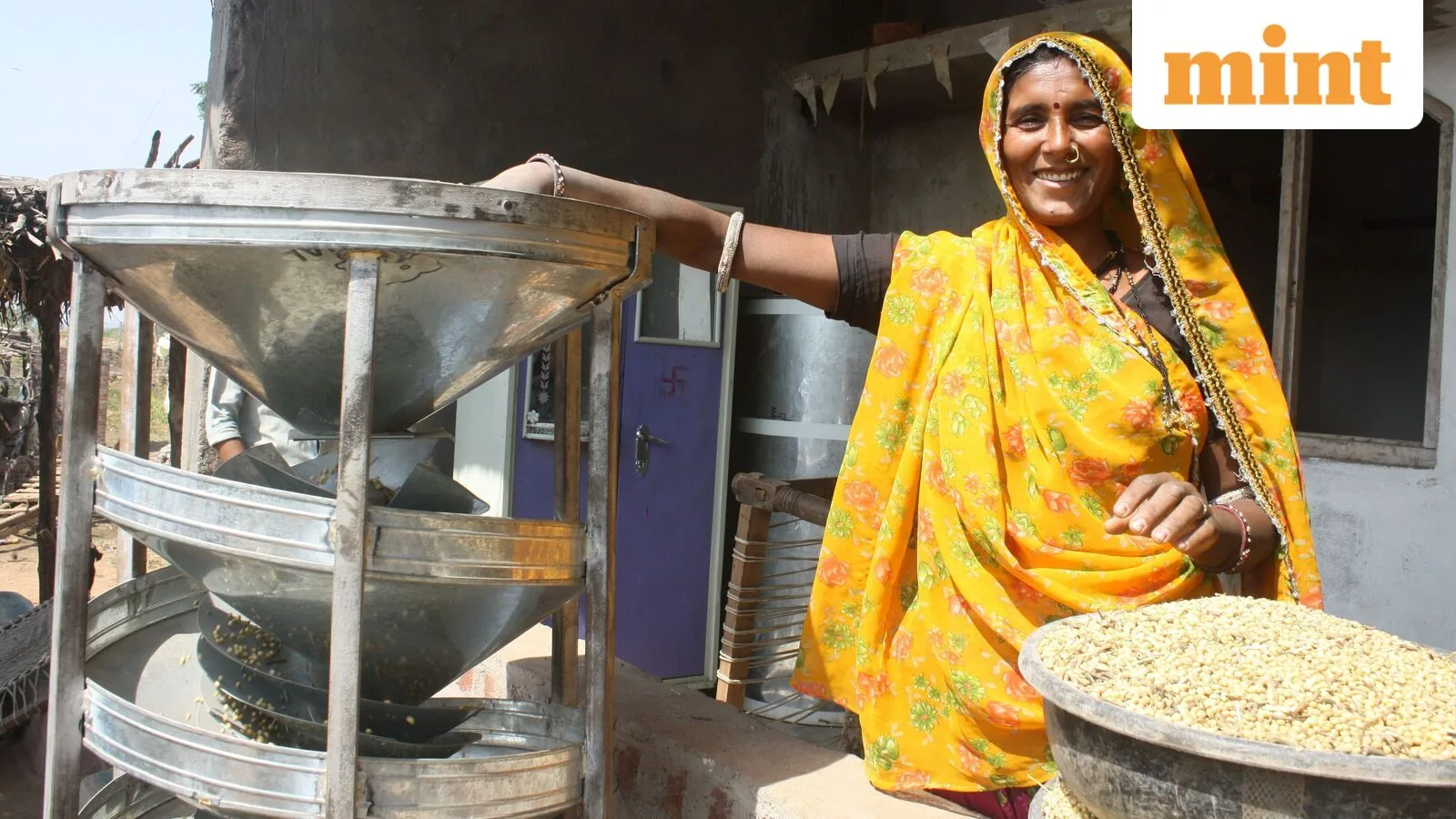
At the heart of this transformation are individuals like Gayatri Karma, a 37-year-old mother of three from Dewas, Madhya Pradesh. With a modest landholding of three acres, Karma’s journey from a traditional farmer to a board member of Ram Rahim Pragati Producer Co. Ltd. exemplifies the profound shift occurring in rural India. Since its inception in 2012, this FPO, largely managed by women, has grown to 6,000 members, clocking an impressive turnover of nearly ₹16 crore in 2024-25. For Karma, the impact has been tangible and life-altering. Her cultivation costs have plummeted by more than 50%, primarily due to the FPO’s initiative in transitioning members from expensive chemical inputs to cost-effective bio-nutrients and organic pest repellents. This shift not only reduces financial burden but also fosters healthier soils and sustainable agricultural practices, a critical factor in long-term food security and environmental stewardship.
The strategic advantage for FPOs like Ram Rahim lies in their collective bargaining power and direct market linkages. Unlike individual farmers forced to sell their produce immediately after harvest at prevailing low prices, the FPO aggregates members’ produce, performs primary processing—such as milling pulses and converting wheat to flour—grading, and packaging. This value addition enables them to command better prices and directly supply corporate buyers like ITC, AWL Agri Ltd, and Safe Harvest, bypassing traditional traders. Karma no longer fears the seasonal price crashes, stating, "We are not at the mercy of local traders." Furthermore, the FPO’s internal supply chain ensures members receive essential groceries at rates below market prices, enhancing their household economic stability and nutritional well-being through access to organic vegetables for home consumption.
India’s journey to promote FPOs gained significant momentum starting in 2011, with a formal policy framework introduced in 2013 under the Companies Act. This legal structure was a deliberate move to differentiate FPOs from traditional cooperatives, often plagued by bureaucratic inefficiencies and political interference, thereby fostering a more business-oriented and farmer-centric model. The inspiration largely stems from the unparalleled success of India’s dairy cooperatives, such as Amul, which have demonstrated the immense potential of collective action in agricultural value chains. Under the FPO model, a group of farmers pool equity capital—for instance, 1,000 members contributing ₹1,500 each can raise ₹15 lakh—making them eligible for matching government equity grants. This initial capital infusion is crucial for operationalizing the FPO’s activities.
As of March 2025, approximately 44,000 FPOs have been formed across India, with around 11,000 established under a dedicated central scheme. While a large majority (about 41,500) are active, only around 5,100 have established bank accounts, indicating that many are still in nascent stages, grappling with the complexities of institutional building and capital mobilization. Nevertheless, the trajectory is promising. The Ministry of Agriculture reports that over 1,100 FPOs have achieved an annual turnover exceeding ₹1 crore, and as of June last year, 10,000 FPOs under the central scheme collectively generated a cumulative turnover of ₹5,035 crore. These success stories are not merely about scale but about strategic differentiation.
Industry experts, such as Prasanna Rao, CEO of Arya.ag, a startup providing warehousing and market linkage services, highlight the critical need for FPOs to find a "differentiator." In a market often dominated by conventional traders, FPOs that offer specialized products or adhere to stringent quality standards are finding their niche. For instance, food companies seeking low-methane emission rice or low-pesticide residue produce for infant cereals increasingly turn to FPOs. This is because, unlike individual traders, FPOs can influence and monitor the entire production process, ensuring quality and compliance from farm to market.

A compelling example of this differentiation strategy is the Pravidhaan Farmer Producer Co. in Gorakhpur, Uttar Pradesh. Founded in 2022 by former marketing executive Anshuman Upadhyay, this FPO has revived Kala Namak, an ancient, short-grain fragrant rice variety, colloquially known as "Buddha rice." This unique variety boasts three times the protein content of regular rice (17% by weight) and a low glycemic index, making it suitable for diabetics. Pravidhaan, with over 1,200 members, is projected to double its turnover to ₹3.2 crore in FY26. Its members receive a premium price of ₹120 per kg for Kala Namak, nearly triple the price of conventional rice. Pravidhaan’s success, however, was not instantaneous; it required significant effort to build trust and educate farmers on the FPO concept and the value of collective action.
Pravidhaan’s market linkage is facilitated by KisaanSay, a staples brand launched in 2023 by Nitin Puri. KisaanSay operates on a co-branding and profit-sharing model, addressing a critical gap in the FPO ecosystem: market access. Puri explains, "A lot of work was already done in terms of capacity building and training, but not so much when it comes to market linkage." KisaanSay collaborates with over 25 FPOs across nine states, focusing on popularizing regional products like black raisins from Nashik, almonds from Kashmir, cardamom from Idukki, and aromatic rice varieties. This model ensures authentic, traceable products for consumers while providing a distinct identity and fair share of profits to farmers.
While individual FPOs showcase remarkable resilience, marketing to large corporate buyers can be daunting. A successful strategy to overcome this has been the formation of FPO federations. Telangana’s Be’nishan, established in 2019, exemplifies this, uniting over fifty producer groups and nearly 10,000 farmers. Functioning as a professional marketing organization, Be’nishan secures pre-indents from buyers before planting, while member FPOs meticulously adhere to quality parameters like pesticide residue limits. Named after a popular mango variety, Be’nishan achieved a cumulative business of ₹470 crore between FY19 and FY25. It supplies fresh produce to major retail chains like Reliance, quick commerce platforms like Zepto and BigBasket, and specialty ingredients to brands like Scoop (custard apple pulp) and Mars Inc. (maize). A 2023 study by the National Institute of Agricultural Extension Management, Hyderabad, found that member farmers’ incomes rose by 21% between 2019 and 2022 due to Be’nishan’s interventions, driven by better prices, direct farm-gate purchases, and sales assurance.
Despite these inspiring success stories, the FPO movement faces significant hurdles. A recent Tata-Cornell Institute report highlighted that only about 2,600 FPOs (roughly 5% of all formed to date) have accessed institutional credit. The median loan sizes—₹7.7 lakh for short-term and ₹10 lakh for long-term—are often insufficient to drive meaningful operational scale. Furthermore, FPOs often face exorbitant interest rates, ranging from 14-19%, making it difficult to compete with established businesses. Rangu Rao, CEO of Safe Harvest, notes the paradox: "It is way more difficult for a profitable FPO to take a loan than for a bleeding startup to raise funds." This constrained access to formal credit severely limits their growth potential and operational flexibility.
Beyond finance, FPOs also grapple with a limited skill set and difficulty in attracting professional talent. While government grants provide some support for CEO and accountant salaries for the first three years, FPOs are then expected to generate funds independently, posing a challenge for sustaining professional management. Taxation policies also present a hurdle; FPOs enjoy a five-year tax holiday, significantly shorter than the ten years offered to startups, impacting their reinvestment capacity. G.V. Ramanjaneyulu of the Centre for Sustainable Agriculture points out that only a handful of FPOs successfully navigate the output market, as "one mistake (when the market price falls after the FPO has purchased crops from farmers) can sink them." This risk often pushes FPOs towards the less complex input business, supplying seeds and fertilizers.
Addressing price volatility, a perennial threat to farmer incomes globally, is another crucial area. While developed markets often use commodity futures to guide planting decisions, India’s futures market for agriculture is limited. However, platforms like NCDEX are making inroads. Pankaj Bhatt, who heads the FPO vertical at NCDEX, reports that in the current financial year, 199 FPOs traded positions in nine commodities, including guar seed, castor, cumin, turmeric, and maize, with a traded turnover of ₹179 crore. Vishwatej Farmer Producer Co. Ltd from Sangli, Maharashtra, is one such FPO that successfully locked in higher prices for maize and turmeric ahead of harvest, leveraging the NCDEX platform to mitigate price risks.
The journey of India’s FPOs is a testament to the potential of collective action and entrepreneurial spirit within the agricultural sector. While challenges persist—particularly in securing adequate finance, building robust management capabilities, and navigating market complexities—the successes of Ram Rahim, Pravidhaan, Be’nishan, and others illuminate a path towards a more equitable and prosperous future for India’s farmers. As FPOs continue to mature, innovate, and integrate into broader value chains, they are poised to play a pivotal role in strengthening rural economies, ensuring food security, and positioning Indian agriculture as a dynamic, competitive, and sustainable force on the global stage. Further policy support, enhanced access to tailored financial products, and sustained capacity-building initiatives will be critical in nurturing these sparks of success into a widespread agrarian transformation.