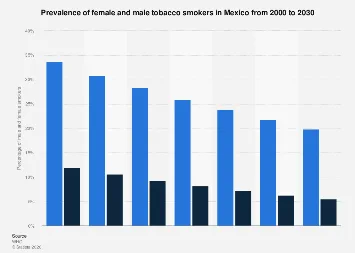
Mexico’s adult population exhibits a discernible disparity in tobacco consumption rates between genders, with a higher proportion of men continuing to engage with smoking habits compared to women. While specific, granular data often requires specialized market research subscriptions, available insights and broader trends in public health indicate that while smoking prevalence is declining across the board, men remain the more significant demographic within the nation’s smoking population. This ongoing divergence has profound implications for public health strategies, healthcare resource allocation, and the future trajectory of tobacco control initiatives within the country.
The historical prevalence of smoking has long been skewed towards male demographics globally, and Mexico is no exception. Several socio-cultural factors have contributed to this trend. Traditional gender roles, societal pressures, and historically targeted marketing by the tobacco industry have often positioned smoking as a behavior associated with masculinity. While these influences are gradually diminishing, their legacy continues to shape current smoking statistics. According to various global health organizations and national surveys, men in Mexico typically report higher rates of daily cigarette use. For instance, while precise percentages fluctuate with each reporting period and methodology, studies often show male smoking rates to be several percentage points higher than those of women. This gap, though potentially narrowing, underscores the need for tailored interventions that address the specific reasons for continued smoking among men.
Conversely, female smoking rates, while generally lower, have also presented unique challenges. Historically, the tobacco industry aggressively targeted women with specific branding and product lines, leading to an increase in female smoking in certain periods. However, in recent decades, heightened awareness of the health risks associated with smoking, coupled with successful public health campaigns emphasizing the detrimental effects on women’s health, including reproductive health and cancer, has contributed to a more pronounced decline in smoking among women in many regions, including Mexico. Nevertheless, the persistence of smoking in certain female demographics, often linked to stress, social factors, or addiction, requires continued vigilance and targeted support programs.
The economic ramifications of these smoking patterns are substantial for Mexico. The direct healthcare costs associated with treating smoking-related illnesses – including cardiovascular diseases, various cancers, and respiratory conditions – place a significant burden on the nation’s healthcare system. These costs are not borne equally; as men represent a larger segment of the smoking population, they are also disproportionately affected by these health consequences, leading to increased demand for medical services, pharmaceuticals, and long-term care. Beyond direct healthcare expenditures, indirect economic costs include lost productivity due to illness, premature mortality, and the financial strain on families impacted by a smoking-related breadwinner’s health issues.
The tobacco industry itself remains a powerful economic entity in Mexico, contributing to employment and generating tax revenues. However, the long-term economic sustainability of an economy heavily reliant on products that cause widespread illness and premature death is increasingly being questioned. Public health advocates argue that the economic benefits derived from tobacco sales are far outweighed by the societal costs. Global trends in tobacco taxation and regulation, which Mexico has also implemented to varying degrees, aim to balance revenue generation with public health objectives by increasing the price of tobacco products, thereby discouraging consumption. The effectiveness of these measures is often debated, with some arguing for more aggressive taxation, while others point to the potential for illicit trade to emerge if prices become prohibitively high.
International comparisons provide valuable context for Mexico’s smoking trends. Many developed and developing nations have implemented comprehensive tobacco control measures, including smoking bans in public places, stringent advertising restrictions, and public awareness campaigns. Countries that have aggressively pursued these policies often report significant declines in smoking prevalence, particularly among younger generations. For example, countries like Australia and the United Kingdom have seen substantial reductions in smoking rates through a combination of high tobacco taxes, plain packaging regulations, and extensive public health messaging. Mexico’s efforts, while progressing, may benefit from adopting more aggressive strategies seen to be successful elsewhere. The World Health Organization’s Framework Convention on Tobacco Control (FCTC) provides a roadmap for countries to implement effective policies, and Mexico is a signatory to this convention, underscoring its commitment to reducing the tobacco epidemic.
The future of smoking in Mexico will undoubtedly be shaped by a confluence of factors. Continued public health education, particularly focusing on the long-term health consequences and the benefits of cessation, will be crucial. Targeted campaigns addressing the specific socio-cultural drivers of smoking among men, while also supporting women who smoke, are essential for achieving equitable progress. The role of taxation as a deterrent will likely remain a key policy lever, though its implementation must be carefully managed to mitigate potential unintended consequences. Furthermore, the growing global focus on harm reduction strategies and the potential impact of novel nicotine delivery systems, such as e-cigarettes, on established smoking patterns will require careful monitoring and evidence-based regulatory responses. The long-term objective remains a significant reduction in the burden of tobacco-related diseases, leading to improved public health outcomes and substantial economic savings for Mexico. This will require sustained political will, robust public health infrastructure, and a comprehensive, multi-faceted approach that acknowledges and addresses the nuanced gender dynamics within the nation’s smoking population.