The landscape of corporate innovation is undergoing a profound transformation, with venture studios emerging as a powerful, albeit resource-intensive, mechanism for organizations seeking to unlock significant value creation. This structured and systematic approach to building multiple ventures, pioneered by technology giants and increasingly adopted across diverse sectors, offers a compelling alternative to traditional research and development, corporate venture capital, or accelerator models. However, for leaders contemplating this strategic leap, a critical assessment of organizational context, resource availability, and long-term commitment is paramount to ensure successful integration and sustainable impact.
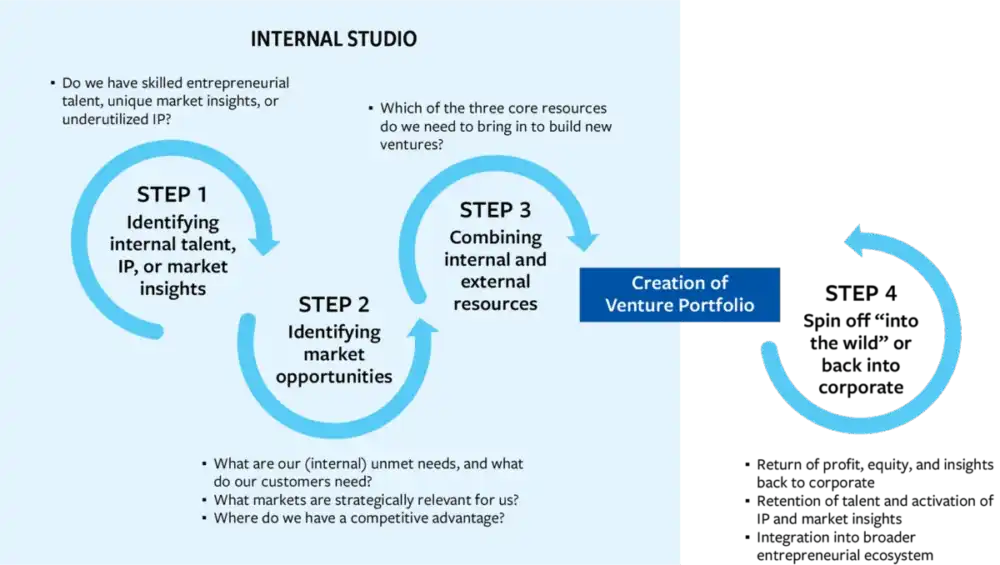
Venture studios, whether operating independently, embedded within investment funds, or housed inside large corporations, universities, or even government entities, function as dedicated engines for systematic venture creation. Their methodology involves a rigorous multi-stage process: first, identifying and meticulously shaping promising market opportunities or technological white spaces; second, recruiting or incubating entrepreneurial talent into these defined areas; and third, co-founding ventures, often with shared equity, to develop and scale nascent ideas. This parallel development model, characterized by structured experimentation and iterative refinement, allows studios to advance multiple projects simultaneously, applying stringent down-selection criteria to narrow the field and focus resources on the most viable prospects. Ultimately, ventures are either integrated into the parent organization, spun out as independent entities, or, if unsuccessful, systematically terminated, preserving capital and redirecting efforts.
The rapid proliferation of this model underscores its growing appeal. Industry analyses reveal a significant surge, with the number of independent and in-house venture studios more than doubling between 2018 and 2023, reaching an estimated 870 entities globally. This growth reflects a broader recognition among businesses that conventional innovation pathways often struggle to keep pace with accelerating technological disruption and evolving market demands. In an era where competitive advantage is fleeting, and the imperative to diversify revenue streams is ever-present, venture studios offer a dynamic framework to convert strategic insights, proprietary intellectual property, or underutilized internal assets into new, high-growth businesses.
Despite their surging popularity, venture studios are not without inherent complexities and significant challenges. One primary hurdle lies in the delicate balance of equity and control. Studios typically maintain substantial equity stakes and exercise significant operational influence over the ventures they create. While this provides stability and strategic alignment, it can inadvertently deter top-tier external founders who may prefer greater autonomy and higher individual equity ownership. Similarly, external investors in follow-on funding rounds may be hesitant to allocate capital if the studio’s existing stake is perceived as excessively dilutive or if the governance structure appears overly centralized.
Moreover, the financial demands of simultaneously nurturing multiple ventures, often requiring substantial upfront investment before any returns materialize, necessitate robust capital reserves. Without disciplined and rigorous down-selection processes, the venture pipeline can quickly become diluted, undermining the "funnel logic" critical for effective venture development and scaling. This can lead to inefficient resource allocation and a diminished success rate for the entire portfolio.

For internal venture studios operating within large, established corporations, additional layers of complexity arise. While success stories like Google X, responsible for incubating groundbreaking initiatives such as Waymo, now valued at over $100 billion, and SC Ventures, which launched Mox, a rapidly expanding digital bank in Hong Kong, highlight the potential, corporate studios often contend with the bureaucratic inertia of their parent organizations. Embedded within existing structures, they are subject to shifting corporate priorities, intricate governance frameworks, and numerous compliance, legal, and risk management functions. Such organizational friction can impede agility, slow decision-making, and render them vulnerable to changes in internal strategy or leadership that may lead to funding cuts or even outright closure.
For organizations considering the venture studio model, four critical conditions must be met to maximize the probability of success. Firstly, the enterprise must possess a distinct advantage in the form of specialized talent, a robust internal intellectual property portfolio, or unique market insights. This foundational strength provides the raw material for new ventures. For instance, a pharmaceutical giant might leverage its deep scientific expertise and extensive patent library to spin out biotech ventures, while a data analytics firm could use its proprietary algorithms and access to rich datasets to launch AI-driven solutions. Without such a unique strategic asset base, a studio risks simply replicating efforts that could be more efficiently pursued through traditional venture capital or open innovation.
Secondly, successful studios typically orchestrate a potent combination of internal assets and external capabilities. This hybrid approach acknowledges that no single organization possesses all the necessary resources for radical innovation. Leveraging internal domain expertise, operational infrastructure, and brand recognition while actively seeking external entrepreneurial talent, specialized technology, or market access through partnerships creates a powerful synergy. For example, a legacy manufacturer might provide its production facilities and distribution networks, while an external startup team brings disruptive software and agile development methodologies. This blend allows ventures to scale rapidly by bridging internal strengths with external innovation.
Thirdly, establishing the right governance mechanisms is paramount. This involves designing structures that balance the studio’s need for operational control and strategic alignment with the venture’s need for autonomy and agility. This often means creating a dedicated leadership team for the studio with clear decision-making authority, distinct from the parent company’s day-to-day operations. Flexible funding models, performance-based incentives for venture teams, and streamlined approval processes for critical milestones are essential. A transparent framework for how ventures transition – whether integrated, spun out, or terminated – also instills confidence and clarity for all stakeholders, including potential founders and external investors.
Finally, and perhaps most crucially, a venture studio demands a long-term commitment of both time and financial resources. Innovation is inherently uncertain and rarely yields immediate returns. Organizations must enter this space with the understanding that sustained investment, patience, and a willingness to embrace iterative learning and even failure are fundamental. Premature withdrawal of funding or a lack of strategic patience can cripple promising ventures before they have a chance to mature. This long-term view should be ingrained in the organizational culture, supported by top leadership, and reflected in the studio’s operational mandate.
The economic impact of well-executed venture studios extends beyond the immediate profitability of individual ventures. By systematically fostering new businesses, they contribute to job creation, stimulate market competition, and accelerate technological advancement. They can also serve as powerful catalysts for corporate transformation, instilling a more entrepreneurial mindset within the parent organization and fostering a culture of experimentation and continuous learning. As global markets become increasingly dynamic and competitive, the venture studio model offers a strategic pathway for enterprises to not only adapt but to actively shape the future of their industries, proving that structured innovation, when properly resourced and strategically aligned, can indeed unlock unprecedented growth.