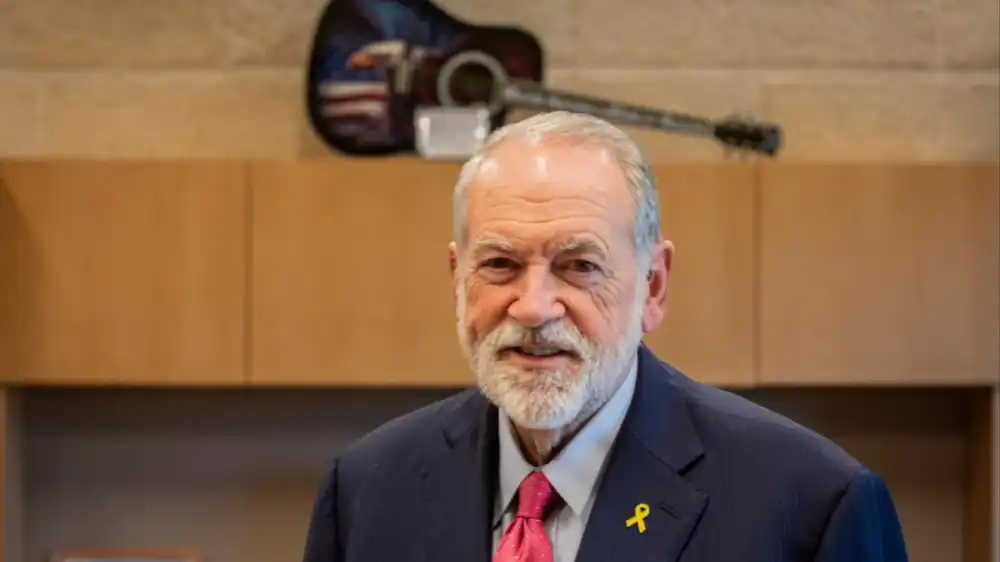
The selection of Mike Huckabee as the United States Ambassador to Israel marks a definitive and controversial pivot in American foreign policy, sending shockwaves through the diplomatic corridors of the Middle East and raising profound questions about the future of regional stability. As a former Governor of Arkansas and a prominent voice within the American evangelical movement, Huckabee’s long-standing ideological alignment with the Israeli right-wing—specifically regarding the settlement movement and the rejection of a traditional two-state solution—has ignited a firestorm of criticism from Arab capitals. This transition in diplomatic leadership occurs at a critical juncture for the global economy, as the Middle East grapples with the dual pressures of regional conflict and a massive multi-trillion-dollar economic diversification effort.
For decades, the bedrock of U.S. policy in the Levant was predicated on a delicate balancing act, officially supporting the eventual creation of a Palestinian state alongside Israel. Huckabee, however, has historically challenged this consensus, often referring to the West Bank by its biblical names, Judea and Samaria, and previously stating that "there’s no such thing as a Palestinian." Such rhetoric, now backed by the weight of an official ambassadorial post, has been interpreted by regional leaders as a green light for the formal annexation of the West Bank. The immediate reaction from the Palestinian Authority and neighboring Arab nations was one of profound alarm, with officials in Amman and Cairo warning that such a shift could permanently dismantle the framework for peace and ignite a new cycle of unrest.
From an economic perspective, the appointment introduces a significant "geopolitical risk premium" into the Levant and the broader Middle East. Markets generally favor predictability and the slow evolution of diplomatic norms; a sudden lurch toward a policy that favors unilateral territorial expansion threatens the fragile stability required for long-term investment. For the Gulf monarchies, particularly Saudi Arabia and the United Arab Emirates, the appointment complicates the "Abraham Accords" era of economic integration. While the UAE and Bahrain normalized ties with Israel in 2020, focusing on technology, tourism, and defense cooperation, the prospect of a U.S. ambassador who openly supports settlement expansion makes the political cost of continued integration significantly higher for Arab leaders.
The Saudi Arabian position is particularly delicate. Crown Prince Mohammed bin Salman has tied the prospect of Saudi-Israeli normalization—a potential "deal of the century" for regional trade—to "irreversible steps" toward a Palestinian state. The introduction of Huckabee into the diplomatic fray suggests a Washington less interested in these concessions, potentially stalling the India-Middle East-Europe Economic Corridor (IMEC). This ambitious transit project, designed to rival China’s Belt and Road Initiative by linking Indian ports to Europe via the Arabian Peninsula and Israel, relies entirely on regional political cohesion. If diplomatic relations sour over the West Bank, the multi-billion-dollar infrastructure investments required for IMEC could face significant delays or withdrawal from risk-averse private equity firms.
Furthermore, the appointment has profound implications for Jordan and Egypt, the two nations with the oldest peace treaties with Israel. Jordan, which hosts a massive Palestinian refugee population, views any talk of annexation as an existential threat to its internal security and demographic balance. An unstable Jordan would be a catastrophe for regional security, potentially disrupting the flow of goods and energy across the Levant. For Egypt, which serves as a vital mediator between Israel and Hamas, a perceived American abandonment of the two-state solution weakens Cairo’s leverage and could force the Sisi administration to take a more confrontational stance to appease domestic public opinion.
The economic fallout of increased regional tension cannot be understated. In 2023 and 2024, the Middle East saw a resurgence in foreign direct investment (FDI) into non-oil sectors, particularly in the "giga-projects" of Saudi Arabia’s Vision 2030. However, capital is notoriously "cowardly" in the face of potential conflict. If the Huckabee appointment is seen as a precursor to heightened volatility in the West Bank or a broader regional escalation involving Lebanon or Iran, the cost of insuring sovereign debt in the region will likely rise. Energy markets also remain sensitive to these shifts; while the West Bank is not a primary oil-producing region, the spillover effects of political instability into the Persian Gulf or the Red Sea shipping lanes—already under pressure from Houthi militia activity—could lead to renewed volatility in Brent crude prices.
In Washington, the appointment is viewed through the lens of domestic political alignment rather than traditional State Department careerism. Huckabee’s influence among the American evangelical voting bloc, a cornerstone of the incoming administration’s support, ensures that his tenure will be characterized by a "values-based" foreign policy that prioritizes religious and historical ties over the pragmatic "land for peace" formulas of the late 20th century. This shift represents a departure from the "honest broker" role the U.S. has attempted to maintain since the Oslo Accords. For international observers, the question is whether this new approach will lead to a breakthrough by shattering old paradigms or if it will simply isolate the United States from its European and Arab allies who remain committed to international law regarding occupied territories.
The European Union, Israel’s largest trading partner, has already signaled its discomfort. Brussels has consistently maintained that settlements are illegal under international law and represent a barrier to peace. A U.S.-Israeli alignment that ignores these concerns could lead to a widening rift in the transatlantic alliance, potentially impacting trade negotiations and joint security initiatives. If the U.S. moves to recognize Israeli sovereignty over parts of the West Bank, European nations might respond with increased labeling requirements for settlement-produced goods or even targeted sanctions against individuals involved in the expansion, creating a fragmented regulatory environment for international businesses operating in the region.
Defense spending and military aid also factor into this strategic recalculation. The U.S. provides approximately $3.8 billion in annual military assistance to Israel. While Huckabee is expected to be a staunch advocate for maintaining or increasing this aid, the political climate in the U.S. Congress is increasingly polarized. A move toward annexation, championed by an ambassador with Huckabee’s profile, could empower critics of unconditional aid, potentially complicating future funding cycles at a time when Israel faces multi-front security challenges.
As the transition of power concludes and Huckabee takes his post in Jerusalem—or perhaps more symbolically, in the newly established embassy in Jerusalem—the Middle East enters an era of high-stakes diplomacy. The "status quo" that has governed the region’s uneasy peace for decades is being dismantled in favor of a more assertive, ideologically driven American presence. For the business community, the primary task will be navigating this new reality where geopolitical ideology takes precedence over diplomatic nuance. The success or failure of this approach will be measured not just in diplomatic cables, but in the stability of regional markets, the flow of global trade, and the prevention of a wider conflict that neither the regional powers nor the global economy can afford.
Ultimately, the Huckabee appointment is more than a change in personnel; it is a signal of a structural shift in the architecture of the Middle East. Whether this shift leads to a "New Middle East" of integrated economies and security pacts, or a return to the era of intractable conflict and economic stagnation, remains the most pressing question for the coming decade. The international community now watches closely as the rhetoric of the campaign trail meets the cold reality of one of the world’s most volatile geopolitical landscapes.