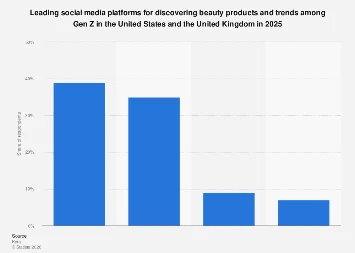
In the burgeoning digital marketplace of 2025, TikTok has firmly established itself as the preeminent platform for Generation Z consumers seeking beauty inspiration, product recommendations, and emerging trends. A significant majority of Gen Z individuals in both the United States and the United Kingdom identify the short-form video app as their primary destination for all things beauty, underscoring a profound shift in how younger demographics engage with the cosmetics industry. This digital phenomenon is not merely about passive consumption; it represents a powerful new paradigm for discovery, influencing purchasing decisions and shaping the future trajectory of beauty brands globally.
While specific, granular percentages remain proprietary, available market intelligence indicates that TikTok captures a substantial lead over its closest competitor, Instagram. The visual-centric nature of TikTok, with its algorithmically driven content delivery and emphasis on authentic, user-generated videos, appears to resonate deeply with Gen Z’s preference for relatable and actionable content. This contrasts with Instagram’s more curated and aspirational aesthetic, which, while still influential, seems to be taking a secondary role in direct beauty product and trend identification for this demographic.
The implications of this trend extend far beyond social media engagement metrics. For beauty brands, understanding this digital ecosystem is no longer optional but a strategic imperative. The ability to connect with Gen Z consumers on TikTok requires a nuanced approach that prioritizes authenticity, creativity, and community building. Brands that can effectively leverage TikTok’s unique features – from viral challenges and influencer collaborations to educational "how-to" videos and behind-the-scenes glimpses – are poised to capture significant market share. Conversely, those that fail to adapt risk becoming irrelevant to a generation that values genuine connection and discoverability through engaging, often serendipitous, online experiences.
The dominance of TikTok is indicative of broader shifts in consumer behavior, particularly among younger generations who have grown up immersed in digital environments. Their journey from initial awareness to purchase is increasingly mediated by social platforms, transforming them into potent channels for both inspiration and conversion. The speed at which trends emerge and disseminate on TikTok, coupled with the platform’s ability to foster direct interaction between brands, creators, and consumers, creates a dynamic marketplace where agility and responsiveness are paramount.
Beyond TikTok and Instagram, other social media platforms likely play a supporting role in Gen Z’s beauty discovery journey, though their precise influence remains less pronounced. Platforms like YouTube, with its long-form content and in-depth tutorials, continue to offer valuable resources for those seeking more detailed product reviews and application techniques. Pinterest, with its emphasis on visual curation and aspirational mood boards, may serve as a platform for broader aesthetic exploration. However, for the immediate discovery of new products and fleeting trends, TikTok’s rapid-fire, algorithmically tailored content appears to hold the undisputed crown.
The economic ramifications of this platform preference are substantial. Brands are reallocating marketing budgets to prioritize TikTok campaigns, investing in creator partnerships, and developing content specifically tailored for the platform’s unique format. This shift has fueled the growth of a new generation of digital-first marketing agencies specializing in social media strategy and influencer management. Furthermore, the direct link between social media discovery and purchasing behavior means that platforms like TikTok are becoming critical drivers of sales, influencing everything from product development to inventory management.
Globally, while the specifics may vary by region, the trend of TikTok’s ascendancy in beauty discovery is not confined to the US and UK. Emerging markets and other developed economies are witnessing similar patterns as Gen Z consumers increasingly rely on digital channels for information and inspiration. This creates a fertile ground for international brands seeking to expand their reach, provided they can navigate the cultural nuances and platform-specific strategies required for success in diverse markets.
The data suggests a clear mandate for the beauty industry: to embrace the power of short-form video and authentic engagement. Brands must move beyond traditional advertising models and cultivate a presence that is not only visually appealing but also interactive and community-oriented. This includes fostering a dialogue with consumers, responding to feedback, and actively participating in the cultural conversations that define platforms like TikTok.
The future of beauty marketing for Gen Z is intrinsically linked to the evolution of social media. As these platforms continue to innovate and introduce new features, brands will need to remain agile and adaptable. The ability to identify emerging trends on these platforms and translate them into compelling marketing strategies will be a key differentiator. The current landscape, with TikTok leading the charge, offers a glimpse into a future where digital influence is the primary engine of consumer engagement and purchasing decisions in the beauty sector. This evolving ecosystem demands a forward-thinking approach, one that prioritizes authentic connection and leverages the immense power of social media to shape the future of beauty.