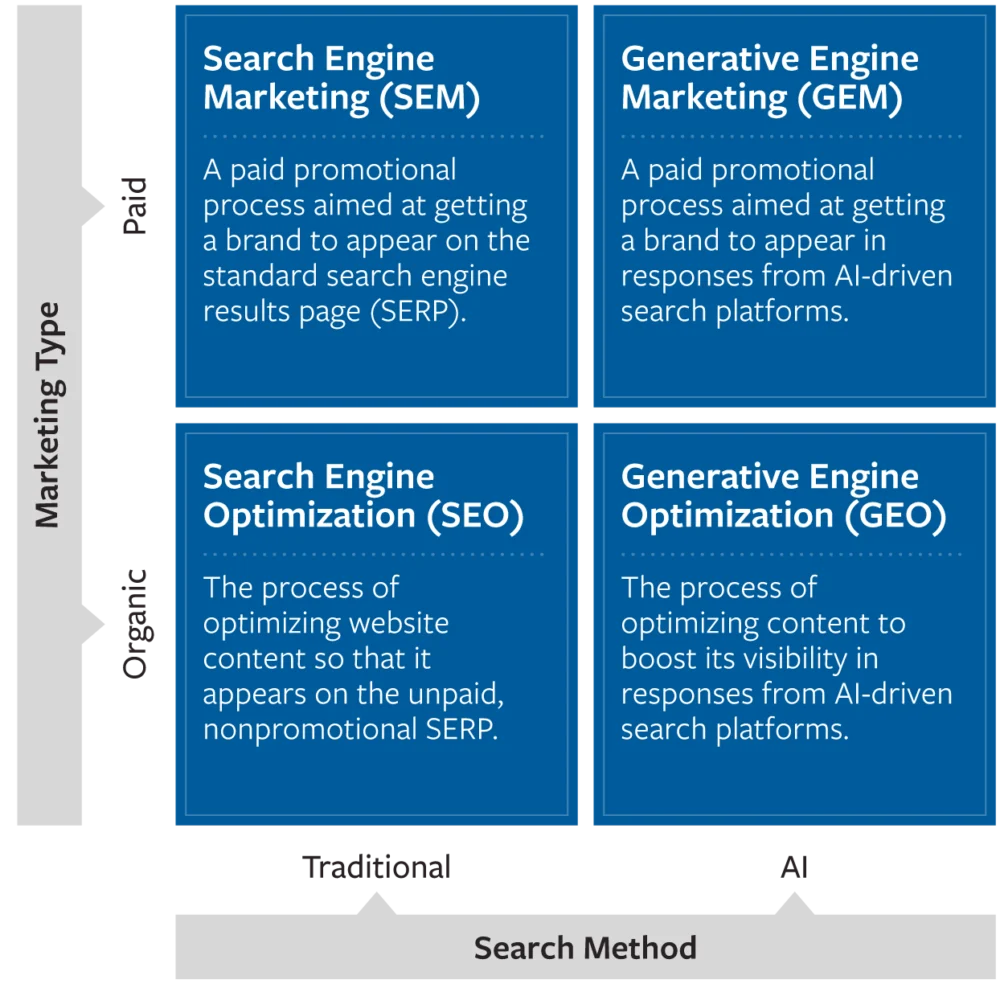
The digital landscape of customer discovery is undergoing its most profound transformation in decades, driven by the rapid ascent of generative artificial intelligence (GenAI) platforms. What began as a nascent technological curiosity has swiftly evolved into a dominant mode of online information retrieval, fundamentally altering how consumers interact with search and, critically, how brands are found. This seismic shift, which has caught many enterprises unprepared, presents an existential challenge to traditional marketing strategies, threatening to render even market-leading brands invisible if they fail to adapt with urgency and precision.
For years, the bedrock of online brand visibility rested on Search Engine Optimization (SEO), a discipline honed to perfection around the algorithms of traditional search engines like Google. Companies poured billions into optimizing keywords, building backlinks, and crafting content designed to secure top rankings in a list of clickable links. However, GenAI tools such as ChatGPT, Google’s Gemini, Perplexity AI, and others, operate on an entirely different paradigm. Instead of presenting a curated list of sources, they synthesize information into direct, conversational answers, often eliminating the need for users to click through to any external website. This phenomenon, increasingly termed "zero-click search," is not merely a tweak to the search experience; it represents a radical reduction in potential customer touchpoints, profoundly impacting brand discovery and engagement.
The implications for businesses are stark. Consider the recent experience of a major U.S. fitness brand, a prominent franchisee with substantial investments in traditional search marketing. A test conducted on GenAI platforms yielded a "wake-up call," as recounted by Kate Klein, an executive vice president of marketing for Houston Fitness Partners. Despite their significant market footprint and search expenditure, the brand was outranked by a small, local Houston company in AI-driven search results. Similarly, a financial services executive observed a consumer bypass Google entirely, opting for ChatGPT to research top-rated industry options. To their dismay, the executive’s firm, a market leader with extensive traditional and digital marketing budgets, was conspicuously absent from the AI platform’s recommendations, overshadowed by a much smaller competitor. These are not isolated anomalies but early indicators of a pervasive trend where past market leadership and substantial marketing spend do not guarantee future visibility in the AI era.
The core challenge lies in the opaque and continually evolving algorithms of GenAI. Unlike traditional search, which largely relies on established ranking factors, AI platforms prioritize information based on criteria that are less explicit and more dynamic, often weighing factors like content comprehensiveness, contextual relevance to a natural language query, perceived authority, and the ability to synthesize disparate data points into a coherent answer. For a brand to be discovered by a top-of-funnel consumer, its presence must first be identified and then prioritized by these sophisticated AI models. Invisibility here translates directly to lost consideration, diminished desire, and ultimately, missed sales opportunities.

The proliferation of zero-click searches signifies a fundamental shift in consumer behavior. Data from leading analytics firms indicate a rising percentage of searches concluding without a user ever navigating away from the search results page. While exact figures vary, some reports suggest that over half of all Google searches now result in no clicks, a trend expected to accelerate with broader GenAI adoption. For marketers, this means the traditional funnel—awareness, consideration, conversion—is being compressed and reconfigured. Brands can no longer rely solely on driving traffic to their websites; they must ensure their information is not just discoverable, but also presented authoritatively and persuasively within the AI’s synthesized response itself.
To navigate this new terrain, businesses must embrace a comprehensive "Information Search Marketing" (ISM) framework, moving beyond conventional SEO to an approach that prioritizes content discoverability and relevance for AI. This framework necessitates several strategic pillars. First, Content Strategy Redefined: Brands must shift from keyword stuffing and transactional content to creating deeply comprehensive, contextually rich, and authoritative content that directly answers complex user queries. This involves anticipating natural language questions, providing structured data that AI models can easily ingest, and establishing unquestionable expertise, authority, and trustworthiness (E-A-T) in their respective fields. Content should be designed not just for human readers, but for AI systems that will summarize and present it.
Second, Audience Intent Mastery: A deeper understanding of consumer intent behind natural language queries is paramount. AI excels at interpreting nuanced questions, meaning brands must analyze not just what users search for, but why they are searching, what problems they are trying to solve, and what information they truly need. This requires advanced analytics, sentiment analysis, and perhaps even leveraging proprietary GenAI tools to simulate user queries and analyze competitor responses.
Third, Platform Diversification and Optimization: While Google remains dominant, the rise of standalone GenAI search engines and integrated AI features across various platforms means brands cannot put all their eggs in one basket. Optimizing for diverse AI models, voice assistants (Siri, Alexa, Google Assistant), and specialized AI search tools becomes critical. This might involve tailoring content formats, semantic markup, and even brand voice to suit different AI personalities and retrieval mechanisms.
Fourth, New Metrics for Visibility: Traditional KPIs like click-through rates and website traffic, while still relevant, will need to be augmented by metrics that measure AI visibility. This includes tracking brand mentions within AI-generated summaries, the quality and accuracy of information presented by AI about the brand, and the overall share of voice in conversational AI responses. Investment in tools that can monitor AI platform performance will be essential.

Finally, Technical Architecture for AI Ingestion: Beyond traditional technical SEO, brands must ensure their digital infrastructure is optimized for AI consumption. This involves clean code, semantic HTML, structured data schemas (like Schema.org), and API access where relevant, allowing AI models to efficiently crawl, understand, and synthesize brand information. Companies might even explore partnerships with AI developers to ensure their data feeds into these systems optimally.
The economic implications of this shift are profound. Industries heavily reliant on online discovery, such as retail, travel, financial services, and healthcare, face immediate pressure. Brands that successfully adapt could see an acceleration in market share growth, leveraging AI search as a powerful new acquisition channel. Conversely, those that cling to outdated strategies risk significant erosion of their customer base and market standing. Small and medium-sized businesses (SMBs), often nimble and less burdened by legacy systems, may find a surprising opportunity to level the playing field. By focusing on niche expertise and producing high-quality, AI-digestible content, they could gain visibility against larger, slower-moving competitors, much like the local fitness company outranking the national chain.
Globally, this transformation will likely exacerbate existing digital divides if access to AI optimization tools and expertise remains concentrated. Governments and industry bodies may eventually grapple with regulatory questions surrounding AI transparency, the ethical use of data in AI responses, and a brand’s "right to be found" amidst algorithmic curation. The ability to influence what AI platforms present as "truth" about a brand or product will become a new frontier for reputation management and competitive strategy.
In conclusion, the era of generative AI search is not merely an evolution of marketing; it is a fundamental redefinition of how brands connect with consumers. The complacency of relying on past investments and traditional market leadership is a perilous path. Businesses must proactively and aggressively re-evaluate their entire digital marketing ecosystem, reallocating resources, upskilling their teams, and embracing an agile, AI-centric approach to content and discovery. The brands that understand and master this new paradigm will not only survive but thrive, cementing their relevance and dominance in an increasingly AI-driven world. The time for adaptation is not tomorrow, but now, as the algorithms of discovery continue their relentless march forward.