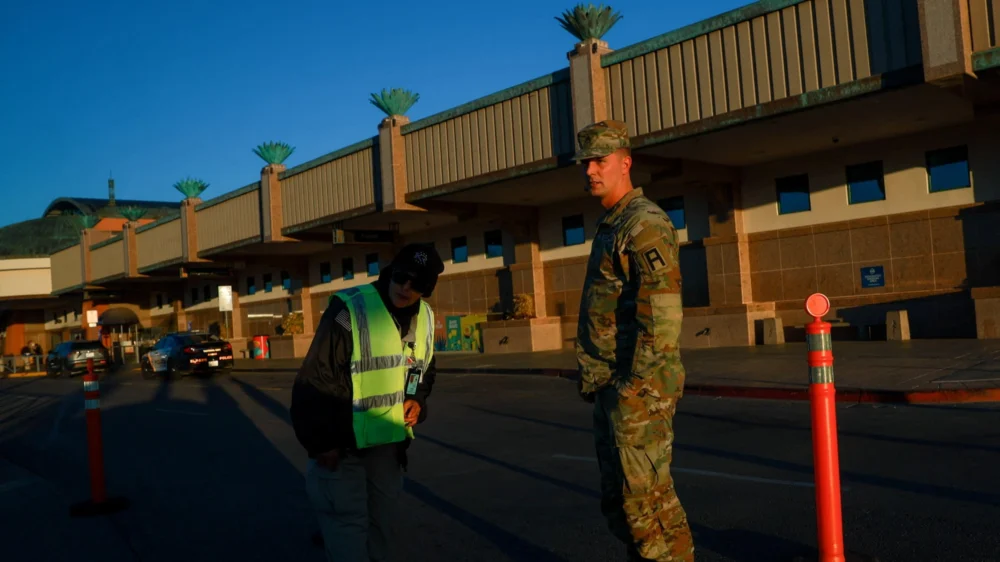
The recent deployment of United States military assets to neutralize unauthorized drone incursions over sensitive installations in Texas marks a significant escalation in domestic security protocols, signaling a new era of aerial vulnerability and defense spending. For decades, the American heartland was considered a sanctuary from the types of asymmetric aerial threats that have come to define modern conflict zones in Eastern Europe and the Middle East. However, a series of persistent and increasingly sophisticated drone sightings over military bases and critical energy infrastructure in the Southern United States has forced a paradigm shift in how the Department of Defense (DoD) and the Department of Homeland Security (DHS) perceive domestic airspace. This transition from passive monitoring to active kinetic or electronic intervention underscores a growing anxiety regarding the proliferation of low-cost, high-impact unmanned aircraft systems (UAS) and their potential to disrupt both national security and the broader economy.
The incidents in Texas, which involved the military taking direct action to mitigate the presence of unidentified drones, highlight a complex intersection of jurisdictional authority and technological necessity. Historically, the Federal Aviation Administration (FAA) has maintained primary control over the National Airspace System (NAS), with a focus on safety and commercial efficiency. Yet, the emergence of "dark drones"—unmanned craft that do not transmit identifying signals and often operate autonomously—has rendered traditional civilian monitoring tools inadequate. The decision to involve military hardware in a domestic setting suggests that these incursions are no longer being viewed merely as hobbyist trespasses, but as potential intelligence-gathering missions or dry runs for disruptive kinetic strikes.
From an economic perspective, the surge in domestic drone threats has ignited a gold rush within the defense and aerospace sectors. Market analysts now project that the global counter-UAS (C-UAS) market, valued at approximately $1.9 billion in 2023, will expand at a compound annual growth rate (CAGR) of over 25% through 2030. Companies specializing in electronic warfare, such as Raytheon, Northrop Grumman, and emerging tech firms like Anduril Industries, are seeing unprecedented demand for systems capable of detecting, tracking, and neutralizing small, low-altitude threats. The challenge for the U.S. government lies in the "cost-per-kill" ratio; deploying a million-dollar missile or a multi-million dollar electronic jamming suite to down a drone that can be purchased for $500 on the open market represents a fiscal imbalance that is unsustainable in the long term. Consequently, the push for directed-energy weapons, such as high-energy lasers and high-power microwaves, has moved from the realm of experimental science to a budgetary priority.
Texas serves as a uniquely sensitive theater for these incursions due to its role as the backbone of the American energy sector. The Permian Basin and the sprawling refinery complexes along the Gulf Coast represent critical nodes in the global energy supply chain. Texas accounts for roughly 42% of U.S. crude oil production and 27% of its marketed natural gas production. A coordinated drone attack on a major refinery or a critical substation in the Texas Interconnection power grid could trigger not only a localized catastrophe but a global spike in energy prices, leading to inflationary pressures that would reverberate through international markets. The military’s proactive stance in the state is, therefore, as much an act of economic preservation as it is a defense of sovereign territory.
Expert insights suggest that the nature of these incursions is evolving from simple surveillance to more aggressive posturing. Defense strategists point to the "Ukraine effect," where the rapid innovation in drone warfare has demonstrated that even a technologically inferior force can achieve significant strategic gains through the mass deployment of cheap, expendable drones. This democratization of aerial power means that non-state actors, or even sophisticated criminal organizations, now possess capabilities that were once the exclusive domain of nation-states. In the context of the U.S.-Mexico border, the use of drones by cartels for surveillance and smuggling has been well-documented, but the transition of these assets into the vicinity of U.S. military installations like Fort Bliss or Dyess Air Force Base introduces a more ominous dimension of espionage and potential sabotage.
The legal landscape governing these military interventions remains fraught with complexity. Under current U.S. law, specifically Section 130i of Title 10, the DoD is granted the authority to take action against drones that pose a threat to "covered facilities or assets." However, the definition of what constitutes a "threat" and the rules of engagement in civilian-populated areas are subjects of intense debate. Active jamming, for instance, can inadvertently disrupt local cellular networks, emergency services, and legitimate commercial drone operations, such as those used for package delivery or agricultural monitoring. The economic impact of "friendly fire" in the electromagnetic spectrum is a growing concern for telecommunications companies and tech firms that rely on a stable and predictable RF environment.
Furthermore, the Texas incidents have prompted a reevaluation of the "Detect, Track, Identify, and Defeat" (DTID) chain. Most current radar systems were designed to track large, fast-moving aircraft at high altitudes, often filtering out small, slow-moving objects as "clutter" or avian activity. Modernizing this infrastructure requires a massive investment in short-range, high-resolution sensors and AI-driven software capable of distinguishing a harmless hobbyist drone from a malicious actor. This technological overhaul represents a multi-billion dollar opportunity for the private sector but also a significant burden on the taxpayer. The Congressional Budget Office (CBO) has already begun looking into the long-term costs of permanent C-UAS installations at every major domestic military site and critical infrastructure hub.
Global comparisons illustrate the scale of the challenge. In the United Kingdom, the 2018 Gatwick Airport drone incident resulted in the cancellation of approximately 1,000 flights and an estimated loss of £50 million to the aviation industry, despite no actual drone being recovered or identified with certainty. In Saudi Arabia, the 2019 drone and missile attacks on the Abqaiq and Khurais oil processing facilities temporarily knocked out 5% of the world’s oil supply. These precedents have served as a wake-up call for U.S. policymakers. The military action in Texas is a clear indication that the United States is no longer willing to wait for a catastrophic event to occur on its soil before mobilizing its defensive capabilities.
As the U.S. military continues to refine its domestic response, the ripple effects will be felt across several industries. The insurance sector is already adjusting premiums for critical infrastructure, factoring in the risk of aerial incursions. Meanwhile, the legal and regulatory frameworks are expected to tighten, with more stringent "Remote ID" requirements for all drone operators and potentially restricted "no-fly zones" expanding around any asset deemed vital to national or economic security. The balance between maintaining an open, innovative airspace and ensuring the safety of the ground below has never been more delicate.
Ultimately, the events in Texas represent a milestone in the "gray zone" of domestic security. The use of military force against a small, unmanned intruder is a stark admission that the traditional boundaries between foreign battlefields and the domestic front have blurred. While the immediate threat in Texas may have been mitigated, the long-term challenge of securing the American sky is only beginning. The success of this endeavor will depend on the government’s ability to foster public-private partnerships, invest in sustainable and cost-effective defense technologies, and navigate the complex legal and ethical questions that arise when the tools of war are deployed over the streets and oil fields of America. The cost of failure is not merely a breach of security, but a potential disruption to the very foundations of the American economic engine. As the hum of propellers becomes a permanent fixture of the modern world, the response in Texas serves as a definitive statement: the United States will defend its sovereignty, whether the threat comes from a high-altitude bomber or a handheld plastic drone.