India is embarking on a pivotal mission to fortify its automotive testing and certification ecosystem, a strategic move designed to propel the nation into the vanguard of global future mobility. At a time when vehicle powertrains are diversifying rapidly and connectivity technologies are becoming ubiquitous, New Delhi is committing substantial resources to upgrade its four primary vehicle testing agencies. This ambitious modernization effort, totaling ₹776.29 crore, aims to address critical bottlenecks, enhance technical capabilities, and establish India as a formidable player in the design, development, and validation of advanced automotive technologies. The initiative is particularly timely as the country positions itself as a manufacturing and export hub for electric, connected, and autonomous vehicles.
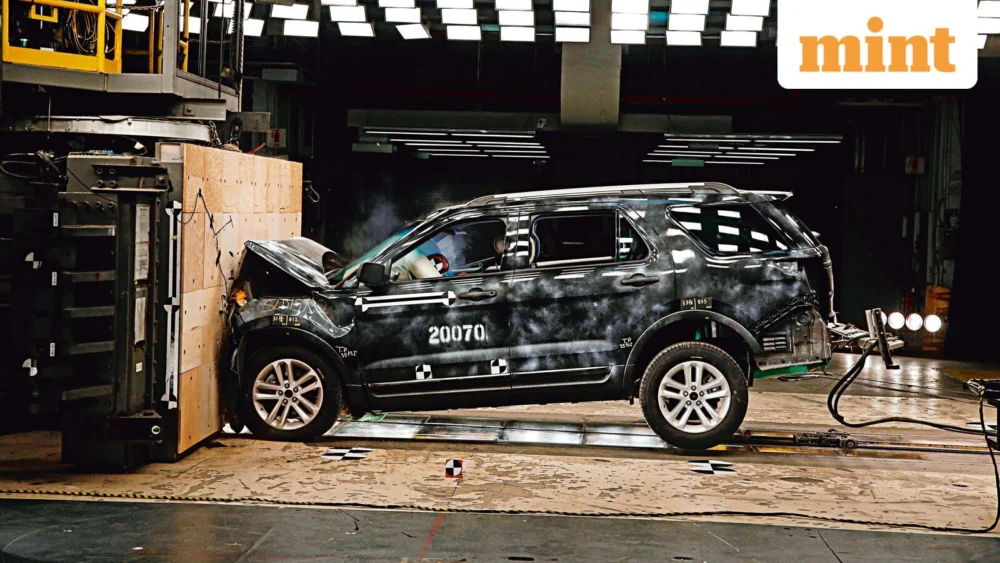
The Union Heavy Industries Ministry is spearheading this significant investment, channeled through the overarching ₹10,900 crore PM E-Drive scheme, which was launched in October 2024. The four agencies earmarked for this transformation are the Automotive Research Association of India (ARAI) in Pune, the International Centre for Automotive Technology (ICAT) in Manesar, the Global Automotive Research Centre (GARC) in Oragadam (near Chennai), and the National Automotive Test Tracks (NATRAX) in Pithampur (Madhya Pradesh). Each of these institutions plays a critical role in ensuring vehicle safety, environmental compliance, and performance standards through rigorous certification and research and development (R&D) testing. State-run Bharat Heavy Electricals Ltd (BHEL) has already initiated the process, issuing 65 tenders to commence the necessary work, signaling the rapid pace of implementation.
A primary driver for this extensive upgrade is the urgent need to drastically reduce the current vehicle certification lead times. Manufacturers presently face waiting periods of six to eight months for testing and approvals, a delay that significantly impedes market entry for new models and innovations. Such protracted timelines translate directly into lost market share and reduced margins for automakers, particularly those operating in the fast-evolving electric vehicle (EV) and advanced technology sectors. By enhancing the capacity and expertise of these testing agencies, the government aims to virtually eliminate these waiting times, thereby expediting vehicle launches and fostering a more dynamic and responsive automotive industry. This clarity and certainty in the certification process are also expected to provide robust assurance for underwriting assets, especially concerning vehicle performance, battery durability, and software reliability, ultimately unlocking greater access to capital and investment in the nascent new-age mobility sector.

The financial allocations underscore the scale of the commitment, with ARAI receiving ₹79 crore, ICAT ₹217 crore, GARC ₹221 crore, and NATRAX ₹257 crore. These funds are earmarked for acquiring state-of-the-art equipment, developing specialized testing facilities, and training personnel to handle the complexities of modern automotive engineering. For instance, ARAI, a prominent cooperative industrial research organization, reported approving 80 localization applications under the Production-Linked Incentive (PLI)-Auto scheme in FY25, more than double the 39 approvals in the preceding fiscal year. Similarly, it granted approvals for over 350 vehicle models under the PM E-Drive scheme in FY25, the scheme’s inaugural year. These figures highlight the burgeoning demand for certification services, which the existing infrastructure struggled to meet, thereby justifying the substantial investment.
The necessity for this modernization is further accentuated by the rapid evolution of India’s automotive market. In 2025, India cemented its position as the world’s third-largest automobile market by sales, with a total of 26.8 million units sold, valuing the market at approximately $137.06 billion, according to Mordor Intelligence. Within this landscape, the electric vehicle segment is experiencing exponential growth, with over 2 million EVs sold in 2025, an increase from 1.9 million in 2024. EVs constituted about 8% of all new vehicles sold in India in 2025, up from 7.4% in the previous year. The market intelligence firm projects India’s EV market to double in value and the hybrid market to more than double by 2029, underscoring the critical need for advanced testing capabilities that can keep pace with this trajectory.
A significant focus of the upgrades is to equip these agencies with the expertise to handle emerging technologies. For electric and hybrid vehicles, this includes sophisticated battery testing for performance, safety, and longevity, thermal management systems, charging infrastructure compatibility, and motor efficiency. Given the rapid decline in EV battery costs, from an estimated $156 per kWh in 2019 to $105 per kWh by 2026, according to BloombergNEF, and the nearing price parity between electric and petrol two-wheelers as noted by a December 2025 KPMG report, the accelerated adoption of EVs makes robust, localized testing indispensable.
Beyond electrification, the testing agencies are being prepared for the advent of connected and autonomous vehicle technologies. While fully driverless vehicles are not yet permitted in India, Advanced Driver Assistance Systems (ADAS) at levels 1 and 2, offering features such as adaptive cruise control, lane assistance, and driver attention monitoring, are already legal and increasingly common. The upgrade will allow for comprehensive testing of ADAS level 3, which involves conditional automation, and lay the groundwork for future advancements in automated driving. This includes evaluating vehicle-to-everything (V2X) communication protocols, ensuring interoperability with 3G mobility networks, charging infrastructure, tolling systems, and roadside assistance platforms. Cybersecurity, a paramount concern for connected vehicles, will also be a core area of enhanced testing, safeguarding against potential vulnerabilities. India is also laying the groundwork for a Connected Commercial Vehicle (CCV) protocol, a unified standard for various vehicle types and infrastructure to communicate seamlessly, necessitating advanced testing facilities.

Experts concur on the urgency and strategic importance of this investment. Sharif Qamar, Associate Director of Transport and Urban Mobility at The Energy and Resources Institute (TERI), emphasizes that enhanced R&D capabilities in Indian testing agencies are crucial to bridge the gap with international counterparts. He highlights the "multiplier effect" of improved standards, citing the enhanced safety of EV batteries as a prime example, and stresses the need to extend this focus to critical segments like commercial vehicles and buses, which often require significant investment in safety and emissions testing.
The NITI Aayog, India’s federal policy think tank, had already flagged this issue in an April 2025 report, noting that the "lack of adequate testing centres could adversely impact India’s competitiveness." The report pointed out that facilities for battery research, vehicle safety testing, and simulation labs for autonomous vehicles were either underdeveloped or unavailable, forcing Indian manufacturers to outsource R&D to foreign labs, which increased both costs and lead times. This upgrade directly addresses these concerns, aligning with the government’s broader ₹25,938-crore Production-Linked Incentive (PLI) scheme for automobiles and auto parts, which aims to incentivize domestic manufacturing of advanced automotive technologies.
Moreover, a robust testing framework is vital for de-risking financial investments in the burgeoning EV sector. Kunal Mundra, founder and CEO of Astranova Mobility, an EV financier, notes that "a clearer and more robust testing framework and infrastructure will reduce technical uncertainty around vehicle performance, battery durability, and software reliability—all of which are critical inputs into underwriting." By mitigating technology risk, stronger testing frameworks are expected to unlock substantial pools of institutional capital, essential for sustaining the growth of EVs and next-generation mobility solutions in India.
This comprehensive modernization of India’s automotive testing infrastructure represents more than just an operational upgrade; it is a fundamental retooling for the future. By investing in these four pillars of automotive certification and R&D, India is not only solving immediate challenges like long waiting periods but is also proactively building the foundational capabilities required to become a global leader in advanced automotive manufacturing and technology. This strategic foresight will enable India to innovate domestically, ensure high safety and quality standards for its burgeoning market, and enhance its competitiveness on the international stage, solidifying its position in the rapidly transforming global automotive landscape.