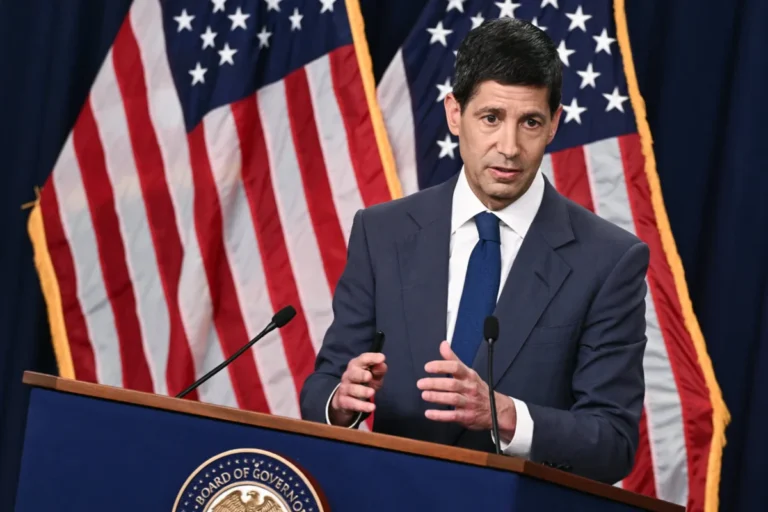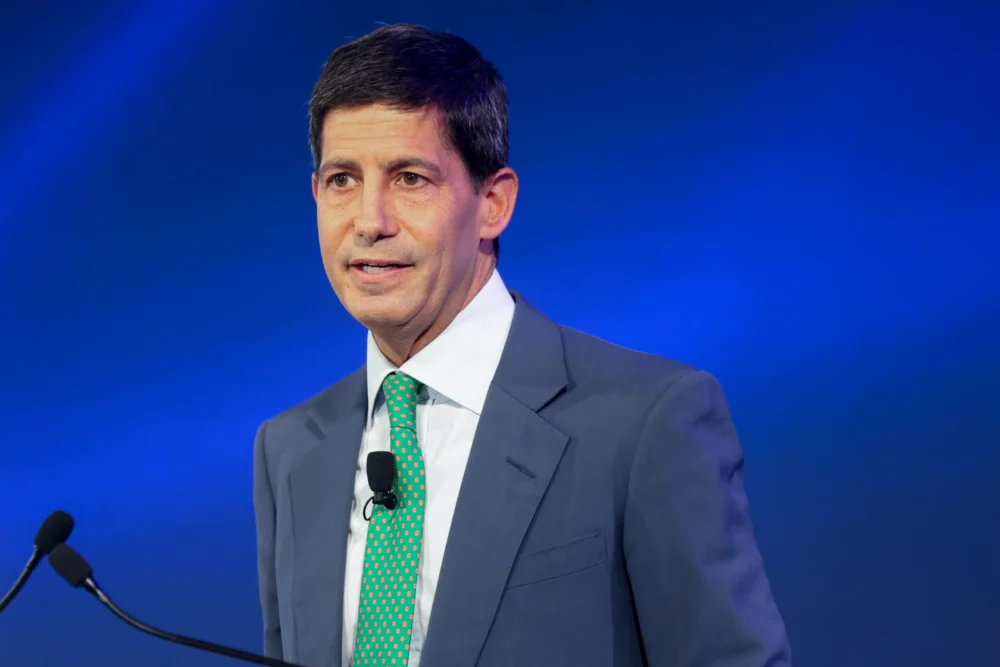
The nomination of Kevin Warsh to lead the Federal Reserve marks a watershed moment for global financial markets, signaling a potential "regime change" at the world’s most powerful central bank. President Donald Trump’s selection of the 54-year-old veteran policymaker and former Morgan Stanley investment banker is more than a personnel change; it is an ideological pivot intended to realign the Fed’s priorities with a new era of American economic policy. Warsh, who served as a Fed governor during the harrowing years of the 2008 global financial crisis, returns to an institution he has frequently criticized for "mission creep" and an over-reliance on the extraordinary stimulus measures he once helped implement.
The return of Kevin Warsh to the Eccles Building comes at a precarious juncture for the U.S. economy. While the post-pandemic inflationary surge has cooled from its 40-year highs, the national debt has ballooned to a staggering $37 trillion, and the federal deficit continues to widen. The incoming administration’s focus on deregulation and supply-side growth necessitates a central bank chief who can navigate the delicate balance between maintaining price stability and facilitating the low-interest-rate environment the President-elect has long championed. In Warsh, Trump sees a figure from "central casting"—a polished, academically rigorous practitioner who possesses the pedigree of the Ivy League and the scars of the Great Recession.
Warsh’s previous tenure at the Fed, from 2006 to 2011, provides the most significant clues to his future leadership. Appointed by President George W. Bush at the age of 35, he was the youngest governor in the history of the board. During the 2008 meltdown, Warsh acted as a crucial liaison between the Fed and Wall Street, working closely with then-Chairman Ben Bernanke and Treasury Secretary Hank Paulson. He was instrumental in the creation of emergency lending facilities that prevented a total systemic collapse, demonstrating a pragmatic willingness to use the Fed’s balance sheet as a lender of last resort.
However, it was his evolution into a "principled dissenter" that defined his later years at the bank. As the Fed moved toward its second round of large-scale asset purchases, known as Quantitative Easing (QE2), Warsh became a vocal internal critic. He warned that the long-term costs of near-zero interest rates and massive bond-buying programs would eventually outweigh the benefits, potentially distorting market signals and undermining the Fed’s credibility. His eventual resignation in 2011 was widely viewed as a protest against the "new normal" of permanent monetary accommodation. This history suggests that under Warsh, the Fed may move aggressively to shrink its balance sheet—currently hovering near $7 trillion—and return to a more traditional, rules-based approach to interest rate policy.

The "Warsh Doctrine" is expected to emphasize productivity-led growth over liquidity-driven stimulus. In recent years, as a fellow at Stanford University’s Hoover Institution, Warsh has argued that the Federal Reserve has become too focused on managing short-term market fluctuations and not focused enough on the structural health of the economy. He has often suggested that if the U.S. economy can achieve higher productivity through deregulation and tax reform, the "neutral" interest rate—the rate that neither stimulates nor restricts growth—could be higher than many current Fed officials believe. This view creates an interesting tension: while the President desires lower rates to ease the burden of the national debt and revive the housing market, Warsh’s hawkish reputation suggests he will only deliver those cuts if the underlying data on productivity and inflation justifies them.
Market analysts are currently divided on how a Warsh-led Fed will impact the bond market. On one hand, his reputation as an inflation hawk could lead to a "hawkish pivot," pushing up yields at the long end of the curve as investors price in a more disciplined central bank. On the other hand, some economists, including Krishna Guha of Evercore ISI, argue that Warsh is a pragmatist. They suggest his independent streak may actually give him more "political cover" to cut rates more aggressively than Jerome Powell could, precisely because his hawkish credentials are so well-established. If Warsh believes that the administration’s trade and fiscal policies are boosting the supply side of the economy, he may feel empowered to lower the federal funds rate without fear of igniting a new inflationary spiral.
The transition from Jerome Powell to Kevin Warsh also represents a shift in institutional management. Powell has been praised for his ability to forge a consensus among the Federal Open Market Committee (FOMC), often presiding over unanimous or near-unanimous decisions. In contrast, the current Fed has seen a rise in public dissents, reflecting a growing fracture in the consensus regarding the "last mile" of the inflation fight. Warsh has been a critic of the Fed’s current forecasting models and its communication strategy, which he has described as overly complex and reactive. Observers expect he will streamline the Fed’s messaging, moving away from the "forward guidance" that has characterized the last decade and toward a more straightforward, data-dependent stance.
The international implications of this appointment are profound. As the steward of the world’s reserve currency, the Federal Reserve’s policy shifts reverberate through global markets. A more hawkish Fed under Warsh could strengthen the U.S. dollar, putting pressure on emerging markets that hold dollar-denominated debt. Conversely, if Warsh successfully oversees a period of "non-inflationary growth," it could serve as a model for other central banks, such as the European Central Bank (ECB) and the Bank of England, which are currently grappling with their own stagnant growth and debt challenges.
However, the path to the Chairmanship is not without significant hurdles. The nomination must pass through a Senate where the Republican majority is slim and political tensions are high. A particular complication has emerged in the form of a Department of Justice investigation into the renovation of the Fed’s Washington headquarters. Senator Thom Tillis has signaled he may block Fed nominees until the executive branch provides more transparency regarding the project’s costs and management. Furthermore, Warsh will have to navigate the inevitable questions regarding his independence. Critics argue that his close ties to the administration—symbolized by the President’s "central casting" praise—could compromise the Fed’s role as a non-political arbiter of the economy.

Warsh’s personal and professional background also brings a unique cultural dimension to the Fed. Having married into the Lauder family, he is well-connected within the highest echelons of New York and international business circles. This "Wall Street fluency" is a trait the President values, believing it will allow the Fed to communicate more effectively with the private sector. Yet, this same background often draws scrutiny from those who worry about a "revolving door" between the central bank and the financial institutions it regulates.
As the U.S. approaches the mid-2020s, the economic landscape is defined by the "fiscal dominance" of massive government spending and the technological disruption of artificial intelligence. Kevin Warsh has frequently spoken about the need for the Fed to adapt to these 21st-century realities rather than clinging to 20th-century models. His appointment signals a desire to move past the era of "crisis management" that began in 2008 and into an era of "structural realignment."
Ultimately, the success of a Warsh Chairmanship will be measured by whether he can satisfy the President’s demand for a vibrant, low-rate economy while fulfilling the Fed’s mandate to maintain stable prices. It is a high-stakes gamble for the American economy. If he succeeds, he could oversee a period of sustained expansion fueled by investment and innovation. If he fails to balance these competing pressures, he risks either a return of inflation or a confrontation with an administration that has shown little patience for central bank independence when it conflicts with political objectives. The "regime change" at the Fed has begun, and the global financial community is watching with bated breath.