A profound transformation is sweeping across the retail landscape, redefining the symbiotic relationship between digital-first brands and brick-and-mortar establishments. Direct-to-consumer (D2C) companies, once exclusively online, are now aggressively expanding into physical malls, emerging as pivotal drivers of retail leasing and revitalizing commercial real estate. This strategic pivot, fueled by an escalating cost of online customer acquisition and an imperative for tangible brand visibility, signals a maturity in the D2C ecosystem and a renewed relevance for physical retail, particularly in rapidly growing economies.
The shift is not merely incremental; it represents a significant re-calibration of retail strategy. In 2025, D2C brands constituted a remarkable 27% of India’s total retail leasing, marking an increase from 25% in the preceding year, according to a comprehensive report by Coldwell Banker Richard Ellis (CBRE), a global leader in commercial real estate services. This momentum is overwhelmingly concentrated in malls, which captured two-thirds of this D2C-driven leasing activity. Major metropolitan centers are at the forefront of this trend, with Mumbai leading at 31% of its total retail leasing attributed to D2C entities, followed closely by Bengaluru at 27% and Delhi at 22%. The overall retail leasing market achieved a record 8.9 million square feet in 2025, with a substantial 5.6 million square feet transacted in the latter half of the year, underscoring the robust demand.
The primary impetus for this offline migration stems from the spiraling costs associated with digital customer acquisition. As online advertising channels become increasingly saturated and competitive, the expense of reaching and converting new customers through digital means alone has become unsustainable for many D2C ventures. Brands are discovering that while digital platforms excel at initial discovery and direct transactions, they often fall short in building deep, long-term customer loyalty and trust. A physical presence offers a critical antidote to this challenge, providing an immersive brand experience that digital interfaces cannot fully replicate. This allows consumers to interact with products firsthand, fostering a sense of authenticity and quality crucial for purchasing decisions, especially in categories like fashion, apparel, food & beverage, and jewelry, which have dominated this leasing surge.

A key advantage D2C brands possess over traditional retailers lies in their sophisticated data analytics capabilities. Having originated online, these companies have meticulously collected vast amounts of customer data, enabling them to understand purchasing patterns, demographic profiles, and geographic concentrations of their target audience. This data-driven insight is now being leveraged to strategically geo-target physical store locations, ensuring that new outlets are established in areas with a high propensity for success. Pushpa Bector, Senior Executive Director and Business Head at DLF Retail, one of India’s largest mall operators, highlights this advantage: "D2C brands have a far better edge over traditional brands as they possess the database required to geo-target and reach their consumers effectively." This intelligent approach minimizes risk and maximizes the potential for footfall and conversion in physical spaces.
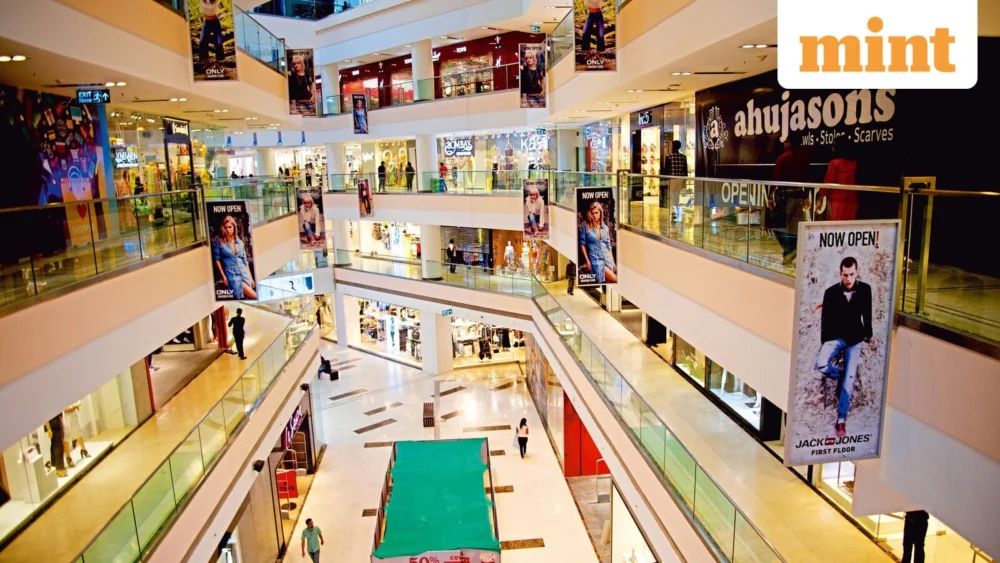
For mall operators, the influx of D2C brands represents a welcome revitalization. These digital-native entities attract a younger, value-conscious demographic, primarily Gen Z and millennials, who are already familiar with these brands through social media and online channels. This familiarity translates into increased footfall and a diversified tenant mix, making malls more dynamic and relevant in an evolving retail landscape. Mall management groups, such as DLF, are not simply opening their doors to any D2C brand; they engage in rigorous due diligence to ensure that prospective tenants possess a strong vision and the operational acumen to thrive in an offline environment. Brands like Lenskart, Chumbak, Bluestone, Snitch, and Souled are among those that have successfully transitioned into physical stores within DLF’s properties, demonstrating their capacity to resonate with consumers in a tangible setting.
Mall operators are also demonstrating flexibility in their leasing strategies to accommodate these agile D2C entrants. The provision of pop-up stores, typically smaller in footprint, allows D2C brands to test market traction and consumer response with lower initial investment. This agile approach enables brands to gauge demand effectively before committing to larger, full-sized retail spaces. This adaptability from mall developers is crucial, as it fosters experimentation and innovation within the retail ecosystem. Abhinav Joshi, Head of Research for India, the Middle East, and North Africa at CBRE, notes that developers are increasingly open to experimenting with emerging labels to enhance the overall shopping experience, often finding malls an easier entry point for D2C brands than fragmented high-street locations.
The financial backing from venture capital and private equity firms has been instrumental in powering this aggressive offline expansion. Armed with substantial funding, D2C brands are well-equipped to navigate the complexities of mall logistics, lease negotiations, and pricing strategies. This capital enables them to secure prime retail locations, often willing to pay top-of-market rentals, intensifying competition for premium space across both high-street corridors and Grade-A malls. This phenomenon, in turn, contributes to rental appreciation, underscoring the significant market power these digital disruptors now wield in the commercial real estate sector. The confidence of investors in the D2C model, even offline, speaks volumes about its perceived long-term viability and growth potential.

Beyond major metros, D2C brands are increasingly eyeing growth opportunities in India’s burgeoning tier II and tier III cities. Pradeep Krishnakumar, co-founder of Zouk, an Indian D2C brand, articulates this strategy: "We look at our online data to see where our customers already exist and then open a mall store close to them." He notes that while initial rental costs can be high, they tend to rationalize as brands scale, allowing D2C players to secure competitive lease terms, sometimes even surpassing those offered to traditional retailers. The robust online growth observed in these smaller cities, often doubling year-on-year for some brands, is now directly translating into physical store expansion, tapping into a vast, underserved consumer base that values both digital convenience and tangible retail experiences.
The D2C sector’s robust growth trajectory, valued at approximately $87 billion in 2025 and projected to nearly triple by 2030, is fundamentally reshaping India’s retail real estate landscape. This rapid expansion, underpinned by strong investor confidence and aggressive strategic plans, highlights a broader shift towards omnichannel retail. Retailers are increasingly focusing on creating experiential flagship stores and Gen-Z-focused formats designed to boost dwell time and engagement. This emphasis on immersive brand experiences reinforces the growing momentum of mall-led retail over purely online models, demonstrating that the physical store remains a critical component of a successful retail strategy.
The strategic imperative to move offline is echoed by brands like fashion startup NEWME, which derives about 23% of its revenue from physical stores, complementing its app and website sales. Sumit Jasoria, co-founder and CEO of NEWME, emphasizes, "Digital-only reach is no longer sufficient for long-term growth. Physical retail builds trust, enables discovery-led demand and strengthens brand engagement." Their expansion plans are carefully calibrated, guided by demand signals emanating from their extensive online customer data. This data-driven, measured approach ensures that offline growth is sustainable and strategically aligned with consumer behavior.
Despite the rapid expansion, India’s retail real estate market remains significantly underpenetrated in terms of quality mall space per capita when compared to global benchmarks. This considerable gap suggests substantial room for sustained growth, particularly as D2C brands continue to refine their offline strategies. As these brands learn from their initial physical experiments and optimize their brick-and-mortar operations, their share of retail leasing is expected to strengthen further. The current 30% contribution to mall and high-street leasing from D2C brands, as estimated by CBRE’s Joshi, is already a high figure, and projections indicate that this percentage will continue its upward trajectory, cementing the role of digital-native brands as the new anchors of modern retail. This ongoing evolution not only transforms shopping habits but also redefines urban commercial infrastructure, fostering a dynamic and resilient retail future.