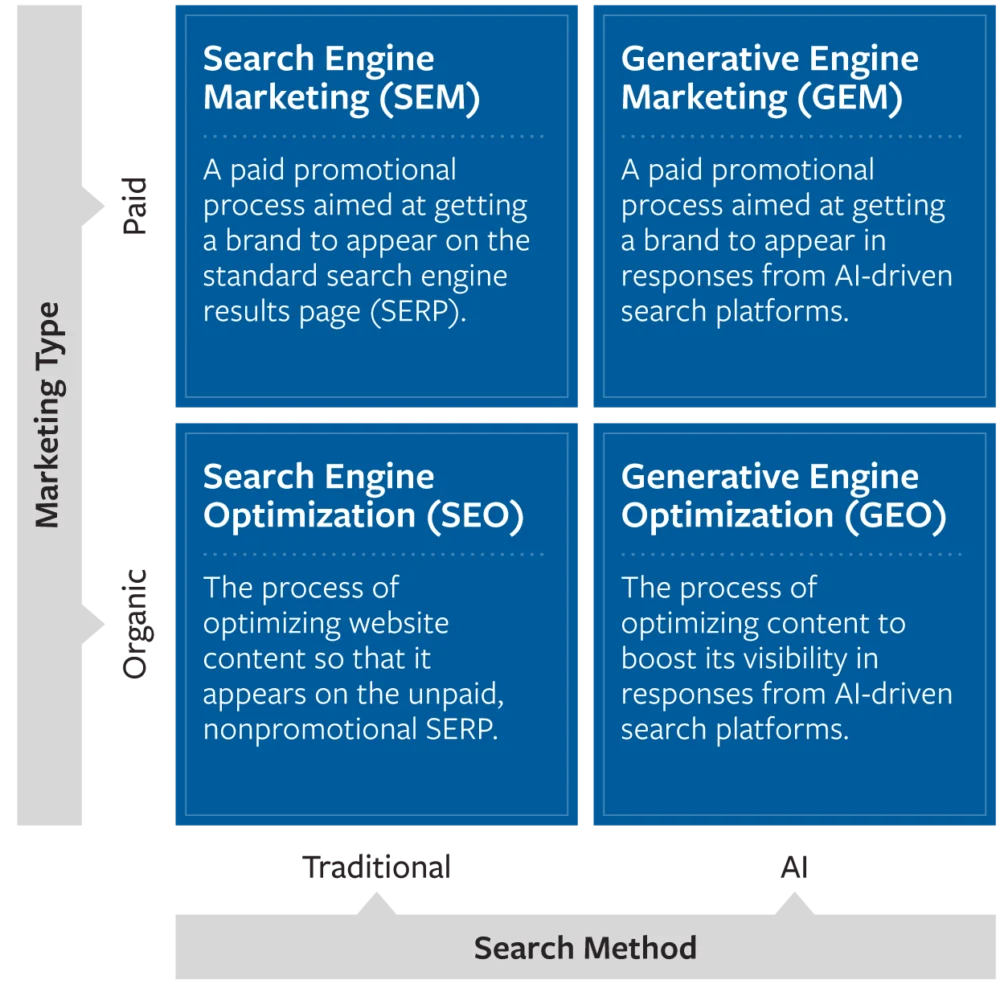
The digital marketing landscape is undergoing an unprecedented seismic shift, fundamentally reshaping how consumers discover and interact with brands online. Generative AI (GenAI) platforms have, in a remarkably short span, begun to dismantle established search paradigms, introducing a new era where even market-leading enterprises face the profound risk of digital invisibility. Businesses, many of which were caught unprepared by the rapid ascent of these AI tools, must urgently recalibrate their internet search marketing strategies to secure their position in this evolving ecosystem. This transition presents both immense opportunities for agile players to expand their market footprint and grave risks for those tethered to outdated methodologies.
The traditional search engine, with its ranked list of hyperlinks, is steadily giving way to an "answer engine" model. Tools like ChatGPT, Perplexity AI, and Google’s Gemini offer synthesized, conversational responses, often eliminating the need for a user to click through to an external website. This paradigm shift has profound implications for brand discoverability. Consider the recent experience of a major U.S. fitness conglomerate, a dominant player with substantial investments in conventional search engine optimization (SEO). A test conducted using an AI platform yielded a startling result: a comparatively diminutive local fitness studio in Houston consistently outranked them in AI-generated recommendations. Similarly, a high-ranking executive at a global financial services firm recounted observing a consumer bypass Google entirely, opting instead for ChatGPT to research top-rated financial products. The firm, a market leader renowned for its extensive traditional and digital marketing spend, was conspicuously absent from the AI’s curated list of recommendations, which instead featured a far smaller, lesser-known competitor. These anecdotes underscore a critical new reality: past investments in market leadership do not guarantee future prominence in AI-driven search.
At the heart of this disruption lies the phenomenon of "zero-click search." In the traditional model, a search query typically initiated a journey across multiple websites, each click a potential touchpoint for brand engagement. Now, AI platforms frequently provide immediate, comprehensive answers directly within the search interface, obviating the need for users to navigate away. Data from leading analytics firms suggests that well over half of all online searches globally are now zero-click, a figure projected to rise significantly as AI integration deepens. This drastically reduces the available points of contact between a brand and its prospective customers, diminishing opportunities for direct website traffic, brand storytelling, and lead generation that marketers have long relied upon. For top-of-funnel consumers, the critical first step of discovering a brand is now mediated by opaque and continuously evolving AI algorithms, which must first identify and then prioritize a company’s offerings to grant it visibility.

The algorithmic opacity of generative AI models presents a formidable challenge. Unlike traditional search algorithms, where factors like keyword density, backlinks, and page authority offered clear (if complex) targets for optimization, AI’s decision-making processes are often less transparent. These models learn from vast datasets, identifying patterns and generating responses based on a multitude of factors that extend beyond conventional SEO signals. Brand mentions, sentiment analysis, factual accuracy, authoritativeness, and even the contextual relevance of content within a broader knowledge graph can influence AI’s recommendations. This shift necessitates a move beyond simple keyword stuffing or technical SEO fixes towards a more holistic "Information Search Marketing" framework, one that prioritizes the creation of genuinely valuable, authoritative, and easily digestible content that AI can confidently synthesize and present.
Economically, the reordering of digital visibility carries substantial implications. Established market leaders, who often enjoy a "first-mover advantage" in traditional search results due to accumulated domain authority and extensive content libraries, could see their competitive moat erode rapidly. Smaller, niche brands, by contrast, might discover new avenues for market penetration if they can strategically optimize for AI’s specific preferences, potentially leveling the playing field. The global digital advertising market, valued at over $600 billion annually, is also poised for disruption. A reduction in click-through rates could impact the efficacy and pricing models of traditional pay-per-click (PPC) campaigns. Advertisers may need to explore new formats within AI interfaces, such as sponsored answers or integrated product recommendations, which are still in nascent stages of development. Businesses must prepare for a significant reallocation of marketing budgets, shifting resources from legacy SEO and SEM tactics towards new frontiers of AI optimization.
To navigate this new terrain, businesses must embrace a multi-faceted strategic overhaul. First, content strategy needs a radical reimagining. The focus must pivot from merely attracting clicks to providing definitive, comprehensive, and contextually rich answers that AI models can readily interpret and summarize. This involves investing in authoritative content creation, potentially leveraging subject matter experts, academic research, and proprietary data to establish a brand as a trusted information source. Content should be structured using semantic markup (schema.org) to provide explicit signals to AI about its meaning and relevance, moving beyond simple keywords to address complex user intent and natural language queries.
Second, building and signaling brand authority is paramount. AI models are inherently designed to prioritize credible and trustworthy sources to prevent the spread of misinformation. Brands must actively cultivate their reputation through verifiable expertise, industry recognition, positive customer sentiment, and a robust digital presence that consistently reinforces their domain authority. This includes securing citations from reputable sources, collaborating with recognized experts, and ensuring a consistent brand narrative across all digital touchpoints. The goal is to become an indispensable source of information, making the brand a natural choice for AI to reference.

Furthermore, proactive experimentation and continuous learning are critical. Given the rapid evolution of AI platforms and their underlying algorithms, static marketing strategies are doomed to fail. Companies must allocate resources for ongoing research and development, testing different content formats, optimization techniques, and engagement models across various AI tools. This requires fostering a culture of agility, where marketing teams are empowered to iterate quickly, analyze performance data (even in a zero-click environment), and adapt strategies in real-time. New metrics will be necessary to measure success beyond website traffic, focusing instead on brand visibility within AI summaries, share of voice in conversational AI, and the direct impact of AI recommendations on conversion paths.
Internally, cross-functional collaboration is non-negotiable. Marketing departments can no longer operate in isolation; they must forge strong alliances with data science, product development, and IT teams. Data scientists can provide insights into AI model behavior and data ingestion, product teams can ensure brand offerings are discoverable through structured data, and IT can ensure the technical infrastructure supports optimal content delivery for AI consumption. This integrated approach ensures that every aspect of the digital presence is optimized for the AI era.
The challenges, however, are significant. Smaller businesses may struggle with the resource intensity required for advanced AI optimization and content creation. A growing talent gap exists for professionals skilled in AI-driven marketing, necessitating investment in upskilling existing teams or acquiring new expertise. Moreover, brands must grapple with the delicate balance of maintaining their unique voice and message when AI platforms summarize their content. Ensuring brand fidelity in AI-generated responses will become a new frontier for brand management.
In conclusion, the advent of generative AI represents not merely an update to search engine optimization, but a fundamental re-architecture of market access and brand discoverability. The imperative for businesses is clear: adapt with urgency and strategic foresight, or risk fading into the algorithmic abyss. The future of brand visibility hinges on a proactive shift towards crafting authoritative, AI-digestible content, cultivating unimpeachable brand credibility, and fostering an agile, data-driven approach to marketing. Those who embrace this transformation will not only survive but thrive, harnessing the power of AI to forge deeper connections with consumers in an increasingly automated world.