The decision by Beijing to dispatch a high-level delegation to India’s upcoming artificial intelligence summit marks a pivotal moment in the complex relationship between the world’s two most populous nations, suggesting a transition from years of icy confrontation toward a pragmatic engagement centered on the future of technology. Led by a vice minister from the Ministry of Science and Technology, the Chinese delegation’s presence at the AI Impact Summit in New Delhi, scheduled for February 16 to 20, represents the most significant diplomatic outreach in the technology sector since the two nuclear-armed neighbors engaged in a deadly border skirmish nearly five years ago. This move, facilitated by active coordination between the Indian embassy in Beijing and Chinese policymakers, underscores a mutual recognition that the trajectory of artificial intelligence is too consequential to be navigated through a lens of total isolation.
The diplomatic recalibration comes at a time when both nations are vying for leadership in the global digital economy while simultaneously grappling with the "China Plus One" strategy adopted by multinational corporations. For India, the summit is a platform to showcase its burgeoning status as a global tech hub and a leader of the Global South. For China, participation offers a way to maintain influence in international AI governance frameworks at a time when Western nations, led by the United States, are increasingly tightening export controls on critical semiconductors and AI hardware. The involvement of George Chen, a partner at The Asia Group, in confirming these developments highlights the role of "track-two" diplomacy—where private consultancies and policy experts bridge the gap between official state channels—in navigating the sensitive nuances of Sino-Indian relations.
The backdrop to this warming of ties is a period of unprecedented digital decoupling. Following the June 2020 clashes in the Galwan Valley, New Delhi implemented a series of "digital strikes," banning over 200 Chinese-origin applications, including global sensations like TikTok and WeChat, citing national security and data sovereignty concerns. This move fundamentally altered the landscape of the Indian internet, allowing domestic startups and American tech giants to fill the vacuum left by Chinese firms. However, the economic reality of 2025 has forced a rethink. Despite the political friction, bilateral trade has remained resilient, with India’s dependence on Chinese components for its electronics and renewable energy sectors persisting. The recent resumption of direct flights and the easing of tourist visa restrictions were the first tangible signs that both capitals were ready to move past the stalemate of the early 2020s.
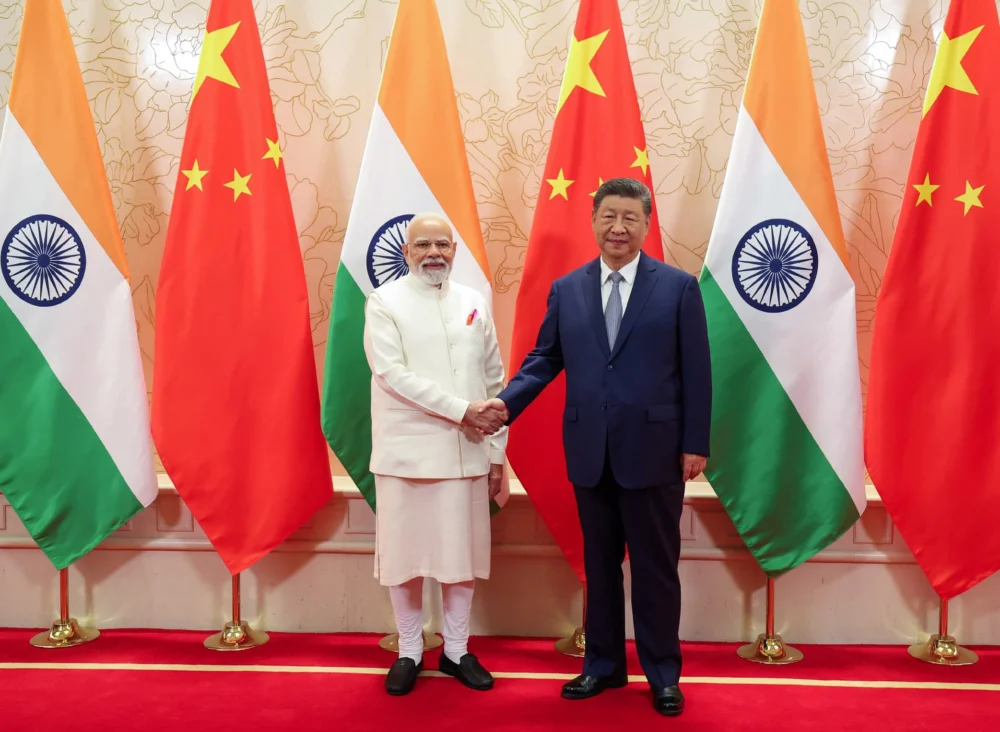
The personal chemistry between Prime Minister Narendra Modi and President Xi Jinping has played a crucial role in this de-escalation. Their interaction during the Shanghai Cooperation Organization (SCO) meeting in Tianjin in August 2025, where they were seen engaging in jovial conversation alongside Russian President Vladimir Putin, signaled to the respective bureaucracies that a "normalization" phase was underway. This summit in New Delhi is the next logical step in that progression. By inviting Beijing, India is signaling that its "AI for All" initiative—a policy framework aimed at making AI inclusive and beneficial for developing economies—requires the participation of all major regional players, regardless of historical border disputes.
The timing of the summit is particularly noteworthy, as it coincides with the Lunar New Year, China’s most significant traditional holiday. The decision by a senior Chinese vice minister to lead a delegation during this period is being interpreted by analysts as a high-stakes diplomatic gesture, indicating the importance Beijing places on re-establishing a foothold in India’s tech discourse. China has consistently used platforms like the SCO and the BRICS bloc to advocate for a more multipolar approach to AI regulation, often clashing with the "values-based" AI governance models proposed by the G7. By attending the New Delhi summit, China aims to ensure its standards and developmental philosophies are represented in a forum that will also feature heavyweights from the American tech industry, including Microsoft co-founder Bill Gates and Anthropic CEO Dario Amodei.

From an economic perspective, the stakes are immense. India’s AI market is projected to reach $17 billion by 2027, growing at an annual rate of 25-35%. The country boasts the highest "AI skill penetration" globally, according to industry data, making it an indispensable partner for any nation looking to dominate the next wave of computing. China, meanwhile, remains the world leader in AI patent filings and specialized hardware manufacturing, despite U.S. sanctions. A collaborative, or at least communicative, relationship between the two could create a formidable "Asian bloc" in AI development that balances the influence of Silicon Valley. However, this potential for cooperation is tempered by lingering suspicions; India remains cautious about Chinese hardware in its 5G infrastructure and critical data centers, while China views India’s growing tech alignment with the U.S. through the iCET (Initiative on Critical and Emerging Technology) with skepticism.
The presence of American tech luminaries like Dario Amodei at the same event as Chinese officials sets the stage for a unique "triangular" diplomacy. India is increasingly positioning itself as a bridge between the West’s innovation-led AI model and the East’s infrastructure-heavy approach. For the Indian government, hosting both U.S. and Chinese representatives allows it to assert its "strategic autonomy." It demonstrates that while New Delhi may be a member of the Quad and a key partner to Washington, it will not be a junior partner in a new Cold War, especially when it comes to technologies that will define the 21st-century economy.
Furthermore, the summit will likely address the divergent regulatory paths the two nations have taken. China has been a first-mover in AI regulation, implementing specific laws for generative AI and algorithmic recommendations that emphasize social stability and state oversight. India, conversely, is currently drafting its Digital India Act, which seeks to balance innovation with safety and user rights. The exchange of views between the Chinese Ministry of Science and Technology and Indian IT officials could provide a blueprint for how large, data-rich nations can regulate AI without stifling the growth of their domestic ecosystems.
Expert insights suggest that this summit could lead to a broader "technological ceasefire." While a full reversal of the 2020 app bans is unlikely in the immediate future, we may see a softening of the investment climate. For years, Chinese venture capital, which once fueled the rise of Indian unicorns like Zomato and Paytm, has been largely blocked by "Press Note 3"—a regulation requiring government approval for investments from countries sharing a land border with India. If the AI summit proves successful in building trust, there may be a calibrated opening for Chinese capital in non-sensitive sectors, providing a much-needed boost to India’s startup ecosystem.
The global implications of this meeting cannot be overstated. As the world fragments into competing technological spheres, the ability of India and China to find common ground on AI safety, ethics, and standards could prevent a total "splinternet" in the field of machine learning. The summit represents a test case for whether economic and technological interdependence can truly override deep-seated geopolitical rivalries. As the delegates gather in New Delhi this February, the focus will not just be on the algorithms and neural networks of the future, but on the delicate art of rebuilding a fractured relationship between two giants whose cooperation, or lack thereof, will shape the global order for decades to come.
Ultimately, the AI Impact Summit is less about a final resolution of conflict and more about the beginning of a sophisticated, albeit wary, engagement. By bringing together the architects of China’s science policy and the titans of American and Indian technology, New Delhi is asserting its role as the new gravity center for global tech diplomacy. Whether this leads to a lasting "Himalayan Thaw" remains to be seen, but for now, the path to the future of artificial intelligence seems to run directly through the increasingly interconnected interests of Beijing and New Delhi.