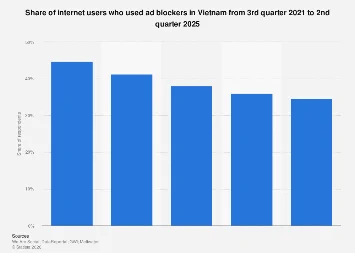
The digital advertising ecosystem in Vietnam is facing a significant shift as the adoption of ad blocking technologies continues its upward trajectory, projecting a substantial portion of internet users to employ these tools by mid-2025. This trend, observed across a survey period spanning from the third quarter of 2021 through the second quarter of 2025, indicates a growing user demand for a less intrusive and more controlled online experience. While precise figures for the second quarter of 2025 are not yet publicly disclosed, projections suggest a significant percentage of Vietnamese internet users will have integrated ad blockers into their browsing habits, positioning Vietnam among nations with high ad blocker penetration rates globally.
The increasing prevalence of ad blockers in Vietnam is not an isolated phenomenon but rather a reflection of global digital consumer behavior. As the internet becomes more deeply embedded in daily life, users are increasingly bombarded with advertisements across various platforms. This constant exposure can lead to digital fatigue, annoyance, and a perceived degradation of user experience, prompting individuals to seek solutions that mitigate these negative impacts. Ad blockers, by their nature, intercept and prevent the loading of advertisements, thereby offering a cleaner, faster, and often more private browsing environment. This appeal is particularly strong in markets experiencing rapid digital growth, where the influx of online advertising may outpace the development of user-friendly and less aggressive advertising practices.
Several factors contribute to this growing trend. The sheer volume and intrusiveness of online advertising are primary drivers. Pop-up ads, auto-playing videos with sound, and intrusive banner ads can disrupt user flow and diminish the perceived value of online content. Furthermore, concerns over online privacy and security are also playing a crucial role. Some ad blockers not only prevent ads but also block trackers that monitor user activity across the web, appealing to individuals seeking greater control over their personal data. The proliferation of sophisticated ad-blocking software, often available as free browser extensions or integrated into mobile operating systems, further lowers the barrier to adoption.
For the Vietnamese digital economy, this escalating ad blocker usage presents a complex challenge. Publishers and content creators, who often rely heavily on advertising revenue to sustain their operations, face potential declines in income. This could impact their ability to invest in producing high-quality content and maintaining their online platforms. Advertisers, in turn, may see their reach and effectiveness diminished, leading to a reassessment of their digital marketing strategies and budget allocations. The overall impact on the digital advertising market in Vietnam could necessitate a shift towards more native advertising formats, content marketing, and subscription-based models to ensure revenue sustainability.
Market data from similar regions offers a glimpse into the potential economic ramifications. In markets where ad blocker penetration is high, publishers have increasingly turned to alternative revenue streams. This includes implementing paywalls, offering premium content, or diversifying into e-commerce and affiliate marketing. Advertisers are also adapting by focusing on contextual advertising, influencer marketing, and investing in creating more engaging and less disruptive ad formats that users are less likely to block. The effectiveness of these strategies often hinges on a deep understanding of local consumer preferences and the specific digital landscape of the market.
Industry experts suggest that the rise of ad blockers is not necessarily a death knell for digital advertising but rather an evolutionary catalyst. "This trend forces the industry to innovate," notes a digital marketing strategist specializing in emerging markets. "It’s pushing us away from intrusive, interruptive advertising towards more value-driven, user-centric approaches. Brands and publishers that can provide genuine value and a seamless user experience will ultimately thrive." This perspective highlights the opportunity for Vietnam to foster a more mature and sustainable digital advertising ecosystem, one that balances commercial interests with user expectations.
The long-term implications for Vietnam’s digital economy are multifaceted. A sustained high rate of ad blocker usage could lead to a more diversified revenue model for online businesses, potentially fostering greater innovation in content creation and platform development. However, it also poses a risk of reduced investment in the digital space if revenue streams become too unpredictable. The government and industry bodies may need to consider policies and initiatives that encourage ethical advertising practices and support the development of sustainable online business models.
As Vietnam continues its rapid digital transformation, the evolving landscape of ad blocker adoption serves as a critical indicator of user sentiment and market dynamics. The ability of businesses, advertisers, and content creators to adapt to this changing environment will be paramount in shaping the future of Vietnam’s digital economy, fostering a more balanced and user-centric online experience for all stakeholders. The insights gleaned from this ongoing trend offer valuable lessons for other rapidly digitizing economies navigating similar challenges in the global digital marketplace.