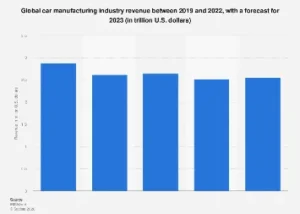

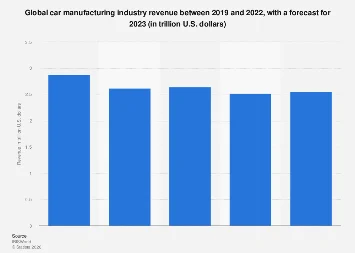
The global automotive manufacturing market, a titan of industry and a significant barometer of economic health, is demonstrating a gradual but persistent recovery, though it has yet to fully reclaim its pre-pandemic peak. In 2021, the sector was valued at an estimated [redacted for privacy] trillion U.S. dollars, with projections indicating a rise to approximately [redacted for privacy] trillion U.S. dollars in 2022. This upward trajectory, while positive, signifies a slow resurgence from the industry’s 2019 market size, a period before the widespread disruption caused by the COVID-19 pandemic and its cascading effects on supply chains and consumer demand. The road back to full strength is proving to be a nuanced journey, influenced by evolving consumer preferences, geopolitical factors, and the relentless march of technological innovation.
At the heart of this transformative period lie two seismic shifts: automation and electrification. These forces are not merely altering the landscape of car production; they are fundamentally reshaping the very definition of an automobile and the intricate ecosystem of its creation. The traditional internal combustion engine vehicle, once the undisputed king of the road, is now sharing the stage with its electric and increasingly autonomous counterparts. This transition is creating significant ripples throughout the entire value chain, from raw material sourcing to the final assembly line.
The burgeoning demand for electric vehicles (EVs) is a primary driver of this transformation. As governments worldwide implement stricter emissions regulations and consumers become more environmentally conscious, the appeal of EVs continues to grow. This surge in interest translates directly into increased production targets for manufacturers, necessitating substantial investments in battery technology, charging infrastructure, and the specialized components required for electric powertrains. The shift away from gasoline and diesel engines means a reduced reliance on certain traditional automotive parts, while simultaneously creating an insatiable appetite for new ones.
Simultaneously, the pursuit of autonomous driving capabilities is injecting another layer of complexity and opportunity into the market. The development of self-driving cars hinges on an array of sophisticated sensors, advanced computing power, and intricate software systems. This reliance on cutting-edge technology is placing an unprecedented emphasis on the automotive electronics sector. As vehicles become more intelligent and interconnected, the demand for high-performance processors, advanced sensor suites, and robust communication modules is escalating rapidly. The integration of these complex electronic systems requires a deep understanding of microelectronics, artificial intelligence, and data processing, areas that were once considered peripheral to traditional automotive engineering.
This technological evolution is creating entirely new avenues for growth and specialization within the automotive supplier segment. The traditional tiered structure of suppliers, long accustomed to providing mechanical components and exhaust systems, is now facing a paradigm shift. The demand for parts is evolving, with a pronounced move towards electronic components. This allows for further segmentation and the emergence of new leaders within the auto supply industry. The automotive electronics sector, in particular, is experiencing an exponential growth spurt. Within this domain, automotive semiconductors stand out as a critical bottleneck and a burgeoning area of opportunity. These tiny but powerful chips are the brains and nervous systems of modern vehicles, managing everything from engine control and infotainment systems to advanced driver-assistance features and the complex calculations required for autonomous navigation.
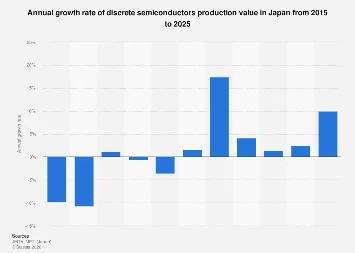
The increasing reliance on sophisticated electronics means that the semiconductor industry, once primarily focused on consumer electronics and computing, is now intrinsically linked to the automotive sector. Manufacturers are facing challenges in securing a stable and sufficient supply of these specialized chips, a vulnerability that became starkly apparent during recent global supply chain disruptions. This has led to increased investment in semiconductor manufacturing capacity and a renewed focus on developing automotive-grade chips that can withstand the harsh operating conditions of a vehicle. The long-term implications of this trend are profound, potentially leading to greater vertical integration by automakers or the formation of strategic partnerships with semiconductor giants to ensure a steady flow of these essential components.
The global comparison of automotive manufacturing reveals a diverse and dynamic landscape. While established automotive powerhouses like Germany, Japan, and the United States continue to be major players, countries like China have emerged as dominant forces, not only in production volume but also in the rapid adoption of new technologies, particularly in the EV space. China’s aggressive push towards electrification, supported by government incentives and a robust domestic supply chain for batteries and components, has positioned it as a leader in this segment. South Korea, with its strong presence in battery manufacturing and electronics, is also a key contributor to the global shift.
The economic impact of these shifts is multifaceted. On one hand, the transition to EVs and autonomous vehicles presents significant opportunities for job creation in new industries, such as battery manufacturing, software development, and AI engineering. It also promises to reduce reliance on fossil fuels, contributing to energy independence and environmental sustainability. On the other hand, traditional automotive manufacturing jobs focused on internal combustion engine components may face a decline, necessitating workforce retraining and adaptation to new skill sets. The investment required for this transition is immense, placing a considerable burden on both manufacturers and governments.
Market data indicates a significant increase in the market share of electric vehicles globally. While still a fraction of the total automotive market, the growth rate of EV sales has consistently outpaced that of traditional vehicles. This trend is projected to accelerate in the coming years, further underscoring the strategic importance of electrification for all major automotive players. The development of robust charging infrastructure remains a crucial factor in this widespread adoption, and governments and private entities are investing heavily in expanding charging networks to alleviate range anxiety among consumers.
The pursuit of autonomous driving technology, while still in its nascent stages for widespread consumer adoption, is also attracting substantial R&D investment. Companies are investing billions in developing the sophisticated sensors, algorithms, and testing protocols necessary to bring safe and reliable self-driving vehicles to market. This technological race is not just about passenger cars; it extends to commercial vehicles, logistics, and public transportation, promising to revolutionize the way goods and people move.
In essence, the global car manufacturing market is at a critical juncture. It is a sector in flux, grappling with the aftermath of global disruptions while simultaneously embracing a future defined by technological innovation. The interplay between automation and electrification is creating a complex web of challenges and opportunities, reshaping the industry’s economic foundations, its supply chains, and the very nature of the vehicles that define modern mobility. The companies that can effectively navigate this intricate transition, adapt to evolving consumer demands, and harness the power of new technologies are poised to lead the automotive world into the next era. The path ahead is undoubtedly challenging, but the potential rewards, in terms of economic growth, technological advancement, and environmental stewardship, are substantial.