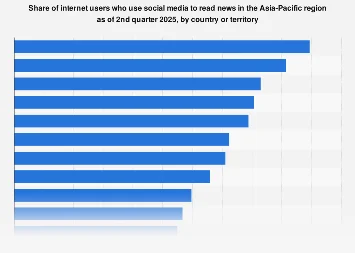
By the second quarter of 2025, the Asia-Pacific (APAC) region is poised to witness a significant trend: the increasing reliance on social media platforms as a primary source for news consumption. This evolving media consumption habit, projected by industry analysts, highlights a fundamental shift in how billions of individuals in this dynamic economic powerhouse access and engage with current events. While precise, granular data for every nation is still being compiled and will be released in October 2025, preliminary insights point towards a diverse adoption rate across the region, influenced by varying levels of digital penetration, cultural preferences, and the maturity of traditional media outlets.
This phenomenon is not merely a regional curiosity but a global indicator of how digital transformation is reshaping information dissemination. Social media platforms, once primarily venues for personal connection and entertainment, have matured into powerful, albeit complex, news ecosystems. Their algorithms, designed for engagement, often prioritize content that resonates with users, leading to rapid information spread, but also raising concerns about echo chambers, misinformation, and the erosion of in-depth journalistic practices. For the APAC region, with its vast and rapidly growing internet user base, these trends are amplified, presenting both opportunities and challenges for citizens, governments, and the media industry alike.
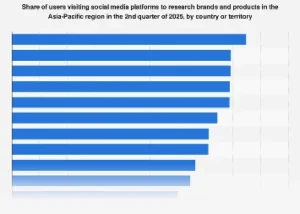
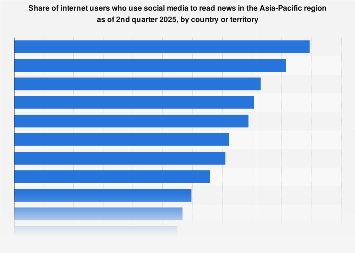
The projected data for Q2 2025, drawing from online surveys of internet users aged 16 and older who have engaged with social media in the preceding 30 days, indicates that the proportion of individuals turning to social platforms for news varies considerably. While specific figures for many countries remain undisclosed pending the official release, anecdotal evidence and earlier trends suggest that nations with higher social media penetration and a younger demographic are likely to exhibit a stronger inclination towards this news consumption model. Conversely, countries with established, robust traditional media sectors or a more discerning digital audience might see a comparatively lower, yet still significant, percentage.
For instance, early indicators suggest that Vietnam might emerge as a frontrunner in this trend, with a substantial share of its internet users reportedly relying on social media for news. This could be attributed to a combination of factors, including a vibrant digital culture, widespread mobile adoption, and a growing middle class actively seeking information and engagement online. The accessibility and immediacy offered by platforms like Facebook, YouTube, and increasingly, TikTok, make them an attractive alternative to traditional news channels, which may sometimes be perceived as less dynamic or accessible.
In stark contrast, South Korea, a nation renowned for its highly advanced digital infrastructure and sophisticated internet culture, is projected to show a lower, though still notable, percentage of social media news consumption. This divergence could be explained by several factors. South Korea boasts a well-developed ecosystem of online news portals, established newspapers with strong digital presences, and a public that may be more critical of information sources, potentially leading them to favor more curated or traditional online news channels. Furthermore, the cultural nuances around social media use and information verification might also play a role.
The economic implications of this trend are far-reaching. For social media companies, it signifies an increased opportunity for advertising revenue and user engagement, solidifying their position as gatekeepers of information. However, it also places a greater onus on them to address issues of content moderation, algorithmic transparency, and the spread of disinformation, which can have tangible economic consequences, from influencing consumer behavior to impacting market stability.
For traditional media organizations, the shift represents a significant challenge to their business models. As audiences migrate to social platforms, the reach and revenue streams of newspapers, television broadcasters, and even established online news sites are under pressure. This necessitates a strategic adaptation, focusing on creating content that is shareable and engaging on social media, while also finding innovative ways to monetize their journalism and maintain editorial independence. Some may explore partnerships with social media platforms, while others will double down on subscription models and exclusive content.
The rise of social media as a news source also has profound implications for democratic processes and civic engagement. While it can democratize information access and empower citizen journalism, it also creates fertile ground for political polarization and the manipulation of public opinion. The speed at which unverified or misleading information can spread on social networks poses a significant threat to informed decision-making and societal discourse. Governments and regulatory bodies across the APAC region are grappling with how to balance freedom of expression with the need to curb harmful content and ensure a healthy information environment. This often involves complex debates around platform accountability, content regulation, and media literacy initiatives.
The survey methodology, employing online surveys with a focus on active social media users, provides valuable insights into a specific segment of the population. However, it is crucial to acknowledge that this data represents a snapshot of active digital participants and may not fully capture the news consumption habits of those with limited internet access or those who primarily rely on traditional media. The age group of 16 and older also means that the youngest internet users are included, a demographic that is often at the forefront of adopting new digital behaviors.
Looking ahead, the trajectory of social media news consumption in APAC is likely to continue its upward climb, driven by ongoing technological advancements, increasing internet penetration, and the ever-evolving preferences of digital natives. The challenge for the region, and indeed the world, lies in navigating this complex media landscape responsibly. This requires a multi-pronged approach involving enhanced media literacy education, greater transparency from social media platforms, robust support for independent journalism, and thoughtful policy-making to ensure that the pursuit of information serves to empower rather than mislead the public. The data projected for Q2 2025 serves as a crucial marker, underscoring the urgent need for stakeholders to adapt and collaborate in shaping a more informed and resilient digital future for the Asia-Pacific.