The Federal Reserve, the linchpin of the global financial system, finds itself at a critical juncture, grappling with unprecedented political pressures that challenge its long-cherished independence. The recent tumultuous transition in its leadership, marked by a sustained public campaign against its former chair and the controversial appointment of his successor, has illuminated the delicate balance central banks must strike between economic imperatives and political realities. This period of flux raises profound questions about the future of monetary policy, its insulation from electoral cycles, and its ripple effects on international financial stability.
Jerome Powell, the outgoing Federal Reserve Chair, endured a barrage of public criticism from the US administration, a stark departure from the traditional decorum surrounding central bank leadership. The rhetoric, often characterized by personal attacks and thinly veiled threats of dismissal, suggested a growing expectation that monetary policy should directly serve short-term political objectives, particularly concerning interest rate adjustments. This approach, reminiscent of a reality television executive wielding power, signaled a potential shift in how the central bank’s mandate was perceived by the nation’s highest office. The suggestion that relief would come with a new chair, specifically naming Kevin Warsh, underscored the administration’s desire for a more compliant monetary policy stance.
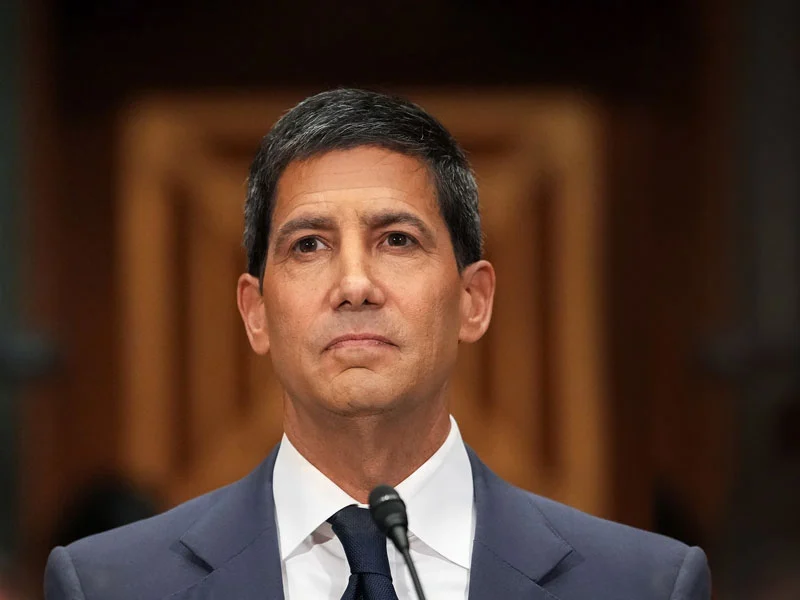
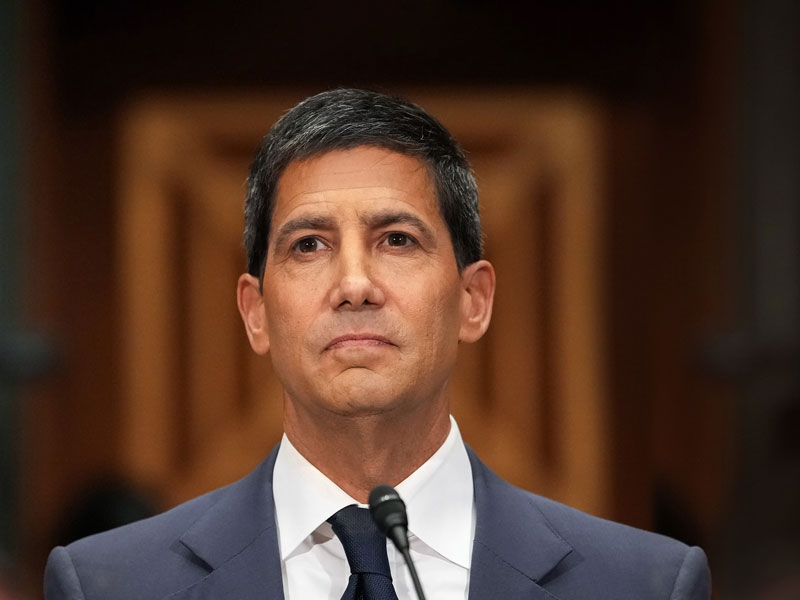
Kevin Warsh, now at the helm, brings a formidable resume to the Federal Reserve. A former governor of the institution from 2006 to 2011, his extensive experience in financial markets is widely acknowledged, instilling a degree of confidence in seasoned observers. His financial acumen is further underscored by his status as potentially the wealthiest Fed chair in history, with assets estimated to be in the tens of millions of dollars, accumulated through his involvement with the Duquesne family office. However, his confirmation process was far from smooth. Senators subjected him to rigorous questioning, particularly concerning over $100 million in assets that were initially characterized as undisclosed, transforming routine hearings into intense interrogations. The support of Republican Senator Thom Tillis, for instance, was contingent on the Department of Justice dropping a criminal probe into Powell, a move widely interpreted as a strategic maneuver to facilitate Powell’s departure. For his part, Powell has committed to remaining on the Fed board as a governor, a decision intended to offer a measure of continuity, despite earlier considerations of stepping down entirely.
Warsh’s perceived closeness to the current administration has become a significant focal point for scrutiny. Critics express apprehension that his alignment with the executive branch could erode the critical distinction between political influence and independent monetary policy decision-making. In the lead-up to his appointment, observations of a softening in his historically hawkish stance on inflation have been interpreted by some as calculated adjustments. His familial ties further amplify these concerns, with his father-in-law, Ronald Lauder, being a long-standing ally and donor to the administration. Conversely, proponents argue that while Fed chairs are political appointees, their professional integrity and commitment to institutional mandates tend to prevail once they assume office. Warsh himself has attempted to assuage these anxieties during his Senate confirmation hearings, dismissing speculation that he intends to replace regional Fed leadership with loyalists. Furthermore, his tenure extends to 2030, a duration sufficient to outlast the current political administration.
The inherent structure of the Federal Reserve offers a degree of insulation. Monetary policy is formulated collectively by the Federal Open Market Committee (FOMC). Critical decisions, especially those pertaining to interest rates, necessitate either consensus or a clear majority. As chair, Warsh commands only one vote, and his ability to influence policy hinges on his capacity to persuade his fellow committee members. Historically, governors have exhibited a tendency to avoid overt dissent, prioritizing an appearance of institutional unity. However, should they perceive any encroachment on the Fed’s autonomy, they may assert their positions through decisive votes or even public pronouncements.
Despite these structural safeguards, leadership remains a pivotal factor. The chair sets the organizational tone, shapes public communication strategies, and significantly influences the internal culture of the institution. A chair perceived as politically aligned could subtly alter market expectations regarding the decision-making processes of monetary policy. Over time, such perceptions can become self-perpetuating, impacting a wide array of financial indicators, from sovereign bond yields to currency valuations. Christopher Hodge, Chief Economist for the US at Natixis CIB Americas, who previously held senior positions at the Federal Reserve Bank of New York and the US Treasury, observes, "Once he is sitting in the Chair’s seat he will be beholden to his fellow FOMC participants and markets, who will be closely watching for signs about his vigilance in keeping inflation expectations well-anchored."
For the majority of its existence, the Federal Reserve has navigated a precarious position – established by legislative action but tasked with operating independently of political interference. Its independence has never been absolute. Congress, as the creator of the institution, has always retained the authority to influence its direction, particularly in the lead-up to electoral cycles. Nevertheless, over time, a prevailing norm has solidified: while politicians might vocally disagree with its policy choices, they have largely respected the Fed’s autonomy. The institution’s gravitas rests on the foundational principle that monetary policy remains insulated from the vagaries of day-to-day politics, a tradition rooted more in shared norms than rigid regulations. The erosion of this mutual restraint between policymakers and elected officials could prove exceedingly difficult to reverse.
That delicate understanding appears to be deteriorating. The administration’s attempts to reshape the Fed, both in terms of its leadership and its policy trajectory, have engendered concerns that transcend mere personality clashes. Last August, an attempt was made to dismiss Governor Lisa Cook, a move that directly challenged the legal protections designed to shield board members from arbitrary removal. Although the attempt ultimately failed, the underlying message was unmistakable. If political entities can dictate the composition of the Fed’s board, the demarcation between fiscal and monetary authority becomes increasingly blurred. Concurrently, the administration has pursued more formalized avenues of control. An Executive Order issued by the administration asserted that “officials who wield vast executive power must be supervised and controlled by the people’s elected President,” mandating that independent agencies submit their regulatory proposals for White House review. While the Fed’s monetary policy deliberations were explicitly exempted, a broad swath of other regulatory actions fell under this purview.
To some historical analysts, the current shift in public rhetoric represents a significant and unprecedented challenge. Richard Sylla, a leading authority on the history of US financial institutions and a professor at the NYU Stern School of Business, states, “Trump’s assault on both Jay Powell and Fed independence is the strongest such assault in the Fed’s 112-year history.” He draws a parallel to the post-war conflict between the Treasury and the Fed regarding interest rate policy aimed at curbing inflation, an episode that ultimately concluded with an accord restoring the central bank’s monetary autonomy. Sylla posits that the current pressures, ironically, might serve to bolster the institution’s standing. He argues, “Trump’s pressure on Powell, and Powell’s successful resistance to that pressure will actually result in increasing the Fed’s reputation for policy independence and strengthening the overall case for central-bank independence.”
Warsh has explicitly articulated his intention to depart from the status quo. He has characterized US monetary policy as having been “broken for quite a long time” and has pledged to enact a “policy regime change.” A significant aspect of this proposed shift is philosophical. In contrast to Powell’s approach, Warsh favors a more constrained interpretation of the Fed’s mandate. He has signaled a move away from policies that tend to blur the lines between monetary and fiscal interventions, particularly large-scale asset purchases, such as those backed by mortgages. Under his leadership, monetary policy is anticipated to be deliberately depoliticized, steering clear of non-monetary issues like climate change and social justice initiatives.
Foremost among Warsh’s priorities is addressing the Federal Reserve’s ballooning balance sheet, which currently stands at approximately $7 trillion. A swift reduction of this balance sheet would signify a definitive break from recent policy, reversing the Fed’s decision to halt quantitative tightening, a process that allowed its bond holdings to mature. The potential for higher Treasury yields could compel the Fed’s interest rate policy into difficult trade-offs between stimulating economic growth and containing inflationary pressures. These complex calculations will not occur in a vacuum, given the current administration’s pronounced focus on lower interest rates. Barry Eichengreen, an economic historian at the University of California, Berkeley, notes, "With what appears to be a persistent energy shock, there will be inflation and reason to raise interest rates. But there will be political pressure from the White House to reduce interest rates. That will not be an easy circle to square."
The calls for the Federal Reserve to maintain low interest rates are not novel. However, this phenomenon is increasingly becoming a systemic feature of US political discourse, exacerbated by the nation’s precarious fiscal position. Elevated debt levels intensify pressure on the Fed to keep rates low and to purchase Treasury securities, thereby diminishing the real value of outstanding US debt. The risks associated with such policies are evident, particularly when viewed through the lens of recent economic history. The 1970s witnessed governmental influence compelling the central bank to suppress interest rates, a policy that inadvertently fueled a surge in inflation. It required the “shock therapy” of aggressive rate hikes under Paul Volcker’s Fed leadership, accompanied by a significant recession, to restore confidence. Even then, re-anchoring inflation expectations proved to be a protracted process. Sylla warns of the potential for a recurrence, stating, “That could happen again, undermining Fed independence, the value of the US dollar and confidence in US public debt management.” He highlights the risks of sustained political interference, which could jeopardize the Fed’s efforts to maintain stable inflation expectations. “If political interference pushes inflation to sustained levels above two percent, the Fed would lose credibility. No matter what it does, it is likely to become a scapegoat for the likely negative results of fiscal irresponsibility.”
The ramifications of the Federal Reserve’s actions extend far beyond the borders of the United States. As the central pillar of the global financial architecture, the Fed’s credibility resonates internationally. Its policy decisions shape capital flows, influence currency stability, and determine the availability of dollar-denominated funding worldwide. For numerous nations, access to US dollars is a fundamental component of their financial stability. Foreign central banks are more inclined to entrust banks and corporations within their jurisdictions with dollar transactions if they can reliably access dollar liquidity from the Fed through currency swap lines during periods of stress, according to Eichengreen. He observes, “If we have a nationalistic US President who insists on nationalistic behavior by the central bank, things will be different.”
Early indicators of this evolving mindset are already apparent. Stephen Moran, a temporary appointee to the Fed board under the current administration, has publicly advocated for a reconsideration of the United States’ role as a global lender of last resort, or at least for the demand of compensation for fulfilling that function. Similar critiques have emerged previously, notably during congressional hearings following the 2008 financial crisis. A more insular Federal Reserve, more closely aligned with transient domestic political objectives, would inevitably reshape the global financial landscape, fostering increased skepticism regarding its credibility.
Yerbol Orynbayev, a former World Bank governor and ex-Deputy Prime Minister of Kazakhstan who played a pivotal role in his country’s response to the 2008 financial crisis, articulates a stark warning: “If financial markets and international partners perceive undue political interference in the central bank, we will see the ‘ABUSA’ – ‘Anywhere But The US’ – sentiment soar, and to the detriment of the US economy.” He further elaborates on the precariousness of the current situation, stating, “The US Treasury market is already on the verge of rioting – yields are fickle and are often rising. If the Fed is compromised, the US economy could face huge losses.” This sentiment underscores the profound implications of any perceived erosion of the Federal Reserve’s independence, not only for the domestic economy but also for the stability and predictability of the global financial system.