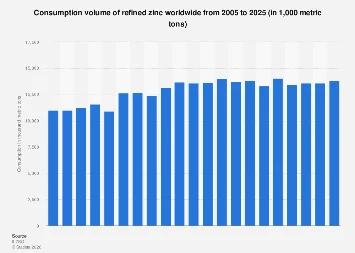
The global market for zinc metal is projected to experience a period of steady, albeit moderate, expansion in demand through the year 2025. This forecast underscores the metal’s enduring importance across a spectrum of industrial applications, from essential infrastructure projects to the burgeoning automotive sector. While market dynamics are influenced by a complex interplay of supply-side factors, geopolitical considerations, and the evolving pace of global economic recovery, the underlying demand drivers for zinc remain robust, pointing towards a sustained, upward trajectory.
Zinc’s primary role as a protective coating for steel, primarily through galvanization, anchors its demand to the construction and infrastructure sectors. As governments worldwide continue to prioritize investments in rebuilding and expanding aging infrastructure – including bridges, buildings, and transportation networks – the need for corrosion-resistant materials like galvanized steel is set to escalate. This trend is particularly pronounced in emerging economies, where rapid urbanization and development initiatives are creating significant demand for construction materials. For instance, the Asia-Pacific region, led by China and India, is expected to remain the largest consumer of zinc, driven by extensive infrastructure development and a growing manufacturing base.
Beyond its crucial role in construction, the automotive industry represents another significant pillar of zinc consumption. Galvanized steel is extensively used in vehicle bodies to enhance durability and prevent rust, thereby extending the lifespan of automobiles. As the global automotive market navigates the transition towards electric vehicles (EVs), the demand for lightweight yet robust materials remains paramount. While the design of EVs may see some shifts in material composition, the fundamental need for corrosion protection in chassis and body panels will persist, ensuring continued demand for zinc. Furthermore, zinc alloys are increasingly finding applications in automotive components, including die-cast parts for engines and other machinery, as manufacturers seek to optimize performance and reduce vehicle weight.
The outlook for zinc is also influenced by the performance of other key industrial sectors. The manufacturing of industrial machinery, household appliances, and even certain types of packaging contribute to overall zinc demand. As global manufacturing output recovers and expands, these downstream industries will translate into increased requirements for zinc-based products. The interplay between economic growth and industrial activity is a critical determinant of zinc’s market performance. A sustained global economic expansion, characterized by increased industrial production and consumer spending, will naturally translate into higher consumption of manufactured goods that rely on zinc.
However, the zinc market is not without its challenges and complexities. Supply-side dynamics, including mining output, mine closures, and the development of new zinc reserves, play a crucial role in shaping market prices and availability. Geopolitical events can also disrupt supply chains and influence trade flows, potentially leading to price volatility. Environmental regulations and the increasing focus on sustainable mining practices are also becoming increasingly important considerations for producers and consumers alike. The industry is under pressure to adopt more environmentally friendly extraction and processing methods, which could impact production costs and the long-term availability of primary zinc.
Market analysts and industry experts offer varied perspectives on the precise growth rates expected for zinc consumption. Projections often range from a modest 1% to 3% annual growth in demand through 2025. These forecasts are typically underpinned by detailed analysis of end-user industries, macroeconomic indicators, and historical consumption patterns. For example, reports from leading market research firms often cite the steady increase in global steel production as a key indicator for galvanized steel demand, which in turn drives zinc consumption. The price of zinc itself, influenced by supply-demand imbalances and speculative trading, also plays a role in moderating consumption patterns. When prices are high, some industries may explore alternative materials or reduce their reliance on zinc where feasible. Conversely, periods of lower prices can stimulate increased demand.
Global comparisons offer further context to the projected growth. While developed economies might see more incremental growth tied to modernization and replacement cycles, developing nations are expected to be the primary engines of demand expansion. The significant infrastructure build-outs in regions like Southeast Asia, Africa, and parts of Latin America will continue to be a major contributor to the global zinc market’s upward trend. The increasing adoption of industrial standards and quality requirements in these regions further solidifies the demand for reliable and durable materials like galvanized steel.
The economic impact of zinc’s demand trajectory extends beyond the metal industry itself. A robust zinc market supports employment in mining, smelting, and downstream manufacturing sectors. It also contributes to government revenues through taxes and royalties. Furthermore, the availability of essential materials like zinc is fundamental to the functioning of modern economies, enabling the construction of critical infrastructure, the production of durable goods, and the advancement of technological innovations. The consistent demand for zinc underscores its status as a foundational commodity, integral to the global industrial ecosystem. As the world continues to build, manufacture, and innovate, the demand for this versatile metal is set to remain a significant, albeit often unseen, component of global economic progress. The projected growth through 2025, while measured, signals a healthy and continuing reliance on zinc’s unique properties.