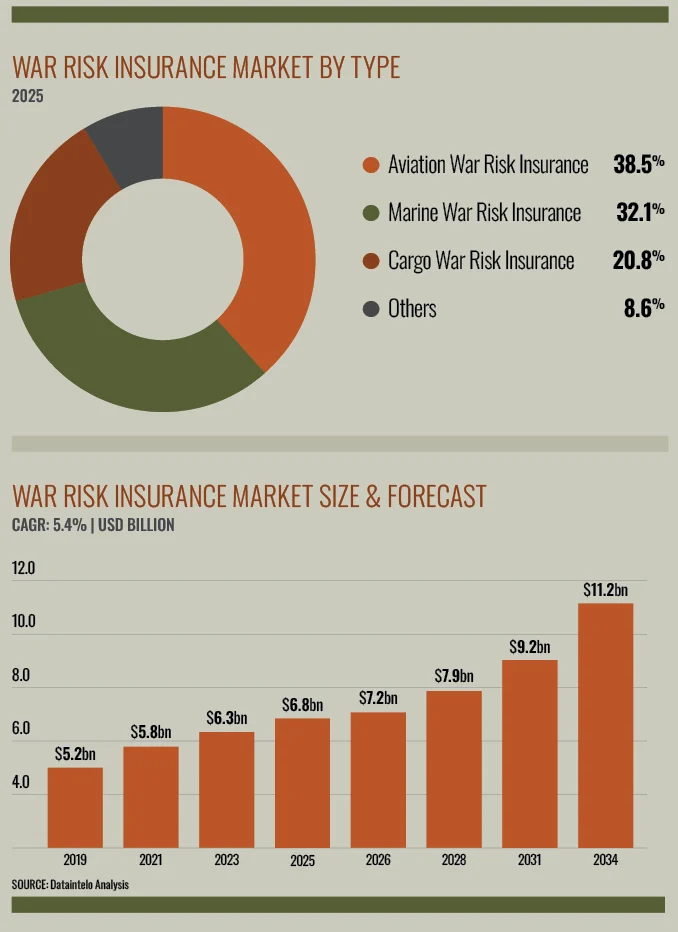
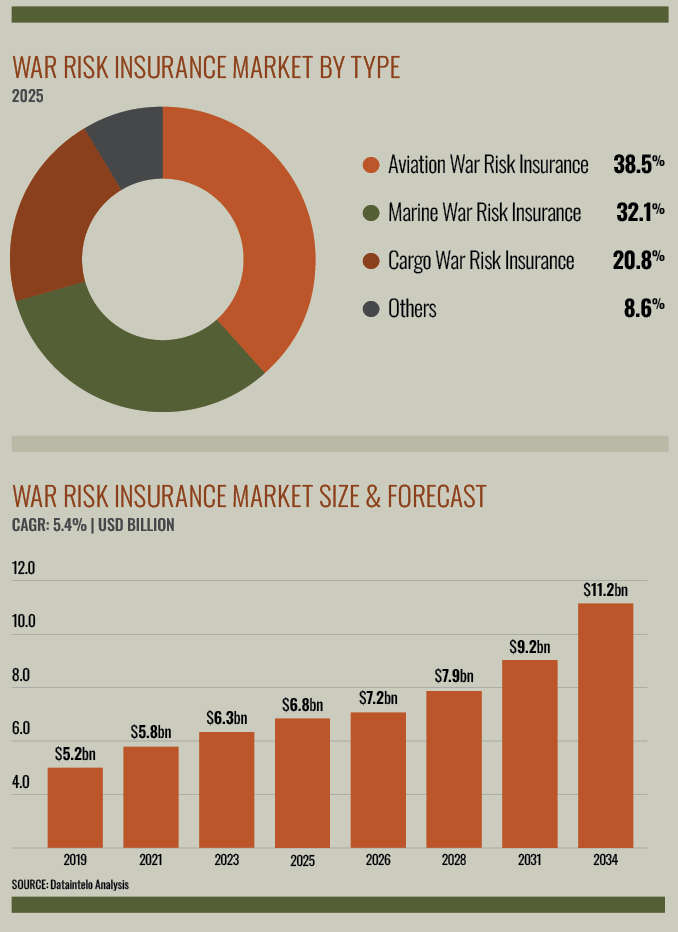
The escalating conflicts in the Middle East and Eastern Europe have propelled the critical, yet often opaque, realm of war risk insurance into the global spotlight. While the immediate focus has been on claims arising from damaged or detained vessels, direct property destruction, and airborne or cyber assaults, the long-term economic repercussions are becoming increasingly apparent. The potential for widespread business interruption, particularly as supply chains grapple with disruptions in vital maritime chokepoints like the Strait of Hormuz, is now a significant concern for insurers and global commerce alike.
Reinsurance powerhouse Munich Re recently announced a cautious reservation of €90 million to address anticipated claims, a figure its CEO Andrew Buchanan described as a preliminary estimate, encompassing potential payouts from marine war markets and political violence and terrorism insurance. Notably, this amount is less than the firm’s outlay in the initial year of the Ukraine conflict, underscoring the evolving nature and scale of geopolitical risk.
The intricate world of war risk coverage, and its indispensable role in facilitating commerce within conflict zones, was starkly highlighted following pronouncements regarding shipping through the Persian Gulf. Initial assertions suggested that a lack of insurance cover was impeding maritime traffic, leading to a US government initiative for a back-stop reinsurance scheme. However, this narrative was met with skepticism by the established London-centric insurance market, including Lloyd’s. Chris Jones, CEO of the International Underwriting Association, stated unequivocally in early March that insurance remained available for operators in the region, including the Strait of Hormuz, despite the heightened risk. The Lloyd’s Market Association echoed this sentiment, refuting reports that insurance unavailability was the cause of shipping slowdowns.
Despite these assurances, the US government, through its International Development Finance Corporation (DFC), moved to establish a $20 billion Maritime Reinsurance Plan, fronted by Chubb, with the stated aim of revitalizing commercial shipping in the Gulf. The DFC indicated that other American insurers were being brought in to bolster market capacity, though details of these additional partners remained undisclosed for several months. The underlying message of these initiatives was to restore confidence and resume trade, implying that insurance gaps were a primary impediment.
However, industry insiders like Andrew James, managing director of marine at London broker Gallagher, have pointed to a significant miscommunication. He asserted that the London market, including Lloyd’s, has consistently offered war risk coverage. The primary deterrent, James explained, is not the absence of insurance but the heightened awareness and autonomy of ship captains and crews. Armed with real-time information, they now have the final say on whether to transit high-risk areas, often opting out to avoid perceived dangers, irrespective of insurance availability. The US government’s facility, therefore, was perceived by some as addressing a problem that did not fundamentally exist in the insurance market itself. Chubb, for its part, has not provided updates on the scheme’s operational status.
Lessons from the Black Sea have informed the market’s response to current geopolitical tensions. In April, specialist insurer Beazley announced a $1 billion consortium to augment existing marine war risk cover in the London market, a move CEO Adrian Cox characterized as demonstrating the market’s agility in supporting global supply chains. This resilience is rooted in decades of experience in navigating international conflicts. The Ukraine war, while presenting significant challenges, also served as a crucial testbed for collaborative and innovative insurance solutions.
The facilitation of grain and fertilizer exports from Ukraine, particularly after the collapse of the UN-broketted Black Sea Grain Corridor in July 2023, has been a testament to the insurance market’s adaptability. Ukraine’s subsequent establishment of its own maritime corridor, hugging the western Black Sea coast and entering Romanian territorial waters, has enabled exports to approach pre-war levels, providing a vital economic lifeline and contributing to global food security. Insurance has been pivotal in making these operations viable.
Rory Colacicchi, a partner in the marine and cargo team at McGill & Partners, recalled a period of intense uncertainty immediately following the Russian invasion in February 2022. With multiple ships trapped, ports under heavy bombardment, and the Black Sea mined, insurers initially withdrew cover. War risk rates, previously near zero, surged dramatically to between 3% and 5% of a vessel’s value in a short period. As Ukraine’s alternative grain corridor became operational, rates stabilized around 3% for voyages through the western Black Sea. However, an attack on a Liberian-flagged ship in Odesa threatened another spike, prompting a government-backed scheme, brokered by Marsh and led by the Ascot syndicate at Lloyd’s, to provide up to $50 million in hull war risk and associated protection and indemnity (P&I) cover.
Oscar Seikaly, CEO of Miami-based NSI Insurance Group, emphasizes the crucial lessons of speed and adaptability learned from these events. He notes that while war exclusions initially lead to coverage withdrawal, capital returns once risks become quantifiable. London’s leadership in structuring solutions, often through consortiums, enables rapid deployment of capacity. Real-time monitoring technology also plays a vital role in assessing and managing risks in critical corridors.
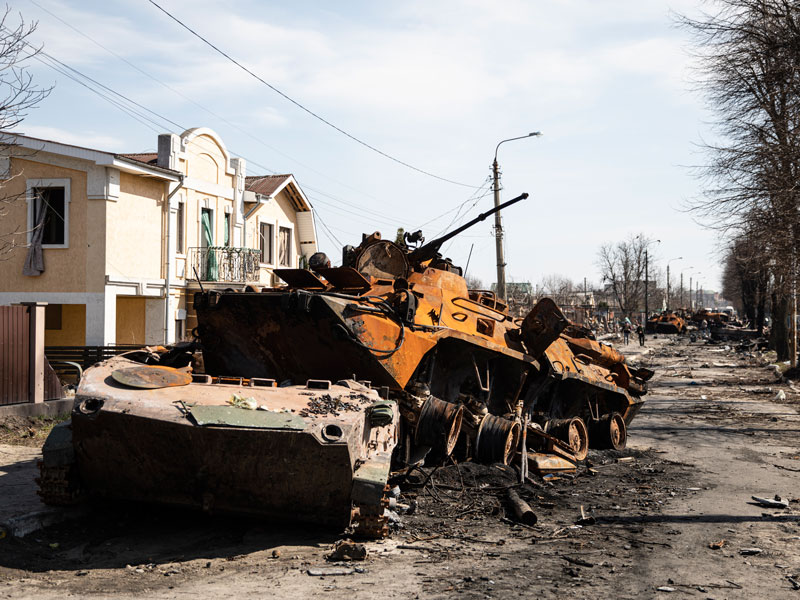
Beyond maritime concerns, the Ukraine conflict has amplified focus on land-based war risks, particularly the persistent attacks on cities and energy infrastructure. Ukrainian insurers, supported by a £110 million reinsurance facility from Aon and the European Bank for Reconstruction and Development, have begun offering limited war risk coverage to businesses. Andrii Semchenko, CEO of INGO, one of Ukraine’s leading insurers, explained that coverage is carefully managed, with strict geographical limitations—typically excluding areas within 100 kilometers of the active battlefield, a range encompassing most drone and rocket attacks. Coverage is suspended if the front line moves closer than 50 kilometers. A Ukrainian government scheme supplements this, covering larger risks and those closer to the front.
Insuring land-based assets, especially critical energy infrastructure like oil terminals and refineries, remains challenging. Blaine Rogers, a partner at Davis Levin Livingston, points out that these risks are generally handled under political violence or terrorism policies, which carry strict sub-limits and exclusions for acts of war. Insurers also mandate extensive risk mitigation measures, and disputes frequently arise over the interpretation of these exclusions.
The aviation sector has also experienced significant turbulence. The 2022 Russian invasion of Ukraine triggered one of the largest aviation insurance disputes ever, following the seizure of approximately 400 leased aircraft by Russia, compelling leasing companies to terminate contracts due to Western sanctions. The core of the dispute centered on whether losses exceeding $10 billion fell under standard "all risks" insurance or war risk extensions, with both sets of underwriters seeking to avoid liability.
In June 2025, the English High Court largely sided with the lessors, determining that the aircraft were effectively lost on March 10, 2022, when Russian legislation prohibited their export. The court ruled that the proximate cause of the loss was the Russian government’s action, thus triggering war risk coverage. This decision has had significant implications for insurers including AIG, Lloyd’s syndicates, Chubb, and Swiss Re. While legal proceedings continue in some jurisdictions, the aviation insurance market has largely responded calmly to the recent Middle East conflict. Bill Smith, global executive for aerospace at Gallagher, noted that after an initial adjustment period, premiums for broader Middle East travel have largely stabilized, with additional premiums only being applied for flights into specific high-risk zones like Tel Aviv and Lebanon.
A significant concern for aviation underwriters and airlines remains the potential for escalation, particularly the deployment of tactical nuclear weapons, which would trigger automatic cancellation of liability policies globally. Furthermore, the increasing sophistication of threats, such as AI-powered drones, presents a novel challenge. Ed Lluth, head of Liberty Specialty Markets, highlighted the lack of a coherent response plan within the industry to counter AI-driven drone attacks against commercial aircraft, citing the successful use of such technology against Russia’s strategic bomber fleet. Insurers anticipate significant difficulty in pricing and covering these emerging risks.
The convergence of physical and cyber warfare is another growing concern. Neil Roberts, head of marine and aviation at the Lloyd’s Market Association, notes that cyber warfare has become an integral tool in modern conflicts, increasing disruption during physical hostilities. This area is fraught with peril, and many major corporations may find themselves inadequately protected. A report by S&P Global Ratings warns that the Ukraine war, the Middle East conflict, and potential escalation over Taiwan are all triggers for intensified cyber-attacks. Many firms remain unaware of the implications of "hostile cyber operation" exclusions in their standalone cyber policies and the difficulty in attributing attacks, which can originate from nation-states or their proxies.
Nick Robinson, a consultant in digital crisis and security strategy at Gallagher, points to the recent disruptive cyber incident affecting medical technology manufacturer Stryker in March 2026, claimed by an Iran-linked hacktivist persona. This attack, which wiped devices and disabled internal systems, caused global disruption and an uncertain recovery timeline. Pro-Iranian hacktivist groups are actively mobilizing, posing threats to infrastructure in several Middle Eastern countries.
Disputes over cyber insurance claims are becoming increasingly common, particularly concerning broad cyber war exclusions. Blaine Rogers notes that courts are scrutinizing these provisions, with overly broad or ambiguous exclusions emerging as a flashpoint for litigation. Major asset managers acknowledge the immense challenge of staying abreast of evolving threats, especially AI-driven attacks, and are continuously testing their defenses, while recognizing that even comprehensive insurance and response plans are being pushed to their limits.
The potential for extensive business interruption claims, particularly given the numerous exclusions for war, terrorism, and hostile acts, represents another significant area of concern and potential dispute. As the economic impacts of ongoing conflicts ripple across sectors like aviation, travel, hospitality, energy, and logistics, the likelihood and scale of claims are growing. Similar to the disputes seen during the COVID-19 pandemic, larger claims are more likely to face insurer scrutiny.
In this era of heightened geopolitical instability, attention is already turning to potential future flashpoints, with China’s ambitions regarding Taiwan being a prominent concern. A conflict in the South China Sea could mirror the global disruption seen in the Middle East. Singapore’s Foreign Minister Vivian Balakrishnan recently underscored the critical importance of global maritime chokepoints, citing the vulnerability of vital shipping lanes like the Strait of Malacca. The potential threat to such critical arteries of global trade would undoubtedly pose profound questions for the international insurance market.