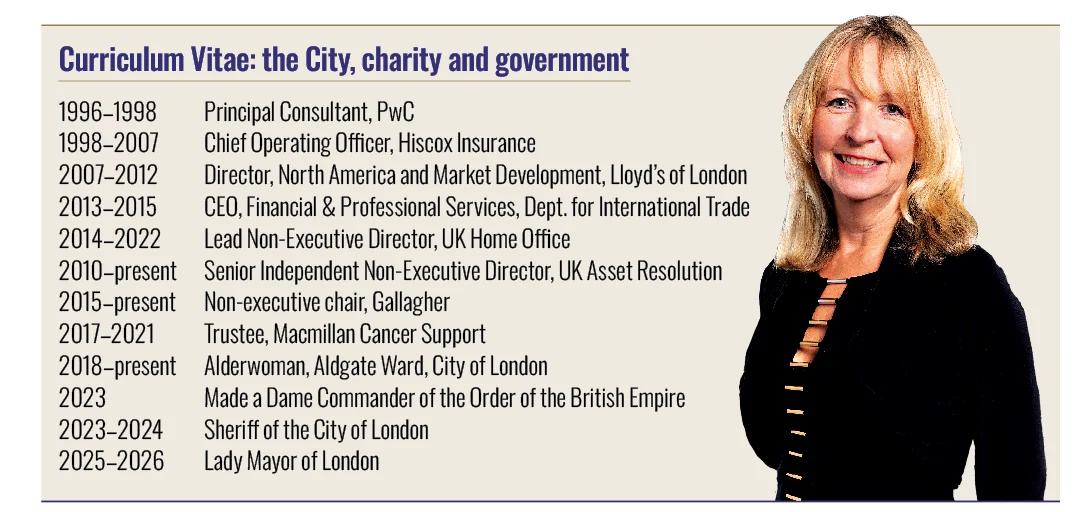
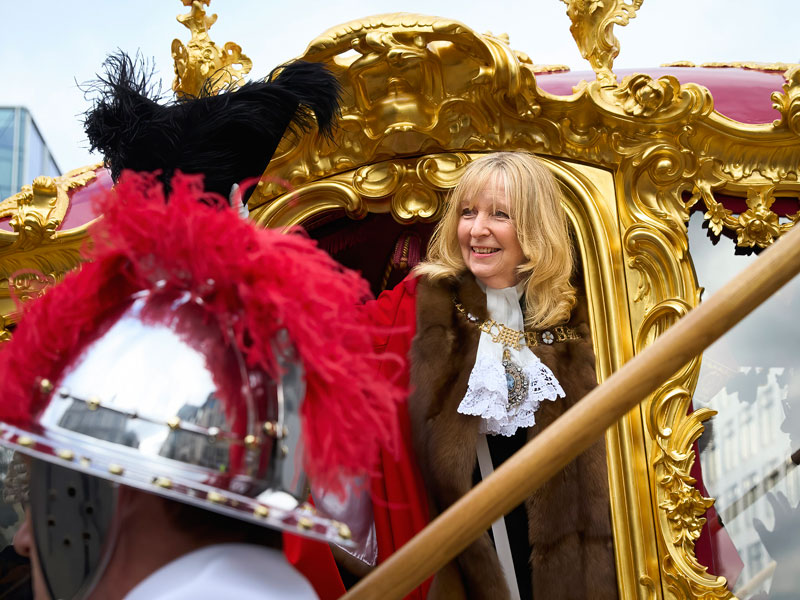
Dame Susan Langley is undertaking a profound transformation of the 800-year-old office of the City of London’s Lord Mayor, aiming to reposition it from a largely ceremonial symbol into a dynamic global ambassador for the UK’s vital financial and professional services sectors. As the 497th holder of this historic position, and only the third woman to do so, her tenure is already marked by significant shifts, beginning with her decision to be styled as Lady Mayor of London. This choice, while initially raising eyebrows among traditionalists, signals a broader intent to modernize an institution steeped in centuries of custom.
Langley’s journey to this pivotal role reflects a deliberate approach to challenging established norms. Her experience as the first Alderwoman in the City’s governance structure, a position she took up in 2018, provided an early platform for this. She recounts how the distinction of "Alderman Langley" often led to her husband being congratulated, a disconnect that prompted her to adopt the title "Alderwoman." "I wasn’t trying to make a point," she explains, "but what triggered it was when someone said ‘Alderman Langley,’ everyone shook my husband’s hand. I got fed up with that." The successful transition to Alderwoman paved the way for further gender-inclusive reforms. When it came to the Mayoralty, the legal framework already accommodated a gender-neutral title, referring to the position simply as "Mayor," with "Lord Mayor" being the customary designation. Langley strategically leveraged this, advocating for "Lady Mayor" through gentle persuasion, often by reframing historical convention. She recalls one instance where she countered a traditionalist’s argument by stating, "Let’s turn it round. Let’s say since 1189, it has been women, and the title is Lady Mayor, and there has always been Lady Mayor." This reframing effectively diffused resistance, highlighting the arbitrary nature of historical gendered titles.
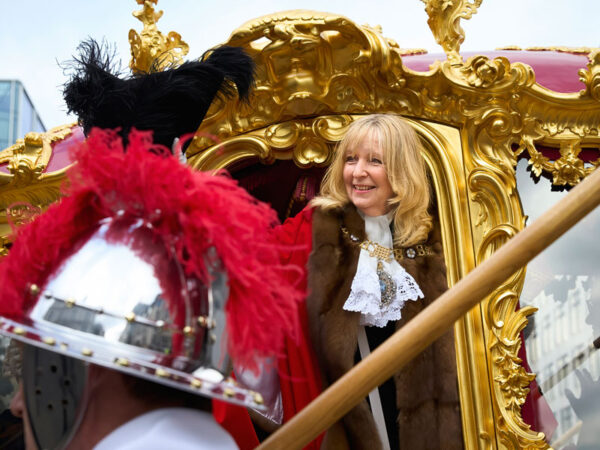
This re-titling extended to the iconic annual parade marking the Mayor’s installation, now known as the Lady Mayor’s Show. Broadcast live and widely covered by the UK press, this change generated significant public attention, fostering a sense of inclusivity. "It made far more of an impact than I ever imagined," Langley notes. "It made people feel they belonged because they could see themselves." This symbolic shift is merely the vanguard of a more substantive agenda, which Langley has termed the "Modern Mayoralty."
A key element of this modernization is the establishment of continuity and strategic focus beyond a single mayoral year. Traditionally, each Lord Mayor sets a personal theme, often with limited lasting impact. In contrast, Dame Susan has worked with City authorities to ensure a more enduring legacy. Unusually, there is a clear succession plan in place, with Timothy Hailes, a lawyer, slated for 2026-27, followed by Bronek Masojada, former CEO of Hiscox Insurance. This forward-thinking approach is bolstered by the formation of an Advisory Board, chaired by former UK Cabinet Secretary Mark Sedwell. The board’s mandate is to "fill in gaps in the Mayor’s skillset" and "ensure all three of us operate within set tramlines to give more consistency and impact." This focus on consistency and strategic delivery is crucial for reinforcing the City of London’s standing in the global marketplace.
Dame Susan’s agenda prioritizes strengthening the City’s international competitiveness and advocating for policies that foster its growth. A notable priority has been pushing for the expedited implementation of the promised captive insurance regime, a development expected to attract further investment and enhance the regulatory environment for specialized insurance solutions. Her role extends to actively engaging with international markets. She has participated in numerous ministerial visits to key economic hubs like China, India, and the United States, leveraging her experience as a UK trade envoy to champion the City’s offerings on a global stage.
The City of London, often referred to as the "Square Mile," is more than just a financial district; it is a hub of trust and a crucial gateway connecting global capital with markets worldwide. Langley emphasizes this role, stating, "For centuries, the City has been a place where deals are made and honoured, contracts enforced, disputes resolved. In other words, a place where trust thrives." Despite global economic headwinds, the UK, and particularly the City, remains a remarkably attractive destination for international investment, a testament to its robust legal framework and established reputation. Partnerships within the financial ecosystem are described as "thriving," a sentiment she reinforced during a recent gathering at Mansion House, the official residence and workplace of the Mayor, with senior foreign diplomats and the British Foreign Secretary.
In an era characterized by geopolitical volatility, economic uncertainty, and increasing fragmentation, Langley’s message underscores the imperative of collaboration. "This is an age defined by volatility, by insecurity, competition and, at times, fragmentation," she stated. "But despair is not an option. Because, when the world feels most fragile, that is precisely when togetherness matters most." She advocates for strengthening international connections, asserting that "the future won’t be built in isolation. It will be built through partnerships grounded in shared values, interest and objectives." Her call to action is for the UK and the City to actively play their part in forging these essential global linkages.
To effectively convey these critical messages, a fundamental shift in public perception regarding the Mayoralty’s true function is necessary. Langley categorizes her own role as approximately "10 percent ceremonial, 20 percent philanthropic, and then 70 percent business." However, she acknowledges that this practical reality is often overshadowed by traditional perceptions focused on pageantry. She observes tourists outside Mansion House discussing the "show and ceremony," and desires to redirect this understanding. Her ambition is for the public to recognize the Mayoralty as an "ambassador for the financial and professional services sectors" and for Mansion House itself to be perceived as the "FPS Embassy for the City of London." This redefinition is visually reinforced by changing the signage on her office to "Ambassador for Financial and Professional Services" and branding Mansion House as the "Embassy for Financial and Professional Services."
While changing signage is a visible step, altering deep-seated perceptions is a more significant undertaking. Yet, the message is beginning to resonate. During a recent visit to Texas, when she offered to explain the Lady Mayor’s role, her host preemptively responded, "That’s OK, we know you are the Ambassador for Financial and Professional Services in the City of London." This indicates a growing awareness of the modernized mandate.
However, Langley also encountered more concerning misperceptions regarding London’s safety and governance. An anecdote about an American firm expressing concern for a female colleague’s safety due to fears of crime, and a senior American enquiring about living in an "Islamic capital under Sharia Law," highlight the pervasive impact of misinformation. Rather than condemning these views, she advocates for a concerted effort by London businesses and authorities to proactively counter such narratives by promoting the city’s positive attributes and fostering a clear understanding of its diverse and dynamic reality.
Langley’s personal connection to London, having been born and raised in the East End, provides a unique perspective. She recalls watching the Lord Mayor’s Show as a child, never imagining she would one day lead the procession. Her own journey into the City’s governance began about fifteen years ago, spurred by concerns from senior figures about the underrepresentation of women in leadership roles. Initially hesitant, viewing the role as overly ceremonial, she gradually recognized its potential impact. "I am the kind of person who likes to make a difference," she states, and as she became more involved, she witnessed firsthand the significant influence the Mayoralty could wield in business and philanthropy.
The pivotal moment came in 2018 when she was persuaded to stand for a vacant Alderman’s seat, a decision that propelled her through the ranks, including a year as Sheriff of the City of London, culminating in her election as Mayor. While many Lord Mayors are eventually forgotten, Dame Susan Langley, much like the legendary Dick Whittington who held the office three times, is poised to leave an indelible mark on the City, redefining its historic office for a new era. Her tenure is not just about tradition; it is about strategically evolving an ancient institution to meet the complex demands of the 21st-century global economy.