
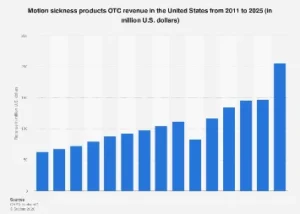

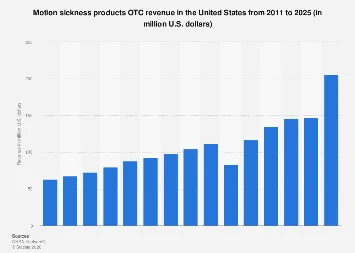
The market for over-the-counter (OTC) motion sickness products in the United States is projected to reach its highest revenue point in 2025, indicating a robust and expanding sector within the broader consumer health landscape. While specific figures remain proprietary, industry analysis suggests a sustained upward trajectory for this segment, driven by a confluence of demographic, lifestyle, and travel-related factors. This growth trajectory underscores the enduring need for accessible and effective solutions to alleviate the discomfort associated with motion sickness.
The market’s expansion is intrinsically linked to increasing consumer mobility and participation in activities that can trigger motion sickness. As travel, whether by air, sea, or land, continues to recover and potentially expand post-pandemic, so too does the demand for remedies. This includes not only traditional vacation travel but also a resurgence in road trips and recreational activities like boating and amusement park visits, all of which present opportunities for motion sickness to manifest. The accessibility of OTC products is a critical enabler of this market, allowing consumers to self-diagnose and treat symptoms without the need for a physician’s prescription. This convenience factor is paramount for a condition that can arise unexpectedly during travel.
Globally, the motion sickness market, encompassing both OTC and prescription-based treatments, is substantial. While the U.S. represents a significant portion of this global demand, other developed nations with high levels of disposable income and travel participation also contribute to the overall market size. Emerging economies, with their growing middle class and increasing access to travel, present future growth potential, though the penetration of OTC remedies may vary based on regulatory frameworks and consumer purchasing habits. The U.S. market, characterized by a well-established pharmaceutical retail infrastructure and a high prevalence of self-care practices, serves as a key indicator for global trends.
The composition of the OTC motion sickness market includes a variety of active ingredients and product formats. Antihistamines, such as dimenhydrinate and meclizine, remain cornerstones of treatment due to their efficacy and long history of safe use. These are commonly found in tablets, capsules, and chewables. Beyond pharmacological solutions, there is also a growing interest in complementary and alternative approaches. Acupressure bands, ginger-based remedies, and even specialized dietary supplements are gaining traction, appealing to consumers seeking non-pharmacological options or adjunct therapies. This diversification of product offerings caters to a wider spectrum of consumer preferences and perceived needs, contributing to overall market vitality.
The revenue generated by these products is influenced by several economic and social dynamics. Disposable income plays a crucial role; as consumers have more discretionary funds, they are more likely to spend on travel and related comfort items. Conversely, economic downturns can dampen travel demand and, consequently, the sales of motion sickness remedies. However, the essential nature of many OTC products, providing relief from a common ailment, often insulates the market to some degree from severe economic contractions, as consumers prioritize their well-being and comfort during travel.
Demographic shifts also impact the market. An aging population, while potentially experiencing fewer travel-related ailments in some cases, may also face increased susceptibility to dizziness and balance issues that can be exacerbated by motion. Conversely, a younger demographic engaged in active lifestyles and adventure travel can also drive demand. The prevalence of motion sickness is not uniform across all age groups or individuals; factors such as genetics, inner ear sensitivity, and even psychological predispositions play a role. Understanding these nuances is key for manufacturers and marketers to tailor their product development and communication strategies.
The competitive landscape within the U.S. OTC motion sickness market is characterized by a mix of established pharmaceutical giants and specialized consumer health brands. Brand recognition, perceived efficacy, and marketing efforts are critical differentiators. Companies invest in research and development to enhance existing formulations, explore novel delivery systems, and potentially identify new active ingredients. Packaging, dosage convenience, and value-added features, such as non-drowsy formulations, are also important competitive factors. The retail environment, encompassing pharmacies, supermarkets, mass merchandisers, and increasingly, online platforms, is crucial for product availability and consumer access.
The data indicating peak revenue in 2025 suggests a maturing yet still growing market. While the growth rate may moderate in the coming years compared to past surges, the absolute revenue figures point to sustained consumer reliance on these products. Future growth could be further stimulated by innovations in product formulation, such as faster-acting or longer-lasting remedies, or by the development of personalized treatment approaches. Furthermore, increased public awareness campaigns about motion sickness and its management could also contribute to higher consumption rates.
The supplementary notes regarding the scope of data, which typically excludes online sales and may include non-medicinal health-related products, highlight the complexities of market measurement. The exclusion of e-commerce is particularly noteworthy, as online channels have become increasingly dominant for consumer health product purchases. If online sales were to be incorporated, the total revenue figures would likely be considerably higher. The inclusion of "health-related products which are not classified as medicines" also suggests a broad interpretation of the market, potentially encompassing items like aromatherapy or specialized snacks marketed for their anti-nausea properties, further broadening the scope beyond traditional pharmaceuticals.
In conclusion, the U.S. over-the-counter motion sickness product market is on a trajectory toward achieving its highest revenue in 2025. This growth is propelled by a dynamic interplay of increased travel, consumer demand for accessible self-care solutions, and a diverse product landscape. While facing the inherent economic sensitivities of consumer spending, the market benefits from the persistent need to alleviate a common and often disruptive ailment. The ongoing evolution of consumer preferences, coupled with potential for further innovation, suggests that this segment of the consumer health industry will remain a significant and resilient market for years to come, even as it adapts to shifting retail channels and a broader understanding of what constitutes effective motion sickness management.