In the leafy corridors of Washington, D.C., proximity to power has long been measured in blocks. For F/m Investments, located just a short drive from the Eccles Building, the physical distance to the Federal Reserve remains unchanged, yet the intellectual chasm has never felt wider. Since Kevin Warsh took the helm of the U.S. central bank in May, the "Forward Guidance" era—a decade-long experiment in radical transparency—has been abruptly shuttered. In its place is a new regime of strategic ambiguity that has sent Wall Street into a frantic technological arms race to decode a Chairman who prefers to let the data, rather than his speeches, do the talking.
For decades, the Federal Reserve operated on the principle that clear communication was a policy tool in itself. By signaling the "pathway" of interest rates months in advance, the Fed could influence long-term borrowing costs and stabilize markets. However, Chairman Warsh appears to be spearheading a counter-reformation. His tenure has been marked by a return to the "enigma" style of central banking, characterized by shorter statements, fewer press conference hints, and a rejection of the idea that the Fed should provide a roadmap for investors.
Alexander Morris, CEO of F/m Investments, has spent years building a business around the nuances of "Fedspeak"—the highly specialized jargon used by central bankers to signal policy shifts without causing panic. "We’ve made a pretty good business out of decoding Fedspeak," Morris noted, reflecting on the industry’s reliance on the Fed’s verbal breadcrumbs. "And he just said he was going to go quiet on us."
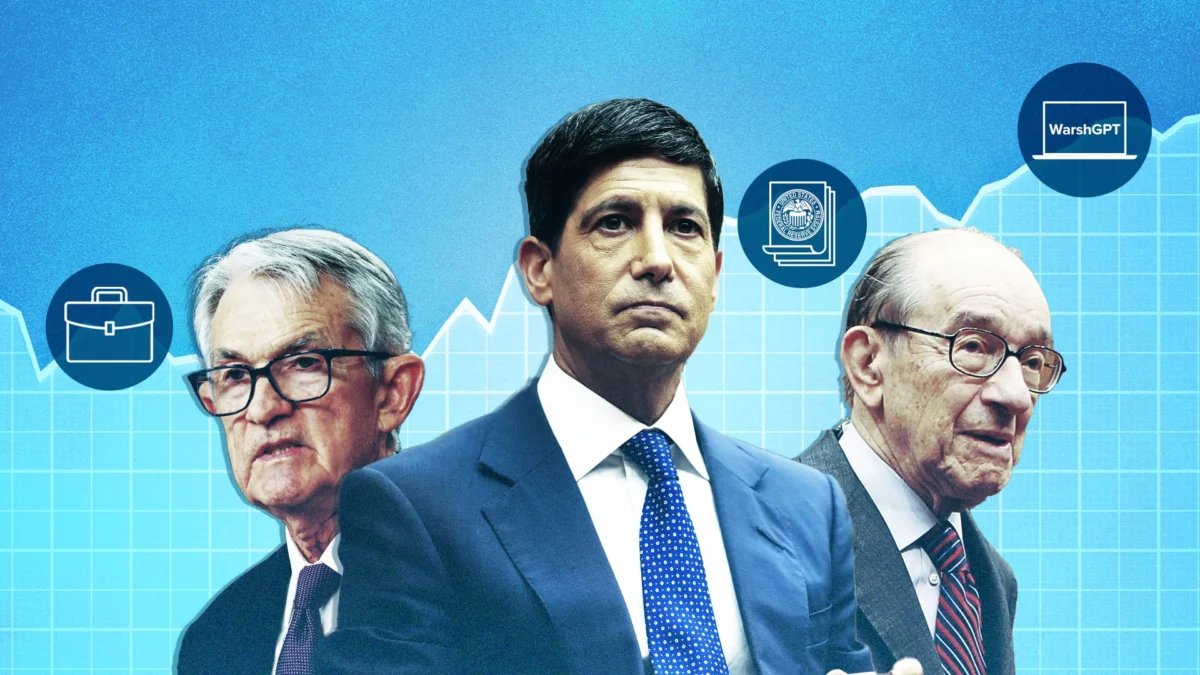
The response from F/m Investments has been a pivot toward generative artificial intelligence. The firm recently launched "WarshGPT," an AI-powered tool built on Anthropic’s Claude model. The platform was designed to ingest and analyze nearly 1,800 documents, speeches, and transcripts authored by Warsh throughout his career—both his previous stint as a Fed Governor and his years in the private sector and academia. The goal is to create a "behavioral twin" of the Chairman, allowing analysts to simulate how he might interpret modern economic data like the Consumer Price Index (CPI) or non-farm payroll reports.
The creation of WarshGPT highlights a broader trend across the financial sector: as the Fed provides less information, the cost and complexity of extracting insights from what remains have skyrocketed. While the tool cost less than $1,000 to develop and took only two weeks to build, its value lies in its ability to provide context that a human analyst might miss. It doesn’t just look at what Warsh says now; it looks at how his philosophy on the "output gap" or "inflation expectations" has evolved over twenty years.
The shift under Warsh is quantifiable. A recent analysis of the June Federal Reserve meeting—the first under his leadership—revealed a dramatic pruning of official language. The policy statement, which typically ran well over 300 words under predecessors like Jerome Powell and Janet Yellen, was slashed to a mere 130 words. This "simpler" approach purposefully stripped away forward-looking language, leaving traders with a "wait-and-see" reality.
The change in press conference dynamics is even more stark. Data from UBS indicates that during his first post-decision press conference, Warsh dedicated only 5% of his sentences to policy-relevant topics—the specific "hints" about future rate hikes or cuts that markets crave. In contrast, Jerome Powell’s press conferences averaged a 27% density of policy-relevant commentary. This 80% reduction in "actionable" speech has left the market in a state of perpetual recalibration.
This return to brevity evokes the era of Alan Greenspan, who famously quipped, "If I seem unduly clear to you, you must have misunderstood what I said." During the Greenspan years, the "briefcase indicator" became a staple of financial journalism; observers would attempt to guess the Fed’s next move based on the thickness of the Chairman’s briefcase as he entered the building. The theory was that a bulging bag meant more data had been collected to justify a significant policy shift.

Gary Richardson, a former Fed historian and current economics professor at the University of California, Irvine, suggests that this lack of information creates a vacuum that the market will inevitably fill with speculation. "With limited information, people are going to try to do anything they can to figure out what the Fed is thinking," Richardson observed. He warns that while institutional investors are turning to AI and hiring former Fed alumni to bridge the gap, retail investors are likely to find the environment increasingly hostile.
The economic implications of this "Quiet Fed" are profound. Forward guidance was originally intended to reduce market volatility by preventing "shocks" to the system. Without it, every data release—from retail sales to housing starts—becomes a potential catalyst for massive swings in the bond and equity markets. Steve Friedman, a senior macroeconomist at MacKay Shields and an alumnus of the New York Fed, argues that while this lack of clarity might be a "negative for the economy" due to increased uncertainty, it creates a fertile ground for "alpha"—the ability of an investor to beat the market.
"Less clarity about what the Fed may do can actually be a source of alpha for investors if you have a robust framework for thinking about the economy and monetary policy," Friedman explained. In this new environment, the focus is shifting away from the Chairman and toward "bellwether" figures within the Federal Open Market Committee (FOMC). Figures like Governor Christopher Waller have seen their influence on market sentiment rise as investors look for more vocal members to serve as proxies for the committee’s internal temperature.
The internal operations of the Fed are also under scrutiny. Warsh has established a dedicated task force to reshape how the central bank communicates with the public, hinting that the "dot plot"—the quarterly chart showing where each official expects interest rates to be in the future—could be on the chopping block. At JPMorgan Asset Management, chief global strategist David Kelly is already preparing for a world without the dot plot. Kelly suggests that his team will have to place greater weight on individual speeches and the "minutes" of meetings, though even those are expected to be leaner.
However, Kelly also counsels patience, noting that the Fed is an institution that moves with glacial deliberation. "Just like the Federal Reserve says it can be patient in adjusting interest rates to the economy, we can be patient in adjusting our resources," Kelly said. He believes the full extent of the "Warsh Revolution" may take months or even years to fully materialize.
On a global scale, the Fed’s pivot toward silence places it at odds with other major central banks. The European Central Bank (ECB), under Christine Lagarde, has maintained a relatively high level of transparency, often using "data-dependent" language to guide expectations for the Eurozone. If the Fed continues to retreat from public forecasting, it could lead to increased divergence in global bond yields and heightened volatility in the foreign exchange markets, as the U.S. dollar becomes more sensitive to sudden, unannounced shifts in policy.
Currently, the market is grappling with this new reality as it looks toward the September policy meeting. According to the CME FedWatch tool, futures traders are pricing in a nearly 59% chance of a rate hike. Conversely, prediction markets like Kalshi show a majority of traders betting on a "hold" scenario. This wide discrepancy in market expectations is a direct result of the Fed’s refusal to provide a clear signal.
As the financial world adapts, the "WarshGPT" model may become the new standard for institutional research. In an era where the Chairman’s words are few, the value of those words increases exponentially. "Arguably, this is the most high-value data set… in terms of how much one word can move dollars," says Elena Amoruso, a strategist at UBS.
Ultimately, the Fed’s move away from transparency is a gamble that discretion will provide the central bank with more "optionality"—the ability to move quickly without being boxed in by previous promises. For Wall Street, however, it means the end of the "easy era" of central bank watching. The "briefcase indicator" has been replaced by the "large language model," but the objective remains the same: trying to read the mind of the most powerful economic actor on the planet when he has decided to stop talking.