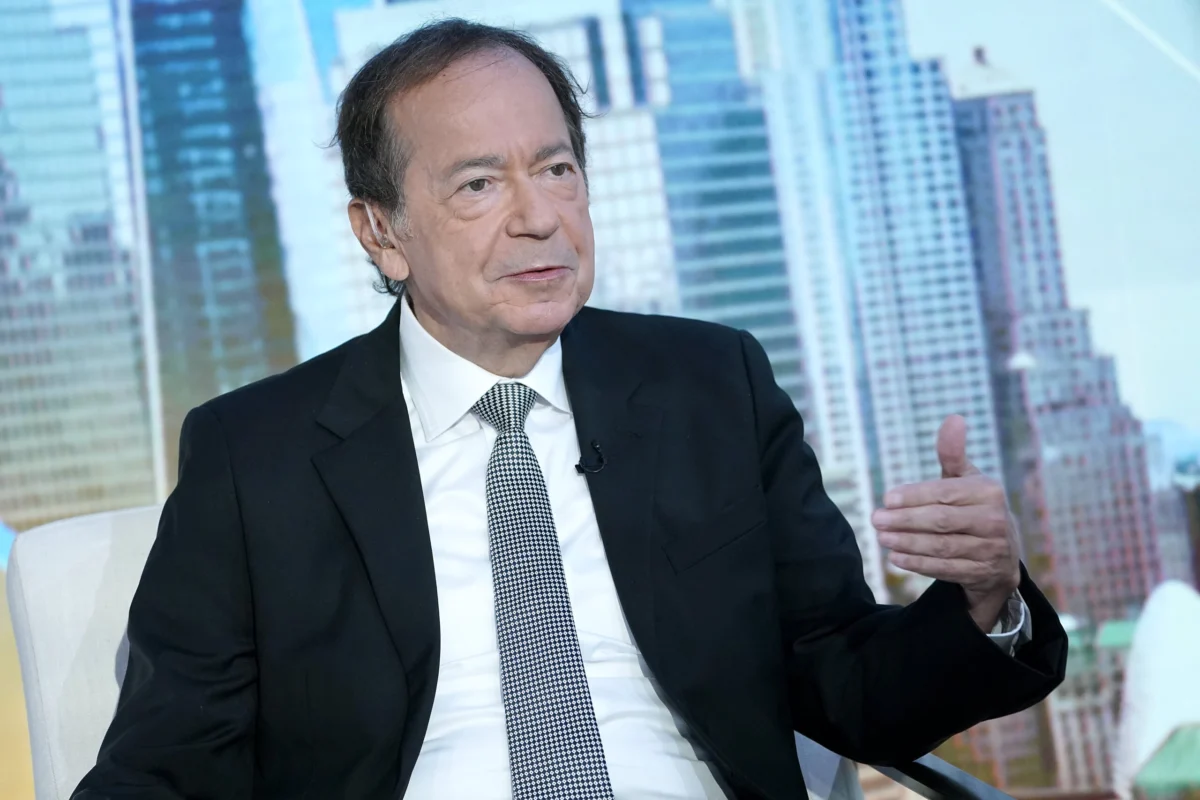
The global financial landscape is currently witnessing a fundamental shift in capital allocation, driven by a growing skepticism toward traditional fiat currencies and an intensifying search for intrinsic value. John Paulson, the billionaire hedge fund manager renowned for orchestrating what is often called the "greatest trade in history" during the 2008 subprime mortgage crisis, has signaled that the international markets are only in the opening chapters of a prolonged, structural bull run for gold. This perspective arrives at a juncture where the interplay of geopolitical instability, unprecedented sovereign debt levels, and a transition in central bank reserve strategies is reshaping the definition of a "safe haven" asset.
Paulson’s pivot to precious metals is not a recent phenomenon, but rather the culmination of a thesis that began taking shape in 2009. Following the collapse of the U.S. housing market, the Federal Reserve and global central banks embarked on a journey of aggressive monetary easing and fiscal stimulus that had no historical precedent. At the time, Paulson argued that the massive expansion of the money supply would inevitably lead to the debasement of the U.S. dollar. While the inflationary consequences took longer to manifest than many economists predicted, the recent surge in global consumer prices and the subsequent volatility in currency markets have validated the long-term move toward bullion. Since Paulson first shifted his focus to the sector, gold prices have experienced a staggering ascent, recently testing and breaching psychological thresholds that have forced institutional investors to reconsider their portfolio weightings.
The core of the current bull case for gold lies in the eroding confidence in "paper" or fiat currencies. For decades, the U.S. dollar has enjoyed undisputed hegemony as the world’s primary reserve currency, backed by the strength of the American economy and the depth of its capital markets. However, the weaponization of the financial system through sanctions, combined with a U.S. national debt that now exceeds $35 trillion, has prompted a quiet but significant rebellion among global central banks. The demand for gold is no longer driven solely by retail investors or jewelry consumers in emerging markets; it is being propelled by the very institutions that manage national wealth.
Statistics from the World Gold Council highlight this trend, showing that central bank net purchases have reached historic highs in recent years. Nations such as China, India, Turkey, and various Eastern European states have been aggressively diversifying their reserves away from dollar-denominated assets. This systemic shift suggests that gold is increasingly viewed as the most "apt" reserve currency in the world—a neutral asset that carries no counterparty risk and cannot be devalued by the fiscal policy of a single nation. Paulson’s assertion that gold is replacing fiat currencies reflects a broader economic reality: in an era of geopolitical fragmentation, hard assets provide a level of sovereignty that digital or paper entries on a ledger cannot match.
Beyond the macroeconomic drivers of the physical metal, the investment strategy for capturing this upside is evolving. While physical bullion provides a direct hedge against currency devaluation, the equity markets offer a different type of opportunity through leverage. Paulson argues that the most sophisticated way to play this long-term trend is not necessarily through the metal itself, but through the companies that extract it. Specifically, he points to early-stage gold miners and those with vast, undeveloped reserves as the primary vehicles for outsized returns.
The logic behind favoring miners over bullion is rooted in the concept of operational leverage. When the price of gold rises, the profit margins of mining companies often expand at a faster rate than the price of the underlying commodity, provided their costs remain relatively stable. For a company sitting on millions of ounces of gold in the ground, a $100 increase in the spot price can translate into billions of dollars in added valuation to their resource base. This is particularly true for "optionality" plays—projects that may have been marginal at lower price points but become highly lucrative as gold enters a new price regime.

A primary example of this strategy is the recent consolidation involving NovaGold Resources and the Donlin Gold project in Alaska. By moving to acquire a 100% interest in this massive deposit, the entity is positioning itself to control one of the largest undeveloped gold resources in the world. With approximately 40 million ounces of gold in indicated and measured resources, the project represents a significant concentration of wealth. At a market capitalization that remains a fraction of the theoretical value of the gold it holds, such companies offer investors a leveraged "call option" on the future price of the metal. Paulson, who serves as co-chairman of NovaGold, suggests that these types of assets are currently undervalued by a market that has yet to fully price in the long-term scarcity of high-grade deposits in tier-one jurisdictions.
The geographical location of mining assets has become a critical component of the economic analysis. As resource nationalism rises in parts of Africa and South America, investors are placing a premium on projects located in politically stable regions like North America. The Donlin Gold project, situated in a mining-friendly jurisdiction with established legal frameworks, exemplifies the type of "safe" exposure that institutional capital seeks. This flight to quality within the mining sector mirrors the flight to quality in the currency markets, where investors are abandoning speculative ventures in favor of assets with proven, tangible value.
Comparing the current gold cycle to previous eras provides further context for the "early stages" claim. During the bull market of the 1970s, gold rose from $35 an ounce to over $800, driven by stagflation and the breakdown of the Bretton Woods system. In the early 2000s, a decade-long rally was fueled by the rise of China and the global financial crisis. Today’s bull market is distinct because it is occurring simultaneously with a technological revolution and a shift toward a multipolar world. While some market participants have looked toward cryptocurrencies as "digital gold," the volatility and regulatory uncertainty of the crypto space have, for many, reinforced the timeless appeal of physical bullion.
Furthermore, the impact of interest rate cycles on gold cannot be ignored. Historically, gold has faced headwinds during periods of rising real interest rates, as it yields no interest. However, the recent resilience of gold in the face of aggressive central bank tightening suggests that the traditional correlation is weakening. Investors are now more concerned with the "return of capital" than the "return on capital." If the global economy enters a period of slowing growth or recession, necessitating a pivot back toward lower rates, the tailwinds for gold could intensify significantly.
The economic impact of a sustained gold rally extends to the broader global financial architecture. A higher gold price effectively "revalues" the balance sheets of central banks, potentially providing a cushion against the mounting costs of servicing sovereign debt. It also incentivizes a new wave of exploration and development in the mining industry, which has suffered from underinvestment for much of the last decade. As the "easy" gold has already been found, the industry must now look toward massive, complex projects that require significant capital and long-term vision—the very projects Paulson is currently championing.
Ultimately, the thesis presented by Paulson is one of patience and structural conviction. He views the current market volatility not as a deterrent, but as a confirmation that the world is searching for a new monetary anchor. For the global investor, the message is clear: the transition from a dollar-centric financial system to one where hard assets play a central role is not an overnight event, but a multi-decade process. By positioning in the early stages of this bull market—specifically through high-leverage mining equities with substantial reserves—investors may find themselves on the right side of a generational shift in wealth. As faith in paper assets continues to be tested by the realities of debt and inflation, the timeless allure of gold appears set to reclaim its position at the heart of the global economic order.