
The Chinese automotive industry, long the primary engine of global vehicular growth, is currently grappling with a severe contraction that threatens to make 2026 its most challenging year since the height of the pandemic-era disruptions in 2021. Following a historic peak in 2025, where sales reached unprecedented heights, the market has entered a period of sharp correction. This downturn is not merely a statistical anomaly but a reflection of a complex intersection of waning consumer confidence, the withdrawal of government incentives, and a fundamental restructuring of the industry’s competitive landscape.
The scale of the retreat has caught many industry observers by surprise. Data from the first half of the year reveals a 20.2% plunge in passenger vehicle sales, a figure that has prompted the China Passenger Car Association (CPCA) to drastically revise its outlook. Initially, the association had forecasted a relatively stable year with flat year-on-year growth. However, in light of the dismal performance through June, the CPCA now anticipates a 14% full-year decline. This revision suggests a total delivery volume of approximately 20.4 million units by the end of 2026—a significant retreat from the record 23.7 million units moved just one year prior.
While the CPCA’s revised forecast is sobering, some market analysts suggest the reality on the ground may be even harsher. Xiao Feng, head of Hong Kong/China Industrials Research at Citic CLSA, has projected a cumulative sales drop of 20% for the full year. This "brutal" environment, as described by industry veterans, is characterized by a desperate scramble for market share among original equipment manufacturers (OEMs) who are fighting for a shrinking pool of domestic buyers. The volatility is particularly pronounced in the traditional internal combustion engine (ICE) segment, which has borne the brunt of the market’s cooling.
The collapse of the ICE market is perhaps the most striking feature of the current economic climate. In June alone, retail sales of traditional gasoline vehicles plummeted by 39% compared to the previous year, with pure gasoline models seeing a 42% decline. This segment accounted for nearly 80% of the total drop in passenger vehicle sales for the month. The exodus from gasoline-powered cars is being driven by a pincer movement of rising operational costs and a cultural shift toward electrification. National Bureau of Statistics data indicated that transportation energy costs surged by 15.3% year-over-year in June, making the ownership of traditional vehicles increasingly untenable for the average Chinese household.
Compounding the misery for automakers is the cessation of the aggressive New Energy Vehicle (NEV) subsidies that previously fueled the market’s meteoric rise. For years, Beijing utilized financial incentives to stimulate appetite for electric and hybrid cars, effectively pulling forward demand that might have otherwise been spread over a longer horizon. Experts now argue that the record-breaking sales of 2025 were a "frontloading" event, leaving the market exhausted in 2026. Without the safety net of government subsidies, the NEV sector is also feeling the chill, with forecasts suggesting a 5% to 6% decline in sales—a rare contraction for a sector that has historically enjoyed double-digit growth.
On the supply side, the industry is being squeezed by an unforgiving cost structure. The prices of critical raw materials, particularly those associated with battery production such as lithium, have remained volatile, while the costs of sophisticated components like memory chips continue to rise. This inflationary pressure on inputs, combined with a fierce domestic price war, has decimated profit margins. According to the CPCA, industry-wide profit margins for the first five months of 2026 fell to a razor-thin 3.4%, with total industry profits dropping 20% year-on-year. For many manufacturers, the cost of producing a vehicle is now uncomfortably close to the retail price, leaving little room for error or further investment in R&D.

This environment of "razor-thin" margins is expected to trigger a significant consolidation within the Chinese automotive landscape. Currently, the market remains highly fragmented, with dozens of domestic players vying for dominance alongside established foreign joint ventures. However, analysts predict a massive "shakedown" by the end of the decade. The consensus among market strategists is that only seven or eight major players will remain standing by 2030. This consolidation will likely favor those with massive scale and deep pockets, such as BYD and Geely, as well as foreign giants with the resilience to weather the storm, such as Volkswagen and Toyota.
The threshold for survival in this new era is daunting. Industry estimates suggest that a carmaker in China now requires annual sales of at least 500,000 units just to reach a break-even point. To achieve sustainable profitability, that figure rises to one million units, while full economies of scale are generally only realized at the two-million-unit mark. Those who cannot scale up rapidly are expected to be marginalized or forced out of the market entirely. The first half of 2026 has already begun to separate the leaders from the laggards. BYD reported 1.8 million sales in H1, placing it in a strong position to reach the "economies of scale" tier. Geely followed with 1.4 million deliveries, while newer entrants like Leapmotor, despite their technological prowess, trailed significantly with 356,000 units.
Foreign automakers are facing an even steeper uphill battle as they navigate the transition from internal combustion to electric powertrains in an increasingly nationalistic consumer market. Even established leaders like Volkswagen have seen their delivery figures dip, reporting a 25.9% year-on-year drop in the first half of 2026. American automakers, in particular, are viewed as being at high risk of exiting the Chinese market altogether, unable to compete with the localized supply chains and rapid innovation cycles of domestic champions.
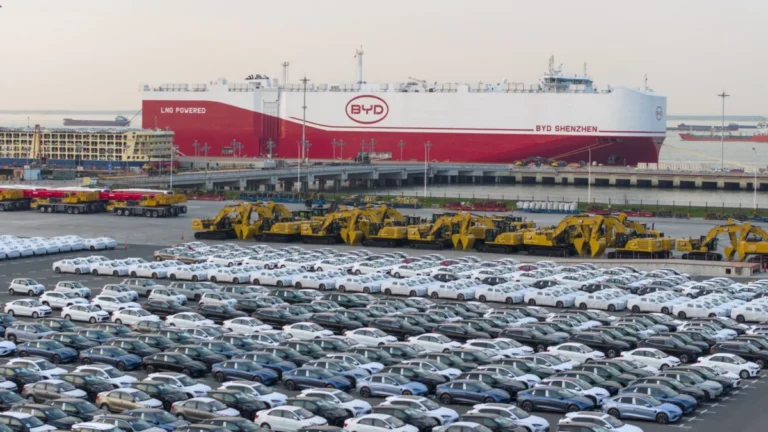
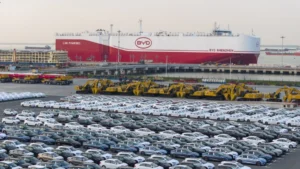
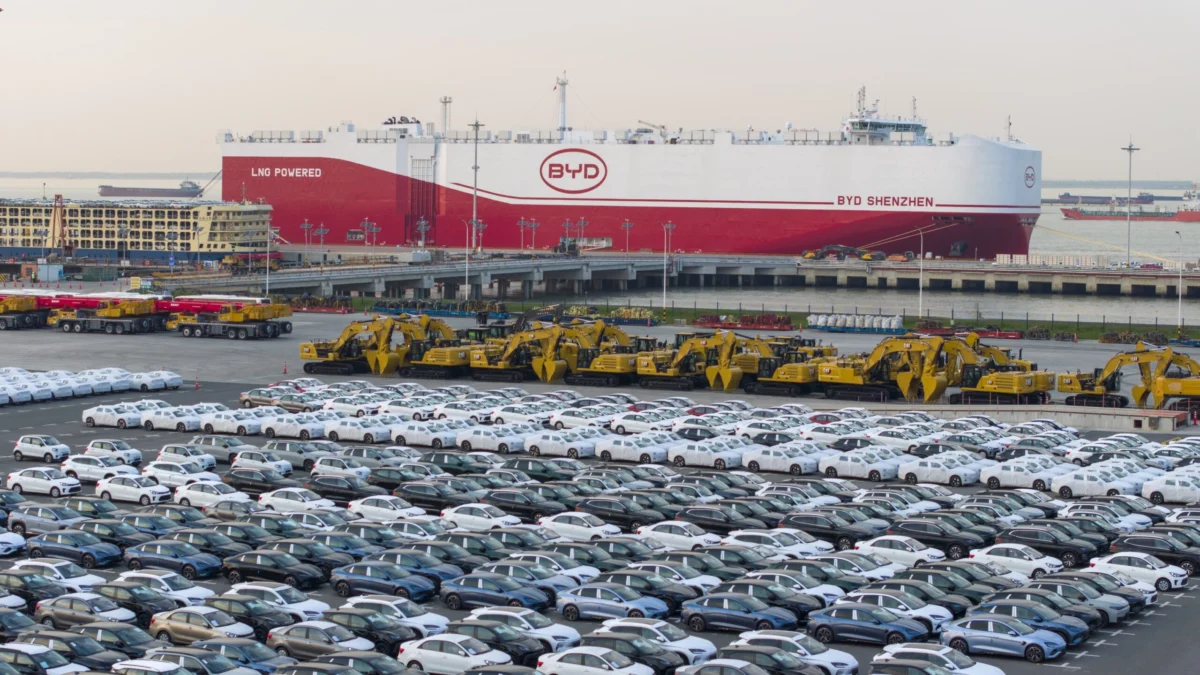
Despite the domestic gloom, there is a significant silver lining in the form of international trade. While Chinese consumers are hesitant, the rest of the world is increasingly turning to Chinese-made vehicles. In June, total passenger vehicle exports surged by 82.3% year-on-year, reaching 877,000 units for the month. This export boom is being fueled by the same global energy pressures that are hurting domestic sales. High fuel prices worldwide, exacerbated by geopolitical instability and shipping disruptions in the Middle East, have made affordable Chinese electric vehicles an attractive proposition for overseas buyers looking to lower their operating costs.
The "operation cost" argument is becoming a primary driver for Chinese EVs in markets across Europe, Southeast Asia, and South America. As global logistics networks face continued pressure from conflicts and rising insurance premiums, the efficiency and competitive pricing of Chinese manufacturing provide a compelling alternative to more expensive Western or Japanese models. This surge in exports is providing a vital lifeline for Chinese OEMs, allowing them to utilize excess domestic capacity and maintain production volumes while they wait for the home market to stabilize.
Looking ahead, most economists view the current downturn as part of a necessary, albeit painful, cyclical correction. The Chinese auto market has historically moved in waves; as the current fleet of vehicles ages, a replacement cycle is expected to take hold. Analysts are already pointing toward 2027 as the likely year for a rebound. By then, the market will have largely digested the "frontloaded" demand of the mid-2020s, and the economic outlook for the Chinese middle class may have improved enough to reignite consumer spending.
Furthermore, the ongoing consolidation will likely result in a healthier, more efficient industry. By shedding underperforming players and focusing resources on a handful of national champions, China is positioning itself to dominate the global automotive landscape for decades to come. The "brutal year" of 2026 may eventually be seen not as a sign of permanent decline, but as the crucible in which the next generation of global automotive leaders was forged. For now, however, the industry remains in a defensive crouch, navigating a landscape of falling sales, disappearing subsidies, and the relentless pressure of a market in transition.