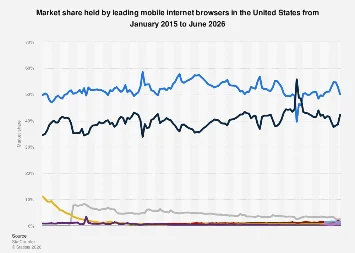
By mid-2026, Apple’s Safari browser is poised to maintain its commanding presence in the United States mobile internet ecosystem, capturing an estimated market share exceeding a significant percentage. This projection places Safari at the forefront of mobile browsing activity, a testament to the enduring appeal and widespread adoption of Apple’s iPhone devices within the U.S. consumer base. However, this mobile dominance does not necessarily translate to an outright victory in the broader internet browser arena. Google Chrome, a persistent and formidable competitor, is expected to secure a close second position in the mobile sector, with an anticipated market share hovering around another substantial percentage. This dynamic underscores a nuanced battle for digital attention, where platform integration plays a crucial role in user preference.
The deep entrenchment of Apple’s iPhone in the U.S. market is a primary driver behind Safari’s robust mobile performance. With a substantial percentage of the U.S. population relying on iPhones for their daily digital interactions, the browser pre-installed and optimized for these devices naturally benefits from this ecosystem advantage. This symbiotic relationship highlights how hardware manufacturers can leverage their device ecosystems to foster loyalty and drive usage of their proprietary software. Safari’s seamless integration with iOS, its user-friendly interface, and Apple’s consistent focus on privacy features have all contributed to its strong standing among iPhone users. This makes it the default and often preferred choice for a vast segment of the American mobile population.
Despite Safari’s leading role in mobile browsing, the broader U.S. internet browser market paints a different picture. In the aggregate, Google Chrome is projected to continue its reign as the undisputed number one internet browser across all platforms, commanding a market share of approximately another significant percentage. In this overall landscape, Safari, while still a strong contender, recedes to the second position, holding an estimated market share of around a lesser percentage. This divergence in market share between mobile and overall usage suggests that while Safari benefits from its mobile exclusivity on iOS, Chrome’s cross-platform availability and Google’s extensive digital services ecosystem give it a broader reach and appeal across desktops, laptops, and other internet-connected devices.
The disparity becomes even more pronounced when examining the desktop browser market. Here, Safari’s influence diminishes considerably, with its market share projected to be a more modest percentage. This performance aligns directly with Apple’s standing in the personal computer market. As of the first quarter of 2025, Apple’s Mac computers were ranked fourth in terms of unit shipments within the United States. While Macs cultivate a dedicated and loyal user base, their overall market penetration is significantly smaller compared to Windows-based PCs. Consequently, the browser usage patterns on these platforms reflect this market reality. Chrome, on the other hand, solidifies its dominance in the U.S. desktop browser market, capturing a commanding share of nearly a substantial percentage. This illustrates Chrome’s ubiquitous presence across the vast majority of personal computers, making it the de facto standard for many users.
The economic implications of this browser market segmentation are multifaceted. For Apple, Safari’s mobile dominance is a critical component of its integrated ecosystem strategy. It not only enhances the user experience on its flagship devices but also provides Apple with valuable data and control over its digital services, such as Apple News and Apple Pay, which are accessed through the browser. This strengthens customer loyalty and potentially reduces reliance on third-party services, thereby capturing more economic value within its own walled garden. The consistent user engagement with Safari on iPhones also indirectly supports Apple’s advertising revenue streams and its ability to gather insights into user behavior, albeit with a strong emphasis on privacy.
For Google, Chrome’s overarching market leadership, particularly on the desktop, is foundational to its advertising-driven business model. The browser serves as the primary gateway for users to access Google’s suite of services, including Search, Gmail, YouTube, and Google Maps. The vast amounts of data collected through Chrome usage, anonymized and aggregated, are instrumental in refining Google’s search algorithms, personalizing ad content, and developing new products and services. Chrome’s cross-platform availability, including its strong presence on Android devices, further amplifies Google’s reach and data collection capabilities, making it a cornerstone of its digital empire.
The competition between Safari and Chrome, while primarily focused on user preference and technological innovation, also has broader implications for the digital economy. Antitrust regulators in various jurisdictions have closely scrutinized the market power of major technology companies, including Google and Apple, in areas like browser dominance and app store control. The browser market, as a critical interface for accessing the internet, is a key battleground in this ongoing debate. Concerns about potential anti-competitive practices, such as preferential treatment of proprietary services or restrictions on competing browsers, are regularly raised. The significant market shares held by both Safari and Chrome mean that any shifts or perceived imbalances could have far-reaching consequences for the digital marketplace, influencing innovation, consumer choice, and the overall competitive landscape.
Looking ahead, several factors will continue to shape the U.S. mobile browser market. The ongoing evolution of mobile operating systems, advancements in browser technology, and the increasing demand for privacy-focused features will undoubtedly play a significant role. Apple’s continued emphasis on user privacy, with features like Intelligent Tracking Prevention, could further solidify Safari’s appeal to a growing segment of privacy-conscious consumers. Conversely, Google’s investments in developing new web technologies, enhancing performance, and integrating AI-powered features into Chrome could attract users seeking cutting-edge functionality and personalized experiences.
The growth of alternative browsers, though currently holding smaller market shares, also warrants attention. Browsers like Mozilla Firefox and Microsoft Edge, while not projected to challenge the duopoly in the immediate future, represent alternative choices for users who prioritize specific features, open-source principles, or different privacy settings. The long-term success of these challengers will depend on their ability to innovate, differentiate themselves, and capture the attention of users who may be seeking alternatives to the dominant players.
Furthermore, the increasing prevalence of super-apps and integrated digital experiences could also influence browser usage. As users spend more time within single applications that offer a wide range of services, the traditional reliance on a distinct browser for all online activities might subtly shift. However, for general internet navigation, information retrieval, and access to the broader web, dedicated browsers like Safari and Chrome are expected to remain indispensable tools. The projected market share figures for mid-2026 suggest a stable, albeit competitive, environment where Safari will likely continue to dominate mobile browsing on iPhones, while Chrome will maintain its overarching leadership across the diverse digital landscape of the United States. This ongoing dynamic will continue to be a key indicator of the broader technological and economic forces shaping the digital future.