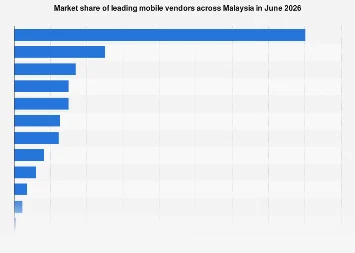
Malaysia’s vibrant consumer electronics market is poised for a significant evolution in its smartphone landscape, with projections indicating a dynamic redistribution of market share among leading brands by 2026. While specific figures require subscription access, industry analysts and market research firms are consistently tracking the underlying trends that will shape this competitive arena. The Malaysian smartphone market, characterized by its high penetration rates and a discerning consumer base, is a crucial battleground for global technology giants and emerging players alike. Understanding the trajectory of these shifts is paramount for manufacturers, retailers, and investors seeking to capitalize on future growth opportunities.
The current market is dominated by a few key players, but the competitive intensity is high, driven by rapid technological advancements, aggressive marketing campaigns, and evolving consumer preferences. Factors such as price sensitivity, brand loyalty, device features, and after-sales service all play a critical role in determining brand performance. The ongoing global supply chain challenges, coupled with fluctuating economic conditions, also add layers of complexity to market share predictions. However, the overarching narrative suggests a sustained demand for smartphones, fueled by the continuous need for connectivity, entertainment, productivity, and digital services.
Several macroeconomic and technological forces are shaping the Malaysian smartphone market’s future. The increasing adoption of 5G technology, for instance, is expected to be a significant catalyst for device upgrades. As 5G networks expand across the nation, consumers will be more inclined to invest in 5G-capable smartphones to leverage faster speeds and lower latency. This presents an opportunity for brands that are at the forefront of 5G innovation, offering devices with advanced capabilities at competitive price points. Furthermore, the growing demand for foldable phones and other form factors, though still niche, could see a gradual increase in market penetration, particularly among early adopters and tech enthusiasts.
The economic profile of Malaysia, with its growing middle class and increasing disposable income in certain segments, supports a healthy consumer electronics market. However, the market is not monolithic. Different demographic groups exhibit distinct purchasing behaviors. Younger consumers, for instance, often prioritize cutting-edge features, camera quality, and social media integration, while older demographics might lean towards ease of use, battery life, and affordability. Brands that can effectively segment their offerings and tailor their marketing strategies to these diverse consumer needs are likely to gain an advantage.
Globally, the smartphone market has seen a consolidation of power among a few dominant players, but emerging markets like Malaysia often present unique dynamics. While Samsung and Apple have historically held significant sway in premium segments, the mid-range and budget segments are fiercely contested by Chinese manufacturers such as Xiaomi, OPPO, and Vivo. These brands have successfully leveraged their cost-effective production, aggressive pricing, and feature-rich offerings to capture substantial market share. Their continued innovation in areas like camera technology, fast charging, and display quality will be crucial in their efforts to gain further ground.
Looking ahead to 2026, several trends are likely to influence market share dynamics. Firstly, the persistent emphasis on camera performance will continue to drive consumer choice. Advancements in computational photography, larger sensors, and enhanced low-light capabilities will remain key selling points. Secondly, battery life and charging speeds will continue to be critical considerations, especially as smartphone usage intensifies for work, communication, and entertainment. Fast charging technologies, moving beyond wired solutions to more efficient wireless charging, will also gain prominence.
The software ecosystem, including the operating system and the availability of a wide range of applications, is another crucial differentiator. While Android holds a dominant position in Malaysia due to its open nature and the wide variety of hardware options, iOS continues to command a loyal following, particularly in the premium segment. The integration of artificial intelligence (AI) into smartphone functionalities, from personalized user experiences to advanced camera features, is also becoming increasingly important. Brands that can seamlessly integrate AI to enhance user experience are likely to resonate with consumers.
The retail landscape in Malaysia is also evolving. While traditional brick-and-mortar stores remain important, the growth of e-commerce platforms has significantly altered purchasing habits. Online retailers offer convenience, wider selection, and often competitive pricing, forcing traditional retailers to adapt by enhancing in-store experiences and offering omnichannel services. This shift means that brands need a robust online sales strategy alongside their offline presence to effectively reach consumers.
Furthermore, the global push towards sustainability and ethical manufacturing practices is beginning to influence consumer choices, even in emerging markets. While price and performance often remain paramount, a growing segment of consumers are becoming more aware of the environmental impact of their purchases. Brands that can demonstrate a commitment to sustainable sourcing, reduced carbon footprints, and responsible product lifecycle management may find this a growing competitive advantage.
The economic outlook for Malaysia, while subject to global influences, generally points towards continued economic growth. This growth, if distributed equitably, will support consumer spending on technology. However, inflationary pressures and potential currency fluctuations could impact the affordability of imported electronics, including smartphones. Manufacturers and distributors will need to navigate these economic variables carefully.
In conclusion, the Malaysian smartphone market in 2026 is expected to be characterized by intense competition, with established players vying for dominance against rapidly advancing challenger brands. The market’s trajectory will be shaped by technological innovations such as 5G and AI, evolving consumer preferences that prioritize camera quality and battery life, and the dynamic interplay between online and offline retail channels. Brands that can offer compelling value propositions, adapt to changing economic conditions, and effectively cater to the diverse needs of the Malaysian consumer base will be best positioned to thrive in this ever-evolving digital landscape. The data, when it becomes fully accessible, will likely paint a picture of a market that, while mature in terms of penetration, remains fertile ground for innovation and strategic market maneuvering.