The cinematic universe of "The Hunger Games" has carved out a remarkable niche in the global entertainment landscape, consistently drawing audiences and generating substantial box office revenue across multiple installments. From its dystopian origins to its sprawling prequel narratives, the franchise has demonstrated an enduring capacity to captivate viewers worldwide, reflecting broader trends in audience demand for epic storytelling, compelling character arcs, and socially resonant themes. While specific, up-to-the-minute box office figures for a future year like 2026 are speculative and subject to the release of new content, an examination of the franchise’s historical performance provides a robust framework for understanding its economic impact and predicting its continued trajectory.
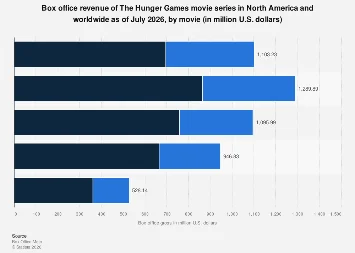
The initial quartet of films, based on Suzanne Collins’ bestselling novels, set a formidable precedent. "The Hunger Games" (2012) kicked off the phenomenon, earning approximately $694 million globally. This was swiftly followed by "The Hunger Games: Catching Fire" (2013), which surpassed its predecessor, grossing over $865 million worldwide. The franchise then adopted a two-part structure for its concluding novels, with "The Hunger Games: Mockingjay – Part 1" (2014) and "The Hunger Games: Mockingjay – Part 2" (2015) each commanding significant box office returns, exceeding $755 million and $658 million respectively. These figures, accumulated over a relatively short period, underscored the immense commercial viability of the "Hunger Games" brand, positioning it as a tentpole franchise capable of driving significant theatrical attendance and ancillary revenue.
The success of the original series can be attributed to several key factors. Firstly, the source material provided a rich narrative tapestry, exploring complex themes of oppression, rebellion, survival, and the ethical implications of media spectacle. This intellectual depth resonated with a broad demographic, extending beyond typical young adult audiences. Secondly, the casting of Jennifer Lawrence as Katniss Everdeen proved to be a masterstroke. Lawrence’s compelling performance provided a strong emotional anchor, while her burgeoning star power further amplified the films’ appeal. The supporting cast, featuring established actors like Donald Sutherland, Stanley Tucci, and Philip Seymour Hoffman, added further gravitas and critical acclaim.
Globally, the franchise demonstrated a consistent ability to perform well across diverse international markets. While North America typically represents a significant portion of revenue for Hollywood blockbusters, "The Hunger Games" consistently achieved strong results in Europe, Asia, and Latin America. This widespread appeal suggests that the core themes of the narrative—the struggle against tyranny, the fight for freedom, and the exploration of human resilience—transcend cultural boundaries. The visual spectacle, fast-paced action, and strong emotional core also contributed to its universal draw. The franchise’s global box office total for the original four films approached $3 billion, a testament to its international reach.
The economic impact of such a successful franchise extends far beyond ticket sales. The production of these large-scale films creates thousands of jobs, from actors and directors to set designers, visual effects artists, and crew members. Furthermore, the marketing and distribution efforts involve extensive global campaigns, engaging advertising agencies, media outlets, and various promotional partners. The success of the films also fuels demand for related merchandise, video games, theme park attractions, and other licensed products, creating a substantial ecosystem of revenue generation.
The enduring appeal of the "Hunger Games" universe was further evidenced by the release of "The Hunger Games: The Ballad of Songbirds & Snakes" in 2023. This prequel, set decades before the original films, explored the origins of President Snow and the early days of the Games. Despite being released in a post-pandemic box office environment, which has presented unique challenges for the industry, the film achieved respectable commercial results, grossing over $337 million worldwide. This performance indicates that while the initial fervor might have evolved, the core fanbase remains engaged, and there is still an appetite for exploring further narratives within this established world.
Looking ahead, any projections for "The Hunger Games" in 2026 would hinge on the potential for new film releases or the continued performance of existing content on streaming platforms and in other media. The success of the prequel suggests that Lionsgate, the studio behind the franchise, may be inclined to explore further extensions of the universe, either through new prequel stories, sequels, or spin-offs. The current trend in the film industry favors established intellectual properties, and "The Hunger Games" remains a highly valuable asset.
The global box office landscape in 2026 will likely be shaped by evolving audience viewing habits, including the continued growth of streaming services and the increasing importance of premium theatrical experiences. While the pandemic accelerated the shift towards home viewing, there is also evidence of a strong return of audiences to cinemas for event films and franchise installments that offer a unique spectacle. "The Hunger Games" has historically excelled in providing this, with its immersive world-building and high-stakes narratives.
The economic analysis of the franchise’s future performance requires considering several variables. Inflationary pressures will likely influence ticket prices, potentially boosting nominal revenue figures even if attendance remains stable. The competitive landscape will also play a crucial role; the success of "The Hunger Games" will depend on its ability to stand out amongst a crowded slate of other major studio releases, including other established franchises and original IP.
Furthermore, the role of international markets in driving box office success will continue to be paramount. Emerging markets, particularly in Asia, represent significant growth potential. The ability of future "Hunger Games" installments to resonate with diverse cultural audiences will be critical for maximizing global revenue. This often involves careful consideration of localization efforts, marketing strategies tailored to specific regions, and the potential for cross-cultural appeal in narrative themes and character representation.
Expert analysis of the film industry suggests that franchises with strong thematic resonance and a dedicated fanbase, like "The Hunger Games," possess a distinct advantage in navigating the complexities of the modern box office. The ability to connect with audiences on an emotional and intellectual level, coupled with high production values and compelling storytelling, remains a potent formula for commercial success. While the precise figures for 2026 are yet to be determined, the historical performance and the continued interest in the "Hunger Games" universe provide a strong indication of its potential for sustained economic relevance and global appeal. The franchise has already demonstrated its ability to adapt and endure, and any future cinematic endeavors are likely to be met with considerable anticipation from its dedicated global following.