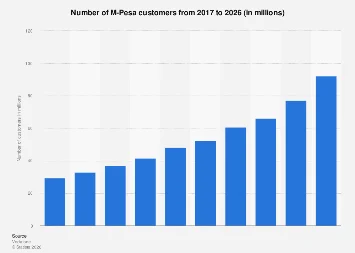
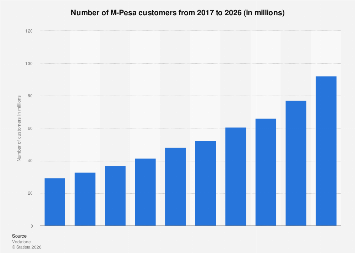
The transformative power of mobile money continues to reshape the financial landscape across Africa, with M-Pesa, a leading service operated by Vodafone and Safaricom, poised for significant user base expansion. Projections indicate that M-Pesa will serve over a substantial, yet undisclosed, number of customers across the continent by the financial year ending March 31, 2026. This anticipated growth underscores the platform’s enduring appeal and its crucial role in fostering financial inclusion for millions who may lack access to traditional banking infrastructure.
M-Pesa’s journey began as a revolutionary solution to facilitate remittances and payments via mobile phones, effectively bridging the gap for the unbanked and underbanked populations. Its success is not merely a testament to technological innovation but also to its deep integration into the daily lives of its users. Operating under various brand names, including Vodafone Cash in Ghana and Egypt, M-Pesa has cultivated a robust ecosystem that extends beyond simple peer-to-peer transfers, encompassing bill payments, merchant services, and even access to credit and savings products.
The projected increase in customer numbers reflects a broader trend across Africa, where mobile money adoption has outpaced traditional banking growth in many regions. According to industry reports, the number of mobile money accounts in Sub-Saharan Africa has surged in recent years, driven by increasing mobile penetration, a young and tech-savvy population, and a growing demand for convenient and affordable financial services. M-Pesa, as a pioneer and dominant player in markets like Kenya, has been instrumental in driving this adoption. The company’s strategy has consistently focused on building a widespread agent network, ensuring ease of access for deposits and withdrawals, and continuously innovating its service offerings to meet evolving consumer needs.
The supplementary notes accompanying these projections highlight that the figures encompass 100 percent of Safaricom’s data, emphasizing the comprehensive scope of M-Pesa’s operations within its core markets. Furthermore, the acknowledgement of limited assurance from Ernst & Young for the 2026 data indicates a commitment to transparency and a rigorous approach to financial reporting, even for future-looking estimates. This level of scrutiny is vital in a sector that handles significant financial transactions and plays a critical role in economic stability.
The economic implications of M-Pesa’s continued growth are far-reaching. For individuals, it provides a secure and accessible means to manage their finances, receive wages, send money to family, and participate in the digital economy. This financial empowerment can lead to increased savings, improved household resilience, and greater opportunities for entrepreneurship. Small businesses, in particular, benefit from the streamlined payment processes, reduced reliance on cash, and access to digital payment histories that can be leveraged for credit applications. This, in turn, stimulates local economies and contributes to job creation.
On a macro-economic level, the widespread adoption of mobile money services like M-Pesa contributes to formalizing the economy, increasing the velocity of money, and enhancing the effectiveness of monetary policy. By bringing more transactions into the digital realm, it also provides valuable data insights that can inform economic planning and policy-making. The growth of the mobile money sector also fosters innovation within the broader fintech industry, encouraging the development of new products and services that cater to the unique challenges and opportunities present in African markets.
Comparing M-Pesa’s trajectory with other mobile money services across the continent reveals a competitive yet collaborative environment. While M-Pesa has established a strong foothold, other players, including those backed by banks and telecommunication giants, are also expanding their reach. This competition is beneficial for consumers, driving innovation and keeping fees competitive. However, M-Pesa’s established brand loyalty, extensive agent network, and continuous adaptation to user needs provide it with a significant competitive advantage.
The future outlook for M-Pesa appears robust, driven by several key factors. Firstly, the increasing penetration of smartphones and affordable mobile data plans will further democratize access to digital financial services. Secondly, regulatory frameworks across Africa are becoming more supportive of digital finance, encouraging innovation and interoperability between different platforms. Thirdly, M-Pesa’s ongoing investment in technology and product development, including exploring areas like micro-insurance, digital loans, and cross-border remittances, is likely to attract new users and retain existing ones.
The projected figures for 2026 are not merely numbers; they represent millions of individuals gaining greater control over their financial lives and participating more fully in the economic development of their communities and nations. As Africa continues its digital transformation, M-Pesa is set to remain at the forefront, a powerful engine of financial inclusion and economic progress. The platform’s ability to evolve and adapt to the dynamic African market will be crucial in sustaining this impressive growth trajectory and solidifying its position as a cornerstone of the continent’s digital economy for years to come.