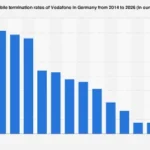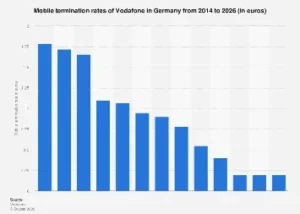



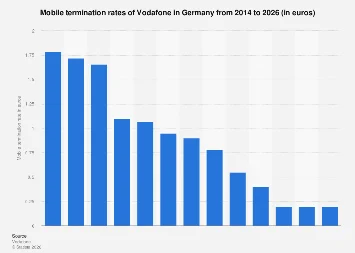
The cost of terminating mobile calls, a crucial metric reflecting wholesale charges between mobile network operators, has undergone a significant and sustained decline in Germany, with Vodafone’s rates serving as a key indicator of this trend. Projections indicate this downward trajectory will persist, culminating in a new EU-wide benchmark being firmly established by 2026. This evolving landscape directly impacts the economics of telecommunications services, influencing pricing strategies for consumers and the profitability of network providers.
Mobile Termination Rates (MTRs) are essentially the fees one mobile operator charges another for terminating a call on its network. Historically, these rates were a substantial component of a mobile operator’s cost structure, particularly for those with a larger subscriber base, as they would receive more incoming calls from other networks. The European Union, recognizing the potential for these rates to act as a barrier to entry and to inflate consumer prices, has implemented regulatory measures to ensure they reflect actual costs and foster a more competitive market.
Vodafone Germany, a major player in the German telecommunications sector, has been at the forefront of this regulatory shift. Data reveals a consistent downward trend in its mobile termination rates since at least 2014. While precise figures for past years are subject to subscription access, the overarching narrative is one of significant reduction. This decline is not an isolated phenomenon but is largely driven by EU-wide directives aimed at harmonizing MTRs across member states.
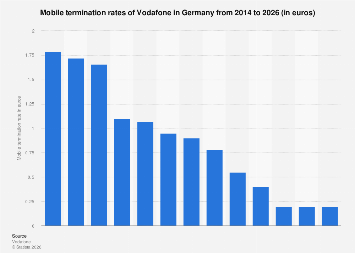
The European Commission’s framework, particularly Delegated Regulation (EU) 2021/654, has been instrumental in this process. This regulation mandates a cap on mobile termination rates, setting a clear path for their reduction. For instance, the regulation established a maximum rate of 0.20 euro cents per minute, a figure that has been observed to be maintained through 2024 and is projected to remain in place through 2025 and 2026. This consistent cap signifies a stable regulatory environment, providing predictability for operators and the market.
The economic implications of these declining MTRs are multifaceted. For mobile network operators, a lower termination rate directly reduces the cost of terminating calls originating from competing networks. This can lead to improved profitability, especially for operators with a significant proportion of outgoing traffic. Conversely, operators with a larger subscriber base, which historically generated more revenue from incoming calls, may see a reduction in this specific revenue stream. However, the overall competitive pressure to reduce retail prices often offsets these shifts.
From a consumer perspective, the reduction in MTRs has historically translated into lower retail prices for mobile services. As the wholesale costs of inter-operator calls decrease, operators have greater flexibility to offer more competitive tariffs, including bundled minutes, unlimited calling plans, and lower per-minute charges. This has contributed to the widespread availability of affordable mobile communication across Germany and the wider EU.
The German market, being one of Europe’s largest, is particularly sensitive to these regulatory changes. The competitive intensity among major operators – including Deutsche Telekom, Vodafone, and O2 (Telefónica) – ensures that any cost savings are likely to be passed on to consumers in some form. The convergence of MTRs across the EU also levels the playing field for international calls originating from or terminating within member states, simplifying pricing and potentially reducing the cost of cross-border communication.
Beyond the direct impact on call termination fees, the trend towards lower MTRs is indicative of a broader shift in the telecommunications industry. The increasing importance of data services, mobile broadband, and over-the-top (OTT) communication platforms (like WhatsApp calls, Skype, etc.) has gradually diminished the revenue reliance on traditional voice calls. While voice remains an essential service, its strategic and economic significance has evolved. Operators are increasingly focused on diversified revenue streams, including 5G services, IoT solutions, and digital entertainment.
The projected stabilization of the EU-wide maximum MTR at 0.20 euro cents per minute through 2026 suggests that the era of drastic regulatory-driven reductions in this specific charge may be reaching a plateau. The focus of regulatory bodies might then shift to other aspects of the telecommunications market, such as wholesale broadband access, spectrum allocation, or the promotion of network investment, particularly in the rollout of 5G.
However, the legacy of declining MTRs will continue to shape the German telecommunications landscape. The efficiency gains realized by operators due to these reductions can be reinvested in network upgrades, enhancing service quality and expanding coverage. Furthermore, the sustained downward pressure on MTRs has contributed to a more consumer-friendly pricing environment, fostering greater accessibility to mobile communication for a wider segment of the population.
In conclusion, the trajectory of Vodafone’s mobile termination rates in Germany, mirroring EU-wide regulatory trends, underscores a significant transformation in the economics of mobile communication. The sustained decline, capped by EU regulations, has fostered a more competitive market, benefiting consumers through lower prices and encouraging operators to innovate and diversify their service offerings. As the industry continues to evolve, the principles of cost-reflectivity and competition embedded in MTR regulation will likely remain a cornerstone of telecommunications policy, adapting to the ever-changing technological and market dynamics.