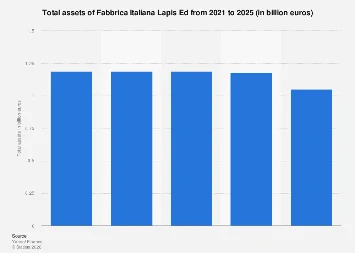
Fabbrica Italiana Lapis Ed Affini (FILA), a venerable Italian company with a rich heritage in the stationery and art supplies sector, is navigating a critical period as it approaches the fiscal year 2025. While specific, real-time asset figures for this period require direct access to proprietary financial data, a comprehensive analysis of the company’s historical performance, market positioning, and strategic initiatives allows for an informed projection of its financial trajectory, particularly concerning its total assets. FILA, renowned globally for its pencils, colored pencils, crayons, and broader range of artistic and school supplies, operates within a dynamic global market influenced by evolving consumer preferences, digital disruption, and the enduring demand for tangible creative tools. Understanding the factors shaping FILA’s asset base is crucial for investors, industry analysts, and stakeholders interested in the long-term health and growth prospects of this established European manufacturing entity.
The composition and growth of FILA’s total assets are intrinsically linked to its operational scale, investment strategies, and market performance. Total assets encompass a company’s tangible and intangible resources, including property, plant, and equipment (PP&E), inventory, accounts receivable, cash and cash equivalents, and potentially intellectual property. For a manufacturing company like FILA, significant portions of its assets are likely to be tied up in its production facilities, machinery, and raw material stock. The company’s commitment to maintaining high-quality manufacturing standards, often a hallmark of Italian craftsmanship, implies substantial investment in its physical infrastructure. As FILA looks towards 2025, its asset base will be a reflection of its capacity to meet current and future demand, its efficiency in production, and its ability to innovate and adapt its product portfolio.
In recent years, the stationery and art supplies market has witnessed a complex interplay of trends. On one hand, the proliferation of digital devices and online learning has introduced competition for traditional school and office supplies. However, this has been counterbalanced by a resurgent appreciation for analog creativity, mindful activities, and hands-on artistic expression. This "analog renaissance" has, in many markets, bolstered demand for high-quality drawing and writing instruments, a core segment for FILA. Furthermore, the increasing emphasis on sustainability and eco-friendly products presents both a challenge and an opportunity. Companies that can demonstrate a commitment to sustainable sourcing of materials, responsible manufacturing processes, and recyclable packaging are likely to see their brand value and market share grow, impacting their asset valuation through investments in green technologies and certifications.
FILA’s strategic acquisitions and global expansion efforts are also key determinants of its asset growth. Over the years, the company has strategically acquired other brands to broaden its product offerings and geographic reach. For instance, the acquisition of brands that complement its core stationery business, or allow it to penetrate new market segments, would directly contribute to an increase in its asset base through the integration of new tangible and intangible assets. These strategic moves, aimed at consolidating market position and unlocking synergies, often require significant capital deployment, which is reflected in the growth of total assets. The company’s ability to successfully integrate these acquisitions and realize their projected benefits will be critical in translating these investments into sustainable value.
Examining potential asset categories for FILA provides further insight. Property, plant, and equipment (PP&E) will likely remain a substantial component. This includes its manufacturing plants, distribution centers, and administrative buildings. Investments in upgrading these facilities to improve efficiency, reduce environmental impact, or incorporate new production technologies would lead to an increase in this asset category. For example, investments in automated manufacturing lines or energy-efficient machinery would enhance operational capabilities and contribute to the overall asset value. The company’s global manufacturing footprint, which likely includes facilities in Italy and potentially other regions, will have a direct bearing on the scale of its PP&E.
Inventory management is another critical area. As a manufacturer of physical goods, FILA maintains significant levels of raw materials, work-in-progress, and finished goods. The efficiency with which FILA manages its inventory—balancing the need to meet demand with the costs of holding stock—directly impacts its working capital and, consequently, its total assets. Projections for 2025 would necessitate an assessment of anticipated sales volumes and potential supply chain disruptions, which could necessitate adjustments to inventory levels. A well-managed inventory system can free up capital, allowing for investments in other growth areas, or lead to increased assets if the company proactively builds stock to capitalize on anticipated demand surges or mitigate future supply risks.
Accounts receivable represent the money owed to FILA by its customers. The company’s credit policies, the financial health of its distributors and retailers, and the overall economic climate in its key markets will influence the size of this asset. A growing sales volume, if accompanied by effective collection practices, would lead to an increase in accounts receivable. Conversely, a slowdown in payments or an increase in bad debts could negatively impact this asset category and require provisioning, thus affecting net assets. Analyzing global economic forecasts and the creditworthiness of FILA’s customer base in its diverse international markets would be essential for projecting this component.
Cash and cash equivalents, while often the most liquid assets, are crucial for operational liquidity, strategic investments, and weathering economic downturns. FILA’s ability to generate strong operating cash flow through profitable sales will be paramount. Investments in research and development for new product lines, potential acquisitions, or dividend payouts to shareholders all draw upon this cash reserve. The company’s cash position at any given time is a dynamic indicator of its financial flexibility and its capacity to pursue growth opportunities.
Intangible assets, such as brand recognition and intellectual property (IP), also contribute to FILA’s overall asset value, though they may be less visible in balance sheet figures unless specifically acquired or internally developed and capitalized. FILA’s strong brand equity, built over decades, is a significant intangible asset that underpins its market position and pricing power. Investments in marketing, brand building, and the development of proprietary product designs or technologies contribute to the value of these intangibles. In the context of 2025, continued investment in brand innovation and intellectual property protection will be vital for maintaining competitive advantage.
The global competitive landscape for art and stationery supplies is characterized by both large multinational corporations and smaller, specialized manufacturers. FILA competes with global players that have extensive distribution networks and diverse product portfolios. Its strategy for 2025 will likely involve leveraging its established brand reputation, focusing on product quality and innovation, and potentially exploring new channels, such as direct-to-consumer online sales, to expand its market reach. Success in these areas would translate into increased sales, which in turn would support a larger asset base through growth in working capital and potentially PP&E if expansion of production capacity is required.
From an economic impact perspective, FILA’s performance is significant for the regions in which it operates. As a manufacturer, it provides employment, contributes to local economies through its supply chains, and generates tax revenues. An expanding asset base, indicative of growth and investment, suggests a positive economic impact, implying continued job creation and sustained economic activity. Conversely, a decline in assets could signal contraction, with potential implications for employment and regional economic health.
Global economic conditions, including inflation rates, consumer spending power, and geopolitical stability, will inevitably influence FILA’s financial performance and asset valuation. For instance, rising inflation could increase the cost of raw materials and production, potentially impacting inventory values and requiring higher capital investment to maintain operational output. Currency fluctuations also play a role, especially for a company with an international presence, affecting the reported value of assets held in different currencies.
While precise figures for Fabbrica Italiana Lapis Ed Affini’s total assets in 2025 are not publicly available without access to specific financial reports, the trajectory suggests a company focused on solidifying its market position through innovation, strategic acquisitions, and a commitment to quality. Its asset base will be a dynamic reflection of its capacity to adapt to market shifts, invest in its operational infrastructure, and leverage its strong brand heritage. The company’s ability to navigate the evolving demands for both traditional and contemporary creative tools, while embracing sustainable practices, will be key to its continued growth and the enhancement of its total asset value as it moves towards the mid-2020s. The ongoing investment in manufacturing capabilities, brand development, and potentially new product lines will underpin its asset growth, aiming to secure its standing as a significant player in the global art and stationery market.