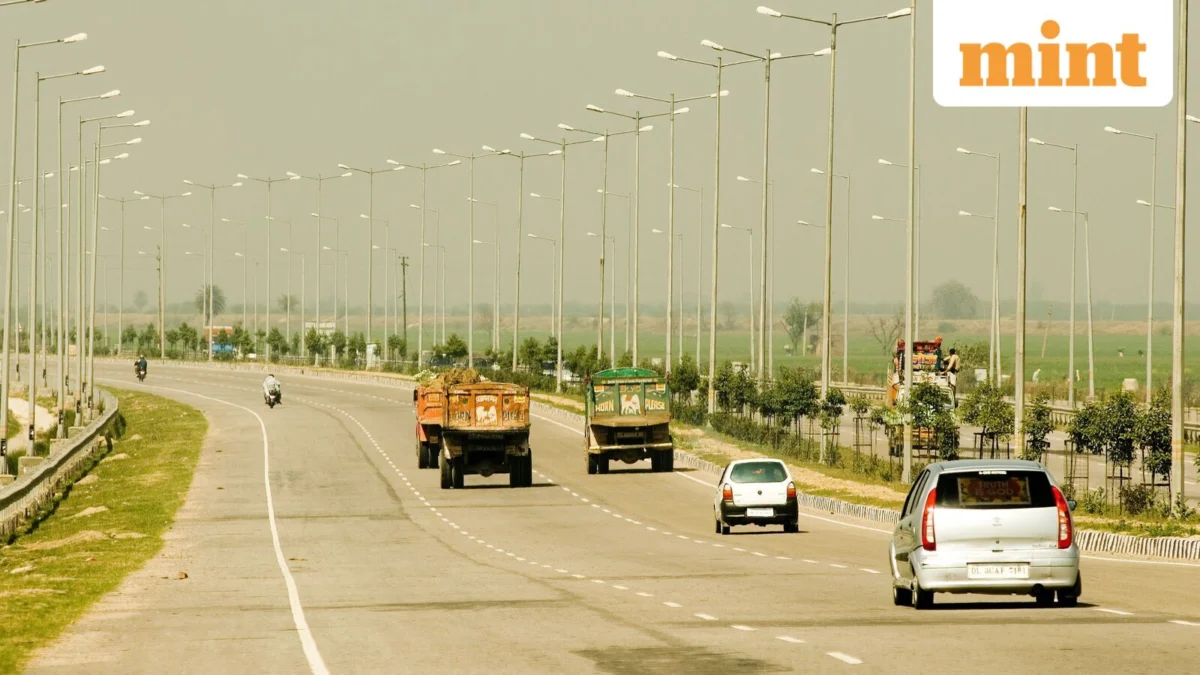
The Indian government is initiating a comprehensive strategy to bolster fiscal prudence and accelerate infrastructure development, with a particular focus on the National Highways Authority of India (NHAI), the nation’s premier road-building agency. At the heart of this drive is a concerted effort to curb the escalating costs associated with legal disputes in highway projects, aligning with a broader goal of making NHAI entirely debt-free by 2030. This ambitious target underscores a significant policy shift aimed at enhancing financial sustainability and operational efficiency within a sector critical to India’s economic growth trajectory.
A cornerstone of this fiscal discipline initiative is a stringent new directive from the Ministry of Road Transport and Highways concerning arbitrator fees. The ministry has moved to strictly cap these fees and enforce a tiered payment structure, a direct response to the considerable financial burden imposed by approximately ₹1.17 trillion in pending construction claims. These outstanding claims have historically constrained NHAI’s financial liquidity and placed undue strain on the federal budget. The directive mandates that all state and municipal road-building authorities adhere rigorously to prescribed rules for calculating arbitrator remuneration, addressing observations that these guidelines have been inconsistently applied in the past. In a communication dated June 16, the ministry highlighted a "lack of uniformity regarding the fixation and release of fees to the Arbitral Tribunal" in ad-hoc arbitrations involving central and state Public Works Departments (PWDs). It explicitly instructed Regional Officers to ensure that arbitrator fees in ad-hoc cases are fixed in strict accordance with the Fourth Schedule of The Arbitration and Conciliation Act, 1996.
The Fourth Schedule of the Arbitration and Conciliation Act outlines a model fee structure, with remuneration ranging from ₹45,000 for disputes valued up to ₹5 lakh, escalating to a maximum of ₹30 lakh for claims exceeding ₹20 crore. However, legal interpretations have historically offered some flexibility. A significant precedent, the 2022 Supreme Court ruling in ONGC v Afcons Gunanusa JV, clarified that the Fourth Schedule is not strictly mandatory, allowing parties to mutually agree upon arbitrator fees. Despite this judicial stance, the ministry’s recent circular, while not possessing the force of law, is considered binding on government entities and their officers. Anuradha Mukherjee, a partner and head of disputes for North India at Cyril Amarchand Mangaldas, noted that while arbitrators retain the discretion to decline nomination if the terms, including adherence to Schedule IV or phase-wise disbursal, are unacceptable, the directive signifies a firm commitment from the government’s side to impose financial discipline.
This renewed focus on arbitration costs is inextricably linked to NHAI’s aggressive deleveraging strategy. As of January, NHAI’s total debt stood at ₹2.16 trillion. This represents a significant reduction from its peak of approximately ₹3.5 trillion in FY22, a period characterized by substantial market borrowings to finance India’s rapidly expanding highway network. The government has since shifted its funding strategy, halting fresh incremental borrowings by NHAI and transitioning to direct budgetary support. This strategic pivot aims to reduce NHAI’s debt to ₹1.5 trillion in the next fiscal year (FY27), ultimately paving the way for a debt-free status by 2030. Achieving this target is paramount, as it would liberate NHAI from substantial interest payment obligations, allowing it to reallocate resources towards further infrastructure investment, embrace technological advancements, and maximize revenue generation from its extensive road assets. Such fiscal health is also crucial for enhancing NHAI’s creditworthiness on the international stage, potentially attracting more favorable financing terms for future projects.
The sheer volume of pending claims, amounting to ₹1.17 trillion against NHAI as per its latest annual report (FY24), highlights a systemic challenge within India’s infrastructure sector. Highway contracts are inherently complex, often characterized by long gestation periods, significant capital outlay, recurrent land acquisition delays, and evolving project scopes. These factors invariably lead to disagreements over cost and time overruns, making disputes almost an unavoidable aspect of project execution. Chirag Gupta, an associate partner at Alpha Partners, a Noida-based law firm, observes that these inherent pressures have historically driven NHAI towards various pre-arbitration dispute resolution mechanisms, eventually leading to a policy of avoiding arbitration for high-value claims.
To address this "pain point," the ministry and NHAI have established a structured dispute-resolution process. This protocol mandates an initial 30-day period for amicable settlement attempts, followed by referral to a Dispute Resolution Board, and then to Conciliation Committees of Independent Experts. Only after these stages, and for claims not exceeding a certain threshold (previously, arbitration was eliminated for disputes over ₹10 crore), are high-value claims escalated to civil courts. This multi-tiered approach reflects a broader governmental push, exemplified by the Ministry of Finance’s June 2024 nudge to all government bodies, encouraging them to prioritize mediation over arbitration for disputes exceeding ₹10 crore, citing mediation’s advantages in terms of speed and cost-effectiveness.
Further reinforcing the new financial discipline, the ministry has also revised the payment schedule for arbitrators. Previously, full arbitrator fees were often disbursed early in the process. The new directive mandates a tiered payment approach: 80% of the fee will be paid during the proceedings, with the remaining 20% released only after the arbitral award has been passed. This change is designed to incentivize efficiency and discourage protracted proceedings. As Gupta of Alpha Partners notes, "By releasing the full fee only once the award is delivered, the arbitrator’s remuneration is contingent upon completion of the proceedings rather than to the number of sittings, thereby discouraging deliberate adjournments and drawn-out hearings." This reform is also expected to gradually steer parties towards institutional arbitration, where such structured payment models are more common. Institutions like the Society for Affordable Redressal of Disputes (SAROD) established by NHAI, the Delhi International Arbitration Centre (DIAC) of the Delhi High Court, and the India International Arbitration Centre (IIAC) run by the central government are being promoted as preferred venues for dispute resolution. While these institutions often have similar payment structures (e.g., 60% upfront, 40% upon award), the government’s explicit endorsement and standardized approach across ad-hoc arbitrations is a significant step towards formalizing and streamlining the process.
The broader economic implications of these reforms are substantial. By reducing the financial overhang of arbitration claims and cutting interest payments on its massive debt, NHAI will gain significant headroom for fresh capital expenditure. This will not only accelerate the pace of highway construction—a vital driver of economic activity and job creation—but also free up government funds that can be redirected to other critical sectors. Enhanced fiscal health for NHAI is also likely to improve investor confidence in India’s infrastructure sector, attracting both domestic and international capital for future projects under various public-private partnership models. Moreover, quicker and more cost-effective dispute resolution mechanisms benefit contractors, reducing their financial uncertainties and improving project cash flows, which can, in turn, lead to more competitive bidding and faster project completion. This holistic approach to financial management and dispute resolution underscores India’s commitment to building world-class infrastructure on a foundation of fiscal responsibility and efficient governance. The journey to a debt-free NHAI by 2030, supported by robust and equitable dispute resolution frameworks, is poised to be a transformative chapter in India’s economic development narrative.