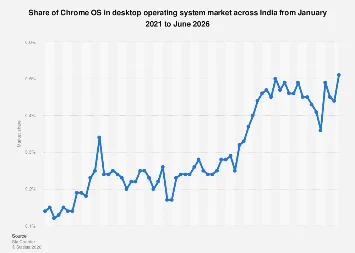
India’s desktop operating system market is undergoing a discernible shift, with Chrome OS projected to capture a substantially larger share by mid-2026. While specific figures remain proprietary and require subscription access, industry projections and market analysis indicate a robust upward trajectory for Google’s browser-centric operating system within the subcontinent. This evolving dynamic reflects broader global trends in computing, driven by the increasing demand for cloud-native applications, affordability, and streamlined user experiences, particularly in emerging economies like India.
The current landscape of desktop operating systems in India is largely dominated by established players, primarily Microsoft’s Windows, which has historically held a commanding market share due to its pre-installation on a vast majority of personal computers and its long-standing presence in both enterprise and consumer segments. Apple’s macOS also maintains a presence, albeit a more niche one, catering to a premium segment of users who value its integrated ecosystem and design aesthetics. However, the emergence and sustained growth of Chrome OS present a compelling counter-narrative.
Chrome OS, characterized by its lightweight nature, reliance on web applications, and integration with Google’s cloud services, has found fertile ground in educational institutions and among budget-conscious consumers. Its lower hardware requirements translate into more affordable devices, known as Chromebooks, making them an attractive option for mass adoption. In India, where price sensitivity is a significant factor in purchasing decisions, this inherent cost-effectiveness is a major catalyst for Chrome OS’s expansion. The operating system’s inherent simplicity and ease of management also appeal to educational administrators and small businesses seeking efficient and low-maintenance computing solutions.
The projected increase in Chrome OS’s market share by 2026 is not an isolated phenomenon but rather a reflection of a global recalibration in the OS market. Worldwide, the demand for flexible, cloud-enabled computing is growing. This trend is particularly pronounced in developing nations where the digital divide is being bridged by accessible and affordable technology. India, with its rapidly expanding internet penetration and a burgeoning young, digitally native population, represents a prime market for such a transition.
Several macroeconomic and technological factors are contributing to this projected growth. The Indian government’s initiatives to promote digital literacy and technology adoption, such as the "Digital India" campaign, are creating a more conducive environment for widespread technology use. Furthermore, the increasing availability of affordable internet connectivity across the country means that users are less constrained by the need for powerful, locally installed software. Instead, they can leverage cloud-based applications and services, which are the very foundation of the Chrome OS experience.
The competitive landscape within the desktop OS market is also evolving. While Windows continues to be the default choice for many, its perceived complexity and higher hardware demands can be a deterrent for certain user segments. macOS, while offering a premium experience, remains out of reach for a significant portion of the Indian market due to its premium pricing. This leaves a substantial opportunity for Chrome OS to carve out a more significant niche.
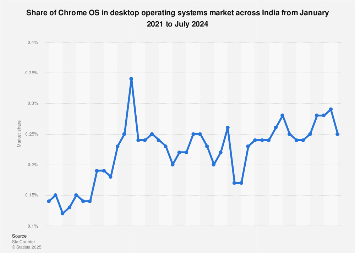
Market analysts suggest that the growth of Chrome OS will likely come at the expense of traditional desktop operating systems, particularly in specific use cases. In education, Chromebooks have already made significant inroads, replacing older, less efficient computing solutions. This trend is expected to continue, as schools and universities recognize the benefits of a standardized, easy-to-manage platform that facilitates collaborative learning and access to online educational resources.
Beyond education, the small and medium-sized enterprise (SME) sector in India also presents a significant growth avenue for Chrome OS. SMEs often operate with tighter budgets and require IT solutions that are simple to deploy, maintain, and secure. The cloud-centric nature of Chrome OS, coupled with its inherent security features, makes it an appealing alternative to more complex and costly Windows-based infrastructures.
The statistical projections, even if not fully disclosed, point towards a sustained period of growth. This implies that manufacturers and software developers will continue to invest in the Chrome OS ecosystem. We can anticipate a wider range of Chromebook models catering to different price points and performance needs, as well as an increasing array of web-based applications and services optimized for the platform.
The economic implications of this shift are multifaceted. For hardware manufacturers, the growing demand for Chromebooks presents an opportunity to expand their market share and revenue streams. For software developers, it necessitates a strategic focus on developing and optimizing web-based applications that can compete with their desktop counterparts. For the Indian economy as a whole, increased adoption of affordable and efficient computing solutions can boost productivity, foster innovation, and enhance digital inclusion.
However, challenges remain. The perception of Chrome OS as solely an educational or entry-level operating system might still be a barrier for some consumers and businesses who associate traditional desktop OSes with greater power and versatility. Furthermore, while cloud-based applications are becoming increasingly robust, certain specialized software, particularly in fields like high-end graphic design, video editing, or complex engineering simulations, may still be best served by more traditional operating systems.
Nevertheless, the trajectory is clear. As India continues its digital transformation journey, the demand for accessible, cloud-native computing solutions is set to surge. Chrome OS, with its inherent strengths in affordability, simplicity, and cloud integration, is exceptionally well-positioned to capitalize on this demand. By 2026, it is highly probable that Chrome OS will represent a significantly more prominent segment of India’s desktop operating system market than it does today, marking a notable evolution in the nation’s digital infrastructure. The exact percentage may be behind a paywall, but the trend itself is a powerful indicator of future market dynamics.