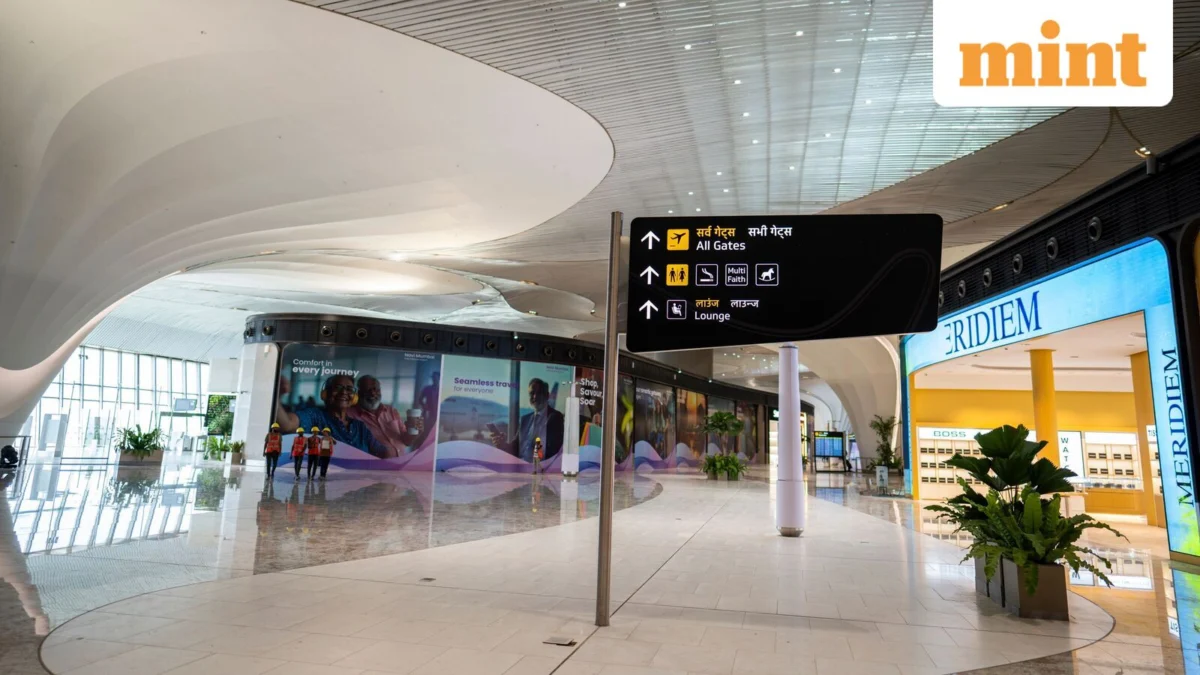
A significant regulatory shift proposed by the Airports Economic Regulatory Authority of India (Aera) is encountering robust opposition from the nation’s leading private airport operators, threatening to reshape the financial landscape for multi-billion dollar infrastructure projects. At the heart of the dispute is Aera’s intent to transition towards a "pay-as-built" tariff model, which would permit airport developers to recover the costs of new terminals, runways, and other critical infrastructure only after these assets are fully commissioned and operational. This marks a stark departure from the current system, where cost recovery often begins once tariffs are approved, based on projected capital expenditure. Industry giants such as GMR Airports, Adani Airport Holdings, and Fairfax-backed Bangalore International Airport have vociferously articulated their concerns, warning that the proposed framework could severely strain cash flows, undermine investor confidence, and complicate the intricate debt financing mechanisms essential for India’s ambitious aviation growth trajectory.
The contentious proposal initially surfaced during the tariff review for Bengaluru International Airport and has intensified as Hyderabad International Airport undergoes its own tariff determination for the five-year period through FY31. These two major hubs alone have earmarked over ₹32,000 crore (approximately $3.8 billion USD) for combined capital spending, highlighting the immense scale of investment at stake. Operators contend that linking tariff increases directly to project completion, rather than allowing for phased cost recovery, could lead to abrupt and substantial increases in user development fees (UDFs) towards the latter half of a tariff cycle. This potential "tariff shock" is perceived as a significant risk, jeopardizing the predictability crucial for long-term financial planning and debt servicing.
The existing regulatory framework, which allows for tariffs to be set based on projected capitalisation and subsequently reconciled through "true-up" or "true-down" adjustments against actual spending, has provided a degree of stability for private investors. This model was fundamental to the government’s strategy for privatising and modernising airports, encouraging significant private sector participation in infrastructure development. Operators argue that any substantial deviation from these established principles could deter future investment, both domestic and foreign, in a sector vital for India’s economic aspirations. The Association of Private Airport Operators (Apao), representing approximately 14 privately managed airports, has echoed these sentiments, urging Aera to reconsider the potential adverse impact on cash flows.
GMR Airports, a key player managing major facilities like Delhi and Hyderabad, stands to be particularly affected. Its Hyderabad International Airport Limited (GHIAL) subsidiary has outlined a massive ₹13,548 crore expansion programme, with nearly 80% of this investment slated for the latter half of the current five-year tariff cycle (FY27-FY31). Under the proposed "pay-as-built" model, the recovery of these significant costs would be deferred, creating immense pressure on the airport’s internal accruals and increasing its reliance on external financing for an extended period. Executives from GMR have suggested a partial implementation of the new framework, perhaps applying it to only a portion of the relevant capital expenditure, to mitigate immediate financial shocks.
Beyond the immediate financial implications for operators, the concerns extend to the broader financing ecosystem. Leading financial institutions, including ICICI Bank, have voiced apprehension regarding the proposal. Representatives from the banking sector underscored that airport projects are typically financed through long-term debt, which relies heavily on predictable future cash flows for timely servicing. A material change in tariff methodology, leading to greater uncertainty in revenue streams, could negatively impact debt service coverage ratios, credit metrics, and ultimately, the cost of capital for these critical infrastructure projects. Rating agencies, which closely monitor regulatory stability, often flag tariff uncertainty as a key risk factor for infrastructure assets. This could translate into higher borrowing costs for airport developers, potentially slowing down project execution or making future investments less attractive.

Adani Airport Holdings, which manages a portfolio of eight airports across the country, highlighted practical implementation challenges from an airline perspective. The company pointed out that airlines frequently sell tickets several months in advance. Any sudden or frequent tariff revisions, triggered by the commissioning of new assets, would create significant reconciliation and operational complexities for airlines, potentially disrupting pricing strategies and passenger experience. Adani suggested a substantial lead time, perhaps a six-month window, for any tariff revisions to allow airlines to adjust their systems and pricing. Similarly, Delhi International Airport Ltd (DIAL), also managed by GMR, raised concerns about the administrative burden of frequent tariff revisions, given that airports commission various projects throughout a five-year control period.
While the operators and lenders express deep reservations, passenger advocacy groups have largely supported Aera’s initiative. Organizations like the Air Travellers Association (ATA) argue that passengers should not be required to pre-pay for future infrastructure through front-loaded charges, especially when the benefits of such infrastructure are yet to materialise. They highlight the inequity that arises if projects are delayed, as passengers who have already paid higher charges would face significant challenges in seeking refunds or benefiting from the promised facilities. This "user-pay" principle championed by Aera aims to align the payment for airport services with the actual availability and use of the underlying infrastructure, fostering greater transparency and fairness for consumers.
Aera, the independent economic regulator for airports, has defended its proposal, asserting that it seeks to rectify a long-standing mismatch in airport regulation. The Authority’s Chairman has reiterated that the objective is to ensure the new approach does not cause undue difficulty to airport operators, while simultaneously addressing the concern that the current system allows airports to recover costs for projects years before passengers can derive any benefit from them. The regulator aims to strike a balance between facilitating necessary infrastructure investment and safeguarding consumer interests.
From a broader economic perspective, the outcome of this regulatory debate will have significant ramifications for India’s aviation sector, one of the fastest-growing globally. India’s passenger traffic has consistently shown robust growth, with projections indicating a substantial increase in air travel demand over the next decade. To accommodate this surge, the country requires massive, sustained investment in airport capacity. Delays or increased financing costs stemming from regulatory uncertainty could impede the expansion of existing airports and the development of new ones, potentially creating bottlenecks that stifle economic growth, tourism, and trade. India’s aspirations to become a global aviation hub and a key player in international supply chains depend heavily on modern, efficient airport infrastructure.
Global practices in airport financing vary widely. In some mature markets, government ownership or significant public funding reduces the reliance on user charges for capital recovery. However, in economies heavily dependent on private capital for infrastructure, such as India, the regulatory framework plays a paramount role in attracting and retaining investment. The challenge for Aera, as noted by aviation experts, lies in finding an optimal balance that supports the financial viability of airport operators while ensuring equitable and transparent pricing for users. A partial implementation or a phased transition could be a potential compromise, allowing operators to adapt their financial models without a sudden disruption, while gradually moving towards a more user-centric cost recovery system.
Ultimately, the resolution of this dispute will hinge on constructive dialogue and a nuanced understanding of the complex interplay between financial viability, investor confidence, consumer protection, and national infrastructure imperatives. The decision will not only shape the future of India’s airports but also send a powerful signal to international investors about the predictability and attractiveness of the country’s infrastructure development landscape.