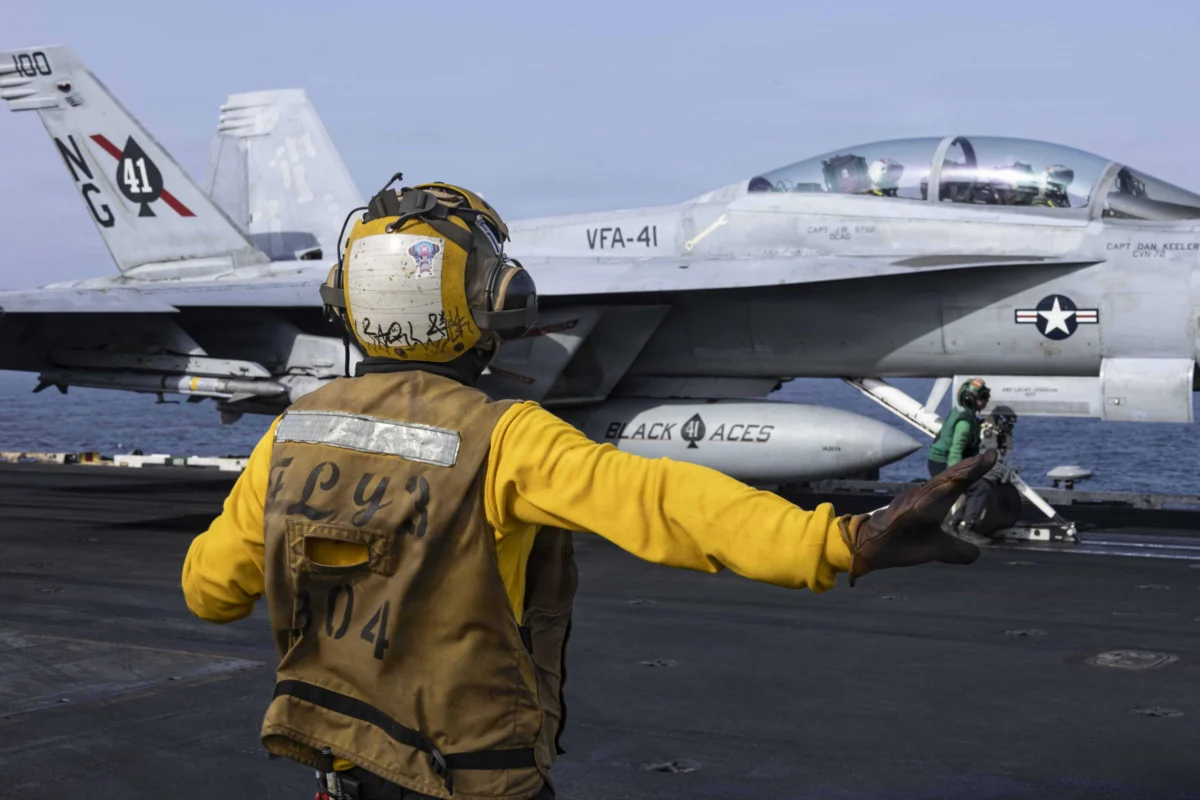
The geopolitical landscape of the Middle East has shifted into a more volatile phase following a series of direct military confrontations between the United States and Iranian-backed forces, prompting economists and market strategists to recalibrate their risk models for the remainder of the fiscal year. A sustained campaign of aerial strikes, now entering its second week, has targeted strategic assets across the region in response to increasing hostilities that have claimed the lives of American service members. The situation reached a critical inflection point over the weekend as Houthi rebels in Yemen declared a formal maritime embargo against Saudi Arabia, a move that threatens to choke one of the world’s most vital energy arteries and further entangle global superpowers in a protracted conflict.
In Washington, the political rhetoric has sharpened alongside the military engagement. Former President Donald Trump, utilizing his Truth Social platform, issued a stern warning that "they will pay," signaling a potential for even more aggressive retaliation should the conflict persist. This escalation marks a departure from the "shadow war" of previous years, moving toward a more overt and lethal era of confrontation that could have profound implications for global supply chains and domestic economic policy.
Despite the gravity of these developments, equity markets have demonstrated a curious level of stoicism. The S&P 500, while experiencing marginal fluctuations during Monday’s trading session, remains remarkably close to the all-time highs established in June. This resilience suggests that investors are currently operating under the assumption that neither Washington nor Tehran desires a full-scale, direct war—a scenario that would almost certainly trigger a global recession. Instead, the market’s attention remains anchored to corporate fundamentals and the burgeoning second-quarter earnings season, where early reports have shown surprising strength across the technology and financial sectors.
However, beneath the surface of this market calm, significant pressures are mounting in the commodities and fixed-income sectors. Brent crude oil, the international benchmark, briefly surged past the psychologically significant $90-per-barrel mark, while the U.S. 10-year Treasury yield climbed above 4.6%. These indicators serve as the primary transmission mechanism through which geopolitical strife impacts the broader economy. If energy prices remain elevated for an extended duration, the "inflationary tax" on consumers could derail the soft-landing narrative that has fueled the 2024 bull market.
Art Hogan, chief market strategist at B. Riley Wealth, emphasizes that the primary concern for Wall Street is not the immediate spike in prices, but the "duration" of the elevated levels. Hogan notes that if crude oil prices persist above $85 or $90 through the end of the year, corporate earnings estimates for the fourth quarter may need to be revised downward across multiple sectors. While the S&P 500 is somewhat insulated due to its heavy 38% weighting in technology—a sector less sensitive to energy inputs—other sectors like logistics, transportation, and consumer discretionaries are far more vulnerable.
The energy sector itself accounts for only 3% of the S&P 500’s total weighting, a historical low that partially explains why the index has not plummeted in the face of rising oil. Yet, for companies like Ryanair, the impact is already visible. The airline recently reported a dip in first-quarter profits, citing delayed bookings and increased operational costs directly linked to the Middle East crisis. This serves as a canary in the coal mine for the broader travel and hospitality industry, which relies heavily on stable fuel prices and consumer confidence in international safety.
Economists are particularly concerned about the "all downside" nature of the current conflict for the U.S. consumer. Mark Zandi, chief economist at Moody’s Analytics, estimates that the average American household has already effectively lost $1,100 due to the indirect costs of the war, including higher pump prices and increased military expenditures. This erosion of purchasing power is reflected in real disposable income figures, which have trended toward flat or negative growth—a metric often associated with the early stages of a recessionary cycle.
The American consumer’s "cushion"—the excess savings accumulated during the pandemic era and bolstered by recent tax reforms—is also beginning to deflate. According to data from the Bureau of Economic Analysis, the personal saving rate fell to 3% in May, a sharp decline from the 5% seen just a year prior. As gasoline prices hit the $4-per-gallon mark for the first time in months, many households are finding that their "rainy day" funds are being redirected toward basic necessities. Heather Long, chief economist at Navy Federal Credit Union, warns that without a new catalyst for income growth, the consumer’s ability to prop up the economy through spending may reach its limit in the second half of the year.
The Federal Reserve now finds itself in a precarious position. While headline Consumer Price Index (CPI) readings are likely to rise due to the energy shock, "core" inflation—which excludes volatile food and energy costs—may remain more stable. Historically, the Fed has looked through energy-driven inflation spikes, viewing them as transitory. However, the risk of "bleed-through," where higher transport and production costs eventually push up the price of services and manufactured goods, remains a significant concern. Current market pricing, reflected in the CME FedWatch tool, suggests an 83% probability that the central bank will maintain interest rates at their current levels in the near term, but a prolonged conflict could force a reassessment of the "higher for longer" interest rate path.
The retail landscape is already showing signs of a bifurcated response to these economic pressures. Michael Gunther, an analyst at Consumer Edge, points out that value-focused retailers and those with driving-dependent customer bases, such as Dollar General and Tractor Supply, could see a contraction in traffic as fuel costs eat into discretionary budgets. Conversely, warehouse clubs like Costco and Sam’s Club are positioned to gain market share. Costco has already reported "record-breaking volumes" at its fuel pumps, as consumers increasingly seek out the lowest possible price per gallon, often combining fuel runs with bulk grocery shopping to maximize efficiency.
Geopolitically, the ultimate "red line" for global markets remains the Strait of Hormuz. As a conduit for roughly 20% of the world’s total oil consumption and a significant portion of its liquefied natural gas (LNG), any disruption to passage through this narrow waterway would likely send oil prices well into triple digits. Marko Papic, macro and geopolitical strategist at BCA Research, suggests that the market is currently underpricing the risk of Iranian hardliners gaining further domestic leverage, which could lead to more provocative maritime actions.
While some analysts, such as JPMorgan’s Mislav Matejka, advise investors to "buy the dip" on geopolitical headlines, others caution that the current environment is fundamentally different from previous skirmishes. The combination of high interest rates, low savings, and a precariously balanced energy market means that the margin for error is thinner than it has been in decades. The resilience of the tech-heavy stock market may provide a veneer of stability, but for the average consumer and the businesses that serve them, the costs of the U.S.-Iran escalation are becoming increasingly tangible.
As the conflict enters this deadlier phase, the global economy faces a test of endurance. The interplay between military strategy in the Persian Gulf and monetary policy in Washington will define the economic narrative for the remainder of the year. For now, the world watches the oil tickers and the troop movements with equal intensity, aware that a single miscalculation in the Strait of Hormuz could transform a localized conflict into a global economic crisis.