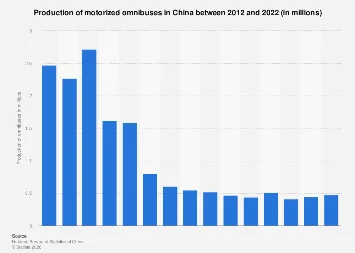
The production landscape for omnibuses in China, a critical segment within the global automotive industry, is undergoing a significant evolution, driven by a confluence of factors including evolving international market demands, a relentless push towards electrification, and advancements in intelligent transportation systems. Historically a powerhouse in manufacturing, China’s output of buses, encompassing a wide range of types from city transit vehicles to long-distance coaches, plays a pivotal role in both domestic infrastructure development and international trade. Understanding the dynamics of this sector requires a granular look at production volumes, export trends, and the strategic imperatives shaping the strategies of Chinese manufacturers.
The sheer scale of China’s bus manufacturing is undeniable. While precise, up-to-the-minute production figures are often proprietary or require specialized data subscriptions, industry analyses consistently place China at the forefront of global bus production. This dominance is not merely a matter of volume; it is also a testament to the sector’s capacity for mass production, driven by a vast domestic market and a robust supply chain. For years, Chinese manufacturers have benefited from government support, investment in industrial capacity, and a skilled labor force, enabling them to produce vehicles at competitive price points. This has facilitated their expansion into global markets, often displacing established manufacturers from North America and Europe in price-sensitive regions.
However, the global demand for buses is not monolithic. Emerging economies, often the primary export destinations for Chinese-made buses, are increasingly prioritizing not just affordability but also environmental sustainability and technological sophistication. This shift is profoundly impacting the types of vehicles Chinese manufacturers are producing and exporting. The era of solely focusing on low-cost, conventional diesel buses is gradually giving way to a demand for zero-emission vehicles, primarily electric buses. China has been a frontrunner in the development and deployment of electric vehicles across all segments, and the bus sector is no exception. Government mandates for cleaner urban air, coupled with significant investment in battery technology and charging infrastructure, have propelled Chinese companies to become world leaders in electric bus production. Companies like BYD, Yutong, and King Long are not only dominating the domestic market with electric fleets but are also actively exporting these advanced vehicles to cities worldwide, from Europe to South America.
The technological advancements extend beyond powertrains. The integration of intelligent transportation systems (ITS) is becoming a key differentiator. Features such as advanced driver-assistance systems (ADAS), real-time passenger information systems, connectivity for fleet management, and even autonomous driving capabilities are increasingly being incorporated into new bus models. Chinese manufacturers are investing heavily in research and development to incorporate these technologies, aiming to move up the value chain and compete not just on price but on innovation. This push is also driven by the Chinese government’s ambitious "Made in China 2025" initiative and its broader vision for smart cities, which necessitates advanced public transportation solutions.
The economic impact of China’s bus manufacturing sector is multifaceted. Domestically, it supports a vast ecosystem of suppliers, from steel and component manufacturers to battery producers and software developers. It contributes significantly to employment, both in manufacturing plants and in the associated service industries. For export markets, Chinese buses offer an often more accessible entry point to modernizing public transportation fleets, especially for developing nations. This can lead to improved urban mobility, reduced pollution, and enhanced economic activity in recipient countries. However, it also presents challenges for domestic manufacturing industries in those importing countries, potentially leading to job losses and trade friction.
Statistics from various market research firms, while not always publicly accessible in full detail, consistently highlight China’s commanding share in global bus production and exports. For instance, reports often indicate that Chinese manufacturers account for a substantial percentage of the world’s electric bus production. This trend is expected to continue as global commitments to decarbonization intensify. The International Energy Agency (IEA) and other global bodies have reported on the rapid growth of electric bus fleets, with China leading the charge in both manufacturing and deployment. This growth is not just about volume but also about the technological maturation of these vehicles, with improvements in battery range, charging speed, and overall reliability.
The competitive landscape within China is also dynamic. While established giants continue to hold significant market share, newer, more agile players are emerging, often focusing on niche markets or specific technological innovations. This internal competition fosters further innovation and efficiency. Furthermore, Chinese manufacturers are increasingly looking beyond traditional export markets in developing nations. They are actively targeting developed markets in Europe and North America, not just with electric buses but also with higher-specification vehicles that meet stringent safety and comfort standards. This strategy involves building stronger brand recognition, establishing robust after-sales service networks, and adapting products to meet diverse regulatory requirements.
Challenges remain, however. Geopolitical tensions, trade disputes, and evolving international regulations can create headwinds for Chinese exports. Concerns about intellectual property, cybersecurity, and the origin of components can also influence purchasing decisions by foreign governments and transit authorities. Moreover, the rapid pace of technological change requires continuous investment and adaptation, a challenge for any industry. The global automotive supply chain, which has experienced significant disruptions in recent years, also presents ongoing risks to production and delivery schedules.
In conclusion, China’s omnibus production sector is a dynamic and strategically important industry. It is a story of scaling production, embracing technological transformation, and navigating a complex global market. The shift towards electrification and intelligent systems is not just a trend but a fundamental reshaping of the industry, with Chinese manufacturers at the forefront. Their ability to innovate, adapt to changing international demands, and manage global supply chain complexities will determine their continued dominance and influence in the coming years, impacting urban mobility and the transition to sustainable transportation worldwide.