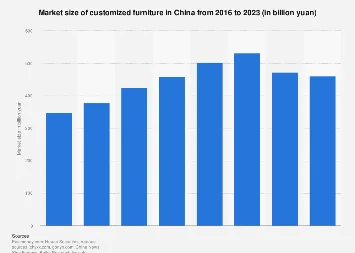
The landscape of the Chinese furniture market is undergoing a profound transformation, with a particular surge of interest and investment gravitating towards the customized and bespoke furniture segment. While precise, publicly available market size figures for 2023 specifically for this niche remain proprietary, industry analysis and broader market trends strongly indicate a period of robust expansion. This evolution is driven by a confluence of factors, including rising disposable incomes, a growing middle class with increasingly sophisticated tastes, and the pervasive influence of digital platforms in shaping consumer purchasing habits.
The broader Chinese furniture market, a colossal entity in its own right, has consistently demonstrated resilience and growth. Projections from various market research firms, prior to 2023, had already painted a picture of continued upward trajectory, suggesting a market valued in the hundreds of billions of U.S. dollars annually. Within this vast ecosystem, the customized furniture segment, often referred to as "tailor-made" or "made-to-order" furniture, is carving out a significant and expanding share. This segment caters to consumers seeking unique designs, specific dimensions, and personalized functionality that mass-produced items simply cannot fulfill. The appeal lies not just in the product itself, but in the experience of co-creation and the ultimate satisfaction of owning a piece that is distinctly theirs.
Several key drivers are fueling this demand for bespoke furniture. Firstly, the burgeoning middle class, particularly in Tier 1 and Tier 2 cities, possesses greater discretionary spending power. This demographic is increasingly prioritizing quality, design aesthetics, and individuality over mere affordability. They are exposed to global design trends through social media, international travel, and premium lifestyle publications, fostering a desire for furniture that reflects their personal style and elevates their living spaces. Secondly, the rapid urbanization and smaller living spaces prevalent in many Chinese cities create a practical need for custom-fit furniture. Solutions that maximize space utilization, integrate multiple functions, and adhere to precise architectural dimensions are highly valued.
The digital revolution has been an indispensable catalyst for the growth of the customized furniture market. E-commerce platforms, both generalist marketplaces and specialized home furnishing sites, have democratized access to a wider array of manufacturers and designers. Consumers can now easily browse portfolios, request quotes, and even engage in virtual design consultations from the comfort of their homes. This digital accessibility significantly lowers the barriers to entry for both consumers seeking bespoke solutions and smaller, agile manufacturers looking to reach a broader customer base. Furthermore, the integration of augmented reality (AR) and virtual reality (VR) technologies is beginning to enhance the customization process, allowing consumers to visualize how their bespoke pieces will look within their actual living environments before committing to a purchase.
Statistics from related sectors provide strong inferential evidence for the growth of the bespoke furniture market. The overall growth in home renovation and interior design services in China directly correlates with increased demand for customized furnishings. For instance, reports on the home improvement sector have highlighted a steady increase in consumer spending on interior decoration and furnishings, with a growing portion allocated to personalized items. The rise of online interior design platforms and influencers also plays a crucial role in popularizing the concept of customized living spaces, thereby driving demand for tailored furniture solutions.
Globally, the trend towards personalization in consumer goods is a well-established phenomenon, and the furniture industry is no exception. While China’s market is characterized by its sheer scale and rapid pace of development, the underlying consumer desire for uniqueness and tailored solutions mirrors trends observed in North America, Europe, and other developed economies. However, China’s approach is often amplified by the rapid adoption of technology and a highly competitive manufacturing base that can translate design concepts into tangible products with remarkable speed and efficiency. This has led to a more dynamic and responsive customized furniture ecosystem compared to some Western markets.
The economic impact of this burgeoning bespoke furniture sector extends beyond the immediate furniture manufacturers. It stimulates growth in ancillary industries such as interior design, architectural services, material suppliers (specialty woods, fabrics, hardware), and logistics. The emphasis on quality and craftsmanship also encourages innovation in manufacturing processes and material sourcing, potentially leading to the development of new sustainable and high-performance materials. Furthermore, the rise of independent designers and small-to-medium enterprises (SMEs) within this segment contributes to job creation and fosters a more diverse and vibrant entrepreneurial ecosystem.
However, challenges remain. Ensuring consistent quality control across a decentralized network of manufacturers can be difficult. Supply chain complexities, especially for imported materials or specialized components, can impact lead times and costs. Furthermore, navigating intellectual property rights and design originality in a highly imitative market requires robust legal frameworks and diligent enforcement. The rapid pace of technological adoption also necessitates continuous investment in R&D and talent development for manufacturers to remain competitive.
Looking ahead, the trajectory for China’s customized furniture market appears exceptionally promising. As consumer affluence continues to grow and the appreciation for unique, high-quality living environments deepens, the demand for bespoke solutions is likely to outpace the growth of the mass-market segment. Innovations in digital design tools, material science, and sustainable manufacturing practices will further shape the industry. The integration of smart home technology into customized furniture pieces, offering enhanced functionality and convenience, is another area poised for significant development. Ultimately, China’s customized furniture market is not just about selling furniture; it’s about selling a vision of personalized living, an experience of co-creation, and a testament to the evolving aspirations of a dynamic consumer base. The market is expected to witness sustained double-digit growth in the coming years, solidifying its position as a critical and innovative segment within the global furniture industry.