

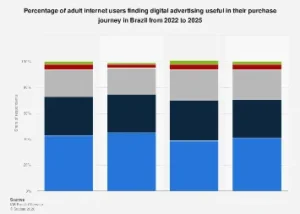
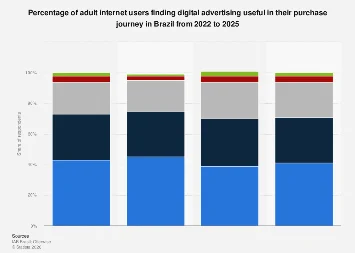
The digital advertising ecosystem in Brazil is undergoing a significant transformation, with consumer attitudes towards online advertisements playing an increasingly pivotal role in shaping purchase journeys. Recent data and projections indicate a growing recognition among Brazilian adult internet users for the utility of digital ads, suggesting a maturing market where online marketing is becoming an integral component of the discovery and decision-making process. This evolution underscores the importance for businesses to understand and adapt to these shifting consumer perceptions to effectively engage with their target audiences in one of Latin America’s largest economies.
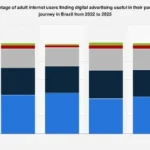
From 2022 through to projections for 2025, a consistent trend emerges regarding the perceived value of digital advertising in Brazil. A substantial proportion of adult internet users report that digital advertisements are at least "sometimes" useful when they are actively searching for new products or services. While precise figures for each specific year remain proprietary, overarching survey data from a sample of 1,500 respondents (with 1,000 in 2022 and an increased sample size for subsequent years) highlights a significant portion finding these ads to be consistently valuable. This suggests that rather than being an intrusive annoyance, digital advertising is increasingly being viewed as a helpful tool in the consumer’s path to purchase.
The data indicates that by November 2025, a considerable segment of Brazilian adult internet users will likely perceive digital advertising as either "always" or "almost always" important during their product search. This contrasts with a much smaller, though still present, minority who find such advertisements to be "seldom" or "never" important. This divergence in perception is critical for marketers. It implies that while a core group of consumers actively seeks out and benefits from digital ad exposure, a segment remains less receptive, necessitating varied and targeted advertising strategies. The increasing sample size in the surveys conducted from 2023 onwards (1,500 respondents compared to 1,000 in 2022) enhances the statistical robustness of these findings, providing a more reliable snapshot of consumer sentiment.
This growing reliance on digital advertising within the purchase journey is not unique to Brazil but reflects a broader global trend. As consumers worldwide become more digitally native, their expectations for seamless and informative online experiences heighten. In emerging markets like Brazil, the rapid expansion of internet penetration and e-commerce provides fertile ground for digital advertising to flourish. According to global market intelligence firms, the digital advertising market in Latin America has witnessed double-digit growth in recent years, with Brazil consistently being a leading contributor. This growth is fueled by increasing investments from both local and international brands seeking to tap into the country’s substantial consumer base.
The utility of digital advertising is multifaceted. For consumers, it can serve as a discovery engine, introducing them to new brands and products they might not have encountered otherwise. Targeted advertising, powered by sophisticated algorithms and data analytics, can present relevant offers and information, thereby streamlining the decision-making process. This can lead to a more efficient and satisfying shopping experience, particularly in a market as diverse and vast as Brazil, where geographical distances and product availability can pose challenges. For businesses, digital advertising offers unparalleled opportunities for precise audience segmentation, measurable campaign performance, and agile budget allocation. The ability to track key performance indicators (KPIs) such as click-through rates, conversion rates, and return on ad spend (ROAS) allows for continuous optimization and a more effective allocation of marketing resources.
However, the effectiveness of digital advertising is contingent on several factors. The quality and relevance of the ad content are paramount. Generic or intrusive advertisements are likely to be ignored or even actively disliked by consumers, regardless of their general receptiveness to digital marketing. Brands that prioritize delivering value through their advertisements – whether by offering useful information, exclusive discounts, or engaging storytelling – are more likely to capture and retain consumer attention. Furthermore, the "purchase journey" itself is becoming increasingly complex, often involving multiple touchpoints across various digital and even offline channels. Digital ads are just one piece of this intricate puzzle, and their impact is magnified when integrated into a cohesive marketing strategy that considers the entire customer lifecycle.
The survey methodology, employing an online panel and targeting adults aged 18 and older, provides a representative sample of Brazil’s digitally active population. The consistent inclusion of a "sometimes" category in the survey responses is particularly noteworthy. It suggests that while many consumers find digital ads useful, the degree of usefulness can vary. This implies that contextual relevance and timing are crucial. An advertisement that is highly relevant during the initial research phase might be less so once a consumer is closer to making a purchase, or vice versa. Understanding these nuances can help advertisers tailor their messaging and placement strategies to align with different stages of the consumer’s decision-making process.
Looking ahead, the continued growth of e-commerce in Brazil is set to further bolster the importance of digital advertising. As more Brazilians adopt online shopping habits, the digital marketplace will become an even more competitive arena. Brands that can effectively leverage digital advertising to build brand awareness, drive traffic, and convert leads will be well-positioned for success. This includes exploring a variety of digital ad formats, from search engine marketing and social media advertising to video ads and influencer collaborations. The ability to adapt to emerging platforms and technologies, such as the metaverse or augmented reality advertising, will also be a key differentiator.
The economic implications of this trend are significant. A robust digital advertising market contributes to economic growth by supporting businesses, creating jobs in marketing and technology sectors, and facilitating commerce. For Brazil, this digital transformation offers an opportunity to enhance its position as a leading digital economy in Latin America. As consumer trust and engagement with digital advertising grow, so too will the potential for businesses to expand their reach, increase sales, and foster long-term customer loyalty. The ongoing evolution of how Brazilians interact with online advertisements is a clear indicator of a dynamic and increasingly sophisticated digital marketplace, one that demands strategic foresight and continuous adaptation from all stakeholders.