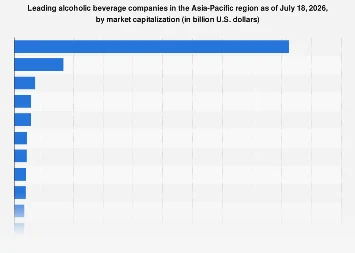
The Asia-Pacific region is poised to solidify its position as a powerhouse in the global alcoholic beverage market, with leading companies projected to see substantial growth in their market capitalization by 2026. This burgeoning economic landscape, characterized by expanding middle classes, evolving consumer preferences, and a growing appetite for premium products, presents a fertile ground for alcoholic beverage producers. Projections indicate a dynamic shift in market leadership, driven by strategic investments, innovative product development, and robust sales performance across diverse markets within the region.
The forecast for 2026 highlights the increasing dominance of players with strong footholds in key Asian economies, including China, India, Japan, and Southeast Asian nations. These markets, collectively representing a significant portion of the global population and consumer spending, are crucial battlegrounds for market share. Companies that can effectively navigate the complex regulatory environments, understand nuanced cultural preferences, and adapt to rapidly changing consumer trends are expected to reap the greatest rewards. The anticipated rise in market capitalization reflects not only current sales volumes but also the long-term potential and investor confidence in these regional titans.
Several factors are contributing to this optimistic outlook. The demographic dividend in many APAC countries, with a young and growing adult population, translates into a larger consumer base for alcoholic beverages. Furthermore, rising disposable incomes and an increasing urbanization rate are fueling a shift towards more sophisticated and higher-value alcoholic products. This includes a growing demand for imported spirits, craft beers, and premium wines, presenting an opportunity for both established international brands and agile local players to capture market share. The "premiumization" trend, where consumers are willing to spend more on higher-quality drinks, is a significant driver of revenue growth and, consequently, market capitalization.
Data analysis suggests that companies with diversified portfolios, encompassing various beverage categories and price points, are best positioned for sustained growth. This includes established players in beer, spirits, and wine, as well as those venturing into emerging categories like hard seltzers and ready-to-drink (RTD) cocktails. The ability to innovate and cater to evolving tastes, such as the increasing demand for low-alcohol or alcohol-free options, will also be a key differentiator. Market research indicates that the demand for RTDs, in particular, is surging across APAC, driven by convenience, variety, and appeal to younger demographics.
Geographically, China continues to be a dominant force, with its vast consumer market and strong domestic brands. However, other regions are rapidly gaining traction. India, with its massive population and burgeoning middle class, represents a significant growth frontier, albeit with its own set of regulatory and cultural complexities. Southeast Asia, encompassing countries like Vietnam, Thailand, and the Philippines, presents a dynamic and diverse market with increasing disposable incomes and a growing middle class eager to explore new beverage experiences. Japan, a mature market, continues to be a hub for innovation, particularly in premium spirits and craft beers, and its companies often possess strong global brand recognition.
The competitive landscape is characterized by a blend of global conglomerates and formidable regional champions. International beverage giants with established distribution networks and strong brand equity are actively expanding their presence in APAC, often through acquisitions or strategic partnerships with local entities. Simultaneously, homegrown companies are leveraging their deep understanding of local tastes and distribution channels to challenge incumbents and carve out significant market share. These regional powerhouses are increasingly sophisticated, investing heavily in branding, marketing, and product innovation to compete on a global scale.
Mergers and acquisitions are likely to play a pivotal role in shaping the market capitalization landscape. Larger companies may look to acquire smaller, innovative players to gain access to new markets, technologies, or consumer segments. This consolidation trend can lead to the emergence of even larger entities with enhanced market power and financial clout. Furthermore, strategic alliances and joint ventures will be crucial for navigating market entry challenges, particularly in countries with stringent foreign investment regulations or unique distribution models.
Investor sentiment towards the APAC alcoholic beverage sector remains strong, driven by the region’s robust economic growth and favorable demographic trends. Analysts predict that companies demonstrating resilience in the face of economic headwinds, coupled with a clear strategy for tapping into emerging consumer trends, will attract significant investment. The focus will be on companies that can demonstrate sustainable revenue growth, healthy profit margins, and a clear path to market leadership. Key performance indicators that investors will scrutinize include sales volume growth, average selling price increases, market share gains, and the successful introduction of new products.
The increasing focus on sustainability and ethical sourcing within the global consumer market is also beginning to influence the alcoholic beverage industry in APAC. Companies that can demonstrate a commitment to environmental responsibility, fair labor practices, and community engagement may find themselves at an advantage, appealing to a growing segment of socially conscious consumers. This shift towards ESG (Environmental, Social, and Governance) factors could become a significant differentiator in attracting both consumers and investors in the coming years.
Looking ahead, the trajectory of the APAC alcoholic beverage market appears robust, with the 2026 market capitalization forecast signaling continued dynamism. While global economic uncertainties and evolving regulatory frameworks present potential challenges, the underlying growth drivers – a burgeoning middle class, increasing disposable incomes, and a youthful, aspirational consumer base – remain compelling. Companies that can successfully blend global best practices with deep local market understanding, foster innovation, and adapt to the evolving preferences of consumers across this vast and diverse region are set to emerge as the undisputed leaders of tomorrow. The ongoing evolution of the market will undoubtedly be a closely watched indicator of broader economic trends and consumer spending power across Asia-Pacific.