For decades, the nocturnal skyline of Morbi, nestled in Gujarat’s Saurashtra region, has been defined by a persistent, fiery glow emanating from hundreds of ceramic kilns. These industrial beacons, operating with an almost sacred constancy, have been the crucible for tiles destined for construction projects across India and for diverse markets spanning the Americas, Europe, Africa, and the Middle East. The inherent technology demands an uninterrupted heat cycle; a kiln mid-firing cannot simply be powered down without incurring significant damage to both the machinery and the product within. Yet, an unprecedented stillness has now descended upon this global ceramic hub, as these once-relentless fires have, for the first time in recent memory, been extinguished.
Across the sprawling industrial cluster, chimneys stand as silent sentinels against the sky. Factory gates are partially closed, signaling a halt to the usual frenetic activity. Trucks, typically a constant feature of Morbi’s bustling logistics network, sit in long, unmoving queues on the fringes of industrial estates. Inside the manufacturing units, production lines are deserted, workers having either retreated to their dormitories or dispersed to their ancestral villages, awaiting a signal for recommencement that remains uncertain. This collective cessation of operations, rather than a fragmented series of individual closures, underscores the severity of the crisis. On March 17, a gathering of over 200 manufacturers, convened by the Morbi Ceramic Manufacturers Association, formally ratified a decision to suspend production until April 15. By this point, an estimated 90% of units had already been dormant for over two weeks, crippled by an acute shortage of natural gas supplies. The extraordinary sight of manufacturers submitting future fuel estimates in the complete absence of current supply is a stark illustration of an industry grappling with its most profound challenge yet.
The root cause of this industrial paralysis lies thousands of kilometers away, in the volatile geopolitical landscape of West Asia. An escalating conflict in the region has severely disrupted maritime traffic through the Strait of Hormuz, a critical chokepoint through which approximately 20% of the world’s crude oil and a substantial volume of liquefied natural gas (LNG) typically traverse. Since late February, a surge in military engagements and heightened shipping risks has drastically curtailed tanker movements. Insurers have withdrawn coverage, forcing vessels onto significantly longer and more expensive routes around the African continent. For India, the fallout has been immediate and severe. Between 55% and 65% of its LNG imports, a large portion originating from Qatar, typically transit this vital waterway. Damage to Qatari gas infrastructure and force majeure declarations have further tightened global availability, while the rerouting of ships has led to stranded cargoes and exorbitant freight costs. With limited alternative suppliers offering comparable transit times from distant sources like the US or Australia, gas has become both scarce and prohibitively expensive. Facing a domestic supply crunch, the Indian government has predictably prioritized household consumption, leaving energy-intensive industrial users like Morbi’s ceramic sector to bear the brunt of the supply shock.
Morbi’s journey to becoming the world’s second-largest ceramic tile manufacturing hub, behind only China, is a testament to entrepreneurial spirit and strategic resource alignment. Located roughly 60 kilometers from Rajkot in the Saurashtra region of Gujarat, the town’s historical association with pottery and wall clocks dates back generations. The true inflection point arrived in the mid-2000s, catalyzed by the Gujarat government’s proactive development of gas infrastructure. This initiative granted smaller manufacturers unprecedented access to piped natural gas, enabling a widespread conversion of kilns from less efficient coal and wood. The precise temperature control afforded by gas significantly improved yields and elevated tile quality, allowing the industry to move upmarket. Italian equipment manufacturers established a presence, fostering a rapid assimilation and local adaptation of advanced glazing, digital printing, and large-format tile production technologies by the early 2010s. This technological leap, combined with abundant local silica and feldspar deposits, proximity to the deep-water Mundra port, and a robust entrepreneurial culture predominantly within the Patel community, spurred explosive growth.
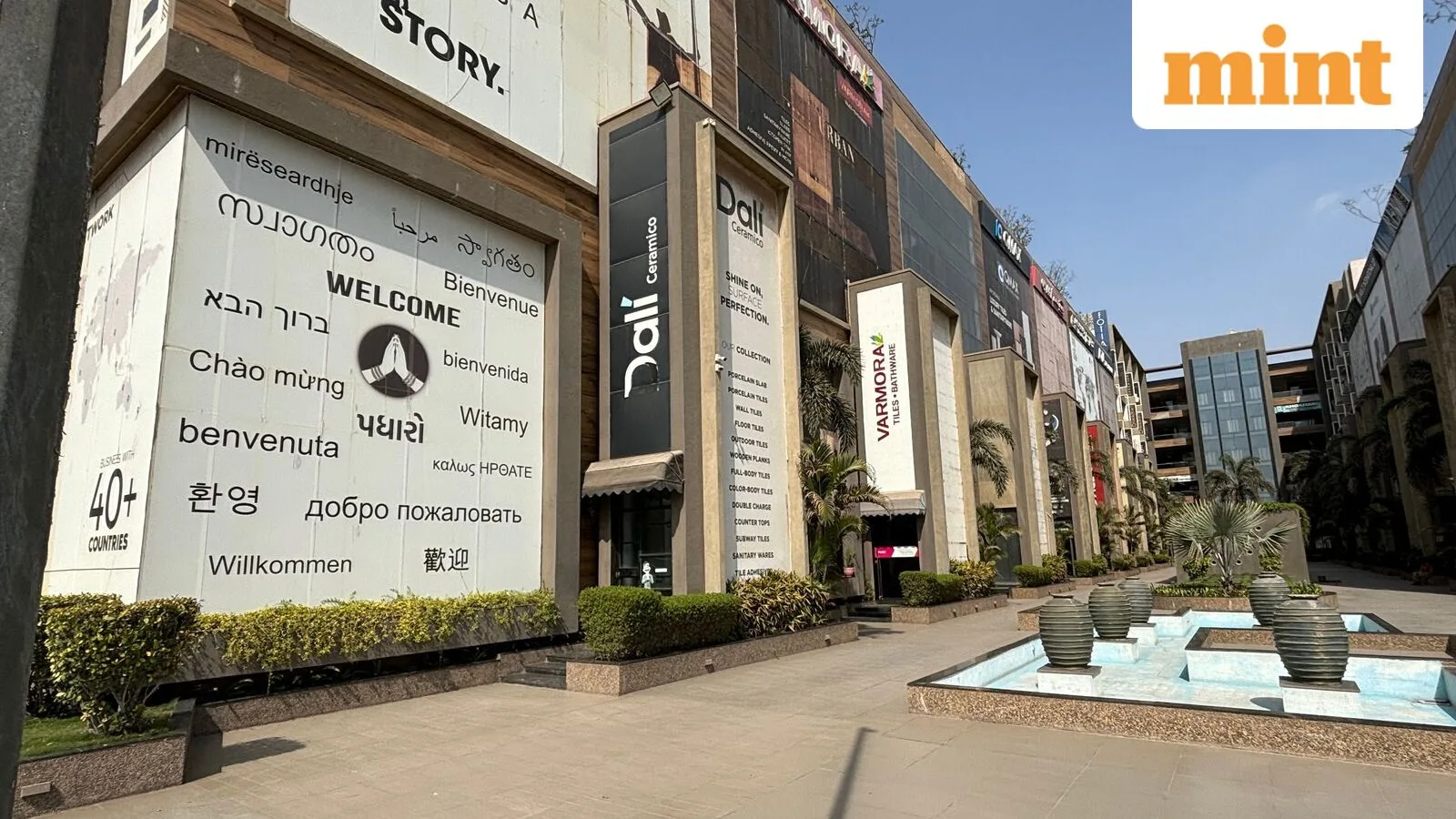
Today, Morbi’s cluster comprises over 700 manufacturing units, ranging from small-scale floor-tile workshops to sophisticated integrated plants producing vitrified slabs for premium commercial applications. According to Manoj Arvadiya, president of the Morbi Ceramic Manufacturers Association, the cluster generates an estimated ₹60,000 crore (approximately $7.2 billion USD) in annual revenue, a figure that rises to ₹80,000 crore (around $9.6 billion USD) when considering the broader Indian ceramic industry. This phenomenal growth has mirrored India’s burgeoning real estate sector. K.K. Patel, president of the Morbi Ceramic Trading Association, notes that while the Indian ceramic industry, valued at less than $10 billion, still has immense growth potential, its relatively small historical size was due to its fragmented, small-scale nature until about 15 years ago. On the export front, Morbi’s achievements are even more remarkable. United Nations Comtrade data indicates Indian ceramic exports reached roughly $2.71 billion, a figure that, while not among India’s top 20 export categories, signifies a rare instance of an Indian industry successfully competing head-to-head with Chinese manufacturers. Narendra Patel, a partner at Veritas Granito LLP, highlights how, despite losing ground in the Middle East to Chinese companies establishing local manufacturing bases, Indian exporters successfully diversified into new markets in Western Europe and Africa, demonstrating remarkable adaptability.

The very process that defines ceramic manufacturing—the intense thermal vitrification of materials at temperatures exceeding 1,000 degrees Celsius in tunnel kilns stretching hundreds of meters—also exposes Morbi’s most significant structural vulnerability: its heavy reliance on imported fuel, primarily propane and piped natural gas. The current geopolitical tensions in West Asia have, therefore, precipitated a long-anticipated reckoning. This energy crunch is not an isolated challenge; it compounds existing cost pressures that were already straining the industry. The production of high-quality tiles necessitates specialized inks, glazes, and chemicals, many of which are imported from Italy and Spain. Key raw materials, including specific clays and binding agents, are sourced from China. Global shipping rates, already volatile, have surged dramatically, with the cost of a container from a Chinese supplier like Fosun reportedly skyrocketing from $700-800 to $2,800. Upendra Nagar, president of the Indian Ceramic Export Association, emphasizes that this dual shock—gas shortages idling factories and soaring shipping costs—renders even the export of existing stock untenable for many.
Adding another layer of complexity is the stark political economy at play. Nilesh Jetpariya, chairman of Capexcil’s ceramic panel, candidly admits that while Morbi is a crucial export industry, its consumption of critical resources is substantial. "A month of gas supply to Morbi is equivalent to the domestic gas consumed by the entire 65 million Gujarat population," he states, highlighting the immense difficulty in advocating for increased industrial gas allocation when domestic needs are prioritized. The political response has been measured. Gujarat Chief Minister Bhupendra Patel acknowledged the industry’s distress during a late March visit to Morbi, assuring manufacturers of ongoing discussions with the central government and gas suppliers. However, specific allocations or firm timelines for supply restoration remain elusive. Similarly, the Ministry of Petroleum and Natural Gas has indicated a review of domestic supply constraints but offered no immediate relief package.
The coordinated nature of Morbi’s shutdown is particularly striking, demonstrating an unusual level of industry-wide discipline among hundreds of predominantly family-run operations. This speaks volumes about the dense social and commercial networks cultivated over decades within the cluster. However, the human cost extends far beyond the factory floor, rippling through a vast ecosystem of transport, logistics, retail, and ancillary services, all meticulously calibrated to the kilns’ rhythm. Prabhat Yadav, president of the Morbi Truck Transport Association, representing over 1,000 truck and logistics company owners, articulates the deeper implications. Many migrant truck drivers, primarily from Uttar Pradesh and Odisha, have returned home. Unlike salaried employees, these drivers earn only when they are actively working. Even with a tentative announcement of gas supply resumption by April 15, their return is contingent on a confirmed return to normal factory operations, signaling a potential restart problem that could outlast the fuel crisis itself. Factories, meanwhile, are striving to retain their core workforce by providing accommodation and meals, but each passing week stretches their financial limits.
Morbi has weathered crises before, providing a historical lens through which to view the current predicament. K.K. Patel of the Morbi Ceramic Trading Association distinguishes the present upheaval from two prior major shocks. The global financial crisis of 2008 had minimal impact on India’s nascent, domestically focused tile industry, whose low installed capacity provided a buffer. The COVID-19 pandemic, while initially shutting down both manufacturers and the user industry, was followed by a surge in pent-up demand and a construction boom that significantly benefited organized players. The current disruption, however, is structurally different and more insidious. The user industry—builders and developers—is functioning normally, but they are drawing from existing inventory rather than commissioning new production. The pain is acutely concentrated on the manufacturer. Patel cautions that while a one-month disruption might be absorbable over the next year, a prolonged absence of gas beyond two months would herald "really tough times," severely depleting cash reserves and pushing smaller manufacturers to irreversible decisions.
This existential challenge is also accelerating conversations about deeper structural changes and energy transition. Jitendra Aghara, chairman and managing director of Simpolo Tiles, one of Morbi’s largest manufacturers, views securing production in the long term as necessitating a move beyond gas-based kilns. He highlights the availability of hybrid kilns capable of operating on hydrogen, an alternative becoming increasingly viable with Gujarat’s plans for hydrogen production by major players like Reliance. Furthermore, Aghara notes the growing insistence from European export markets for tiles manufactured using greener sources, suggesting that the current crisis is not merely a supply shock but an accelerant for an inevitable shift towards decarbonization. European buyers are increasingly scrutinizing the carbon footprint of imported goods, posing a medium-term risk for fossil-fuel-fired kilns through potential carbon border taxes or exclusionary procurement policies.
Beneath the immediate energy debate, a harder structural question looms: will this crisis fundamentally alter the industry’s landscape? Manish Patel, owner of the online tile trading platform morbitilehub.com, suggests that such shocks will likely lead to lasting changes. He anticipates a gradual consolidation, with larger companies and non-Morbi players, such as Delhi-based Kajaria, potentially becoming more dominant due to their deeper financial pockets and greater resilience. This prospect is uncomfortable for a cluster built on the vibrant ecosystem of its small and mid-sized family-run units. Morbi was forged in fire, its prosperity intrinsically linked to the relentless heat of its kilns. In their current, unprecedented silence, the town faces a profound question: how to not only reignite the flames, but whether, in doing so, it can forge a more durable and resilient industry for the future.