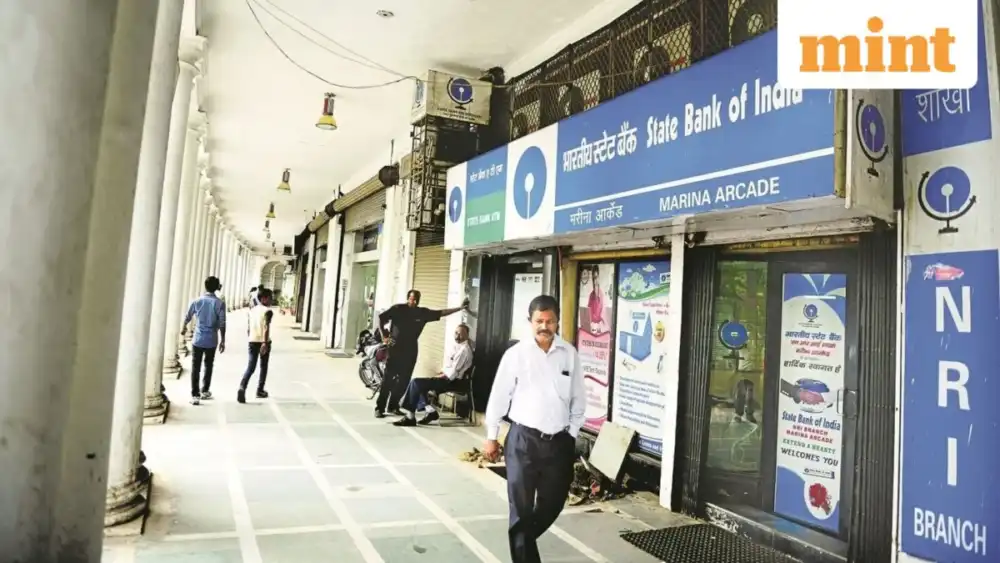
On March 3rd, 2026, the Indian financial landscape will experience a nuanced pause as banks in several cities observe public holidays, reflecting the nation’s profound cultural diversity. This localized cessation of traditional banking operations, sanctioned by the Reserve Bank of India (RBI) under the Negotiable Instruments Act, underscores a recurring feature of India’s economic calendar. Far from a uniform national shutdown, the closures on this day are a mosaic, corresponding to significant regional festivals such as Holi (Second Day), Holika Dahan, Dhulandi, Dol Jatra, and Attukal Pongala. This intricate pattern of holidays, while celebrating the country’s rich heritage, simultaneously presents both minor operational challenges and an impetus for the accelerated adoption of digital financial services across the subcontinent.
The significance of March 3rd’s closures extends beyond mere administrative breaks. Holi, a vibrant festival of colours, is celebrated with immense fervor across northern and central India, with its second day, Dhulandi, marking continued revelry and communal gatherings. In contrast, Holika Dahan, observed on the eve of Holi, commemorates the triumph of good over evil, involving bonfires and ritualistic practices that draw communities together. Further east, particularly in West Bengal and Odisha, Dol Jatra is a festival dedicated to Lord Krishna and Radha, characterized by processions and devotional singing, deeply embedding itself in the regional cultural psyche. Meanwhile, in the southern state of Kerala, Attukal Pongala stands as one of the largest annual congregations of women globally, who prepare offerings for the Attukal Bhagavathy Temple, a testament to the diverse spiritual traditions that thrive across India. Each of these festivals, deeply rooted in local traditions and beliefs, necessitates a temporary halt to normal business activities, including banking, to allow citizens to participate fully in these cultural touchstones.
The RBI’s role in delineating these holidays is pivotal. The central bank publishes an annual calendar of bank holidays, categorizing them into three types: those under the Negotiable Instruments Act, holidays under the Negotiable Instruments Act and Real-Time Gross Settlement (RTGS) Holiday, and bank account closing holidays. The March 3rd holidays fall primarily under the first category, meaning that while physical bank branches are closed, and cheque clearing operations are suspended, essential digital banking services typically remain functional. This distinction is crucial for maintaining economic continuity. The cumulative effect of such regional holidays is substantial; for March 2026 alone, the RBI calendar lists a total of 18 public holidays for banks, a figure that includes all Sundays and the second and fourth Saturdays of the month. This comprehensive approach ensures that while cultural observances are respected, the broader financial system retains a degree of operational predictability.

From an economic perspective, such staggered regional holidays present a complex interplay of short-term disruptions and long-term adaptations. While a single day of closure in specific regions might seem negligible in a USD 3.7 trillion economy, the cumulative effect of numerous holidays throughout the year can subtly impact economic indicators. Micro, Small, and Medium Enterprises (MSMEs), which form the backbone of the Indian economy and often rely on immediate cash transactions or quick access to banking facilities for payroll and supplier payments, can experience temporary liquidity constraints. A delay in cheque clearances or the inability to perform over-the-counter transactions can ripple through supply chains, affecting working capital cycles. According to a recent analysis by a Mumbai-based financial consultancy, such localized shutdowns, if not adequately mitigated by digital alternatives, could lead to a marginal deceleration in regional economic activity by approximately 0.1-0.2% on the days of closure, primarily due to deferred transactions.
However, the proliferation of digital payment platforms has significantly cushioned this impact. India’s Unified Payments Interface (UPI) has emerged as a global benchmark for instant, interoperable digital transactions. With monthly transaction volumes regularly exceeding 12 billion, UPI, along with mobile banking apps, internet banking portals, and ATMs, provides seamless financial access even on bank holidays. "The Indian financial ecosystem has remarkably adapted to the rhythm of our diverse cultural calendar," notes Dr. Anjali Sharma, a senior economist at a leading think tank. "While traditional branch closures affect certain segments, particularly those less digitally integrated, the robust digital infrastructure ensures that the vast majority of consumer transactions and interbank transfers, excluding cheque-based settlements, continue unimpeded. This is a testament to India’s commitment to financial inclusion and technological innovation."
The widespread availability of ATMs, numbering over 200,000 nationwide, further mitigates cash-related emergencies. Customers can withdraw cash, deposit funds (at select ATMs), and perform other self-service banking operations round the clock. This ubiquitous access to cash, combined with the convenience of digital payments, has transformed the public’s interaction with the banking system, reducing reliance on physical branches and making the impact of holiday closures less severe than a decade ago. Data from the National Payments Corporation of India (NPCI) indicates a continuous upward trend in digital payment adoption, suggesting that the economic friction caused by physical branch closures is diminishing year by year.
Globally, countries adopt varied approaches to public holidays. While some nations, like the United States, have a relatively fixed set of national holidays, others, particularly those with diverse cultural or religious landscapes, like India, embrace a more flexible, regionally tailored calendar. This approach, while adding a layer of complexity to national economic planning, is often seen as a necessary trade-off for fostering social cohesion and preserving cultural heritage. The number of holidays in India, when considering regional variations, often surpasses that of many developed economies, prompting ongoing discussions among policymakers about balancing cultural observance with maximizing economic productivity.

For businesses, especially those operating across state lines, understanding and anticipating these regional holiday patterns is crucial. Large corporations often employ sophisticated treasury management systems that account for variations in cheque clearing cycles and fund availability. For smaller businesses, however, proactive planning, such as scheduling payments in advance or leveraging digital payment solutions for immediate transactions, becomes imperative. The State Bank of India (SBI), along with other major public and private lenders, actively communicates holiday schedules, encouraging customers to utilize digital channels for uninterrupted service.
Looking ahead, the trajectory of India’s banking holidays is likely to be shaped by two major forces: the enduring importance of cultural celebrations and the accelerating pace of financial digitization. As more segments of the population embrace digital literacy and access to smartphones, the perceived inconvenience of bank holidays will continue to wane. The future may even see a greater differentiation between "physical branch holidays" and "digital banking holidays," with the latter becoming exceedingly rare. This evolution reflects India’s broader journey: a nation that deeply values its traditions while relentlessly pursuing technological advancement and economic dynamism. The March 3rd bank holidays, therefore, are not just days off; they are snapshots of a dynamic economy balancing its rich cultural past with an increasingly digital future.