The geopolitical landscape of the Middle East has entered a period of unprecedented tension following a high-stakes ultimatum from the United States presidency, demanding that Iran guarantee unrestricted passage through the Strait of Hormuz within a 48-hour window. This directive, which carries the weight of potential military or further economic intervention, has sent ripples through global commodity markets and forced a reassessment of energy security protocols from London to Tokyo. As the deadline looms, the international community is grappling with the prospect of a significant disruption to one of the world’s most critical maritime chokepoints, an artery that facilitates the transit of approximately one-fifth of the world’s total oil consumption.
The Strait of Hormuz, a narrow waterway separating Iran and Oman, serves as the sole sea passage from the Persian Gulf to the open ocean. According to data from the U.S. Energy Information Administration (EIA), an average of 20.5 million barrels of crude oil, condensate, and petroleum products flow through this corridor daily. For the global economy, the strait is more than a geographical feature; it is a vital organ of the international energy trade. Any sustained closure or significant harassment of commercial shipping in these waters would likely trigger a vertical spike in crude prices, with some analysts predicting a surge toward $150 per barrel if the standoff escalates into a kinetic confrontation.
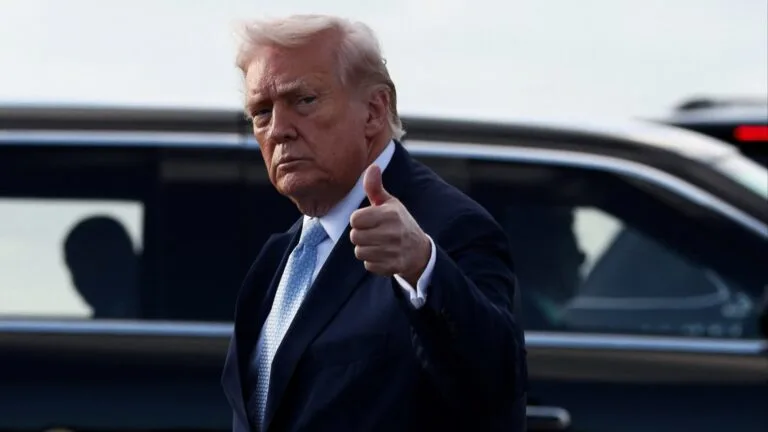
The 48-hour deadline issued by the Trump administration represents a pivot toward a more aggressive "maximum pressure" posture, aimed at forcing Tehran to abandon its use of the strait as a tool of strategic leverage. For decades, Iran has periodically threatened to block the waterway in response to Western sanctions or perceived military threats. However, the current ultimatum removes the traditional buffer of protracted diplomatic back-and-forth, placing both nations on a collision course that leaves little room for face-saving maneuvers. The move is viewed by market observers as a definitive test of American resolve and Iranian resilience, occurring at a time when the global economy is already sensitive to inflationary pressures and supply chain fragilities.
In the hours following the announcement, Brent crude and West Texas Intermediate (WTI) futures exhibited immediate volatility, reflecting the "geopolitical risk premium" that traders must now calculate. While physical oil supplies have not yet been curtailed, the cost of insuring tankers passing through the region has skyrocketed. Marine underwriters in the Lloyd’s of London market have reportedly designated the Persian Gulf and Gulf of Oman as "listed areas," requiring ship owners to pay additional "War Risk" premiums. These costs are ultimately passed down the supply chain, impacting everything from fuel prices at the pump to the manufacturing costs of plastic and chemical products.
The economic implications extend far beyond the borders of the United States and Iran. Asia, in particular, remains the most vulnerable region to a disruption in the Strait of Hormuz. Major economies including China, India, Japan, and South Korea rely on the Persian Gulf for the vast majority of their crude imports. For Japan and South Korea, which lack significant domestic energy reserves, the strait is a lifeline. Any interruption would necessitate the activation of strategic petroleum reserves (SPR) and could lead to mandatory energy rationing. China, despite its efforts to diversify energy sources through pipelines from Russia and Central Asia, still receives nearly half of its oil imports via maritime routes passing through the Middle East. A prolonged crisis would not only threaten China’s industrial output but could also strain its diplomatic relations with both Washington and Tehran.
Furthermore, the Strait of Hormuz is the primary exit point for nearly all of the world’s liquefied natural gas (LNG) sourced from Qatar. As Europe continues to pivot away from Russian pipeline gas, it has become increasingly dependent on Qatari LNG to heat homes and power industries. A blockade would essentially cut off a primary alternative to Russian energy, potentially plunging the European continent back into an acute energy crisis just as it seeks stability. The interconnectedness of modern energy markets means that a localized dispute in the Middle East has the potential to trigger a global recessionary event.
Military analysts suggest that while Iran possesses the capability to harass shipping using fast-attack craft, mines, and shore-based anti-ship missiles, a total blockade would be difficult to maintain against the combined naval power of the U.S. Fifth Fleet and its allies. The U.S. maintains a significant presence in Bahrain and frequently patrols the strait with carrier strike groups. However, the goal of the Iranian strategy may not be a permanent closure, but rather the creation of a "gray zone" of insecurity that makes commercial shipping untenable due to astronomical insurance rates and physical risk. This asymmetric approach allows Tehran to exert pressure while attempting to avoid a full-scale conventional war.
The 48-hour window also places significant pressure on the Gulf Cooperation Council (GCC) states. Saudi Arabia and the United Arab Emirates have invested billions of dollars in pipelines that bypass the Strait of Hormuz, such as the East-West Pipeline (Petroline) and the Abu Dhabi Crude Oil Pipeline. While these routes provide some redundancy, their combined capacity—roughly 6.5 million barrels per day—is insufficient to compensate for the total volume typically transiting the strait. Moreover, these pipelines themselves are vulnerable to sabotage or drone strikes, as demonstrated by regional conflicts over the past five years.
From a legal perspective, the situation challenges the established norms of the United Nations Convention on the Law of the Sea (UNCLOS). While Iran has signed but not ratified the treaty, it generally adheres to the principle of "transit passage" for international straits. Washington’s ultimatum asserts that any interference with this passage is a violation of international order and a direct threat to global commerce. The rhetoric coming from the White House suggests that the U.S. is prepared to treat the freedom of navigation as a non-negotiable national security interest, potentially setting the stage for the escorting of commercial tankers by naval warships—a tactic reminiscent of the "Tanker War" during the 1980s.
Domestic political considerations in the United States also play a role in this escalation. The administration’s hardline stance is consistent with its broader foreign policy objectives of curtailing Iranian influence in the region and dismantling its nuclear ambitions. By setting a definitive deadline, the administration seeks to project strength and clarity, although critics argue that such ultimatums can lead to unintended escalations if neither side is willing to blink. The move also impacts the domestic energy sector; while the U.S. is now a net exporter of petroleum, it remains sensitive to global price shocks, which can have significant political ramifications during election cycles.
As the countdown continues, diplomatic channels remain fraught. International intermediaries, including European and Omani officials, are reportedly working behind the scenes to de-escalate the situation, though the public rhetoric from both Washington and Tehran remains defiant. Iranian officials have characterized the deadline as an act of economic "piracy" and "extortion," asserting their right to defend their territorial waters. Meanwhile, the U.S. State Department has signaled that it has briefed its allies on "all possible contingencies," suggesting that a military response plan is ready should the deadline pass without a satisfactory resolution.
The coming 48 hours will be a defining moment for the global economy in the current decade. If a resolution is reached, it may lead to a temporary stabilization of markets and a reaffirmation of maritime norms. However, if the deadline passes with a move toward closure or military engagement, the resulting shockwaves will likely redefine energy trade routes, accelerate the transition toward alternative energy sources, and fundamentally alter the geopolitical map of the 21st century. For now, the world watches the narrow waters of Hormuz, where the balance between global prosperity and systemic crisis currently hangs by a thread.