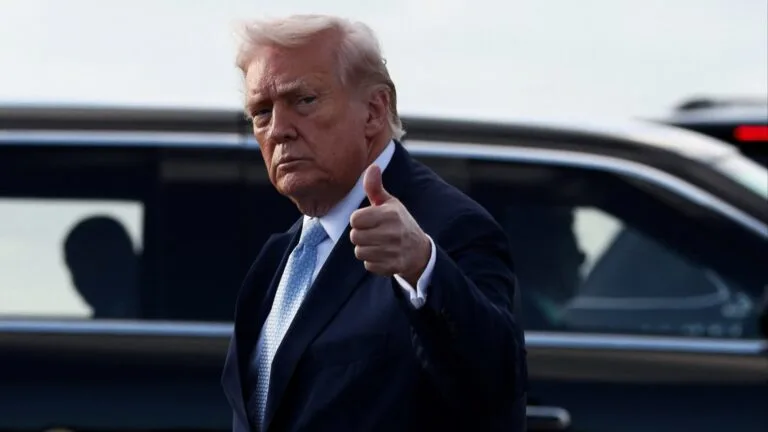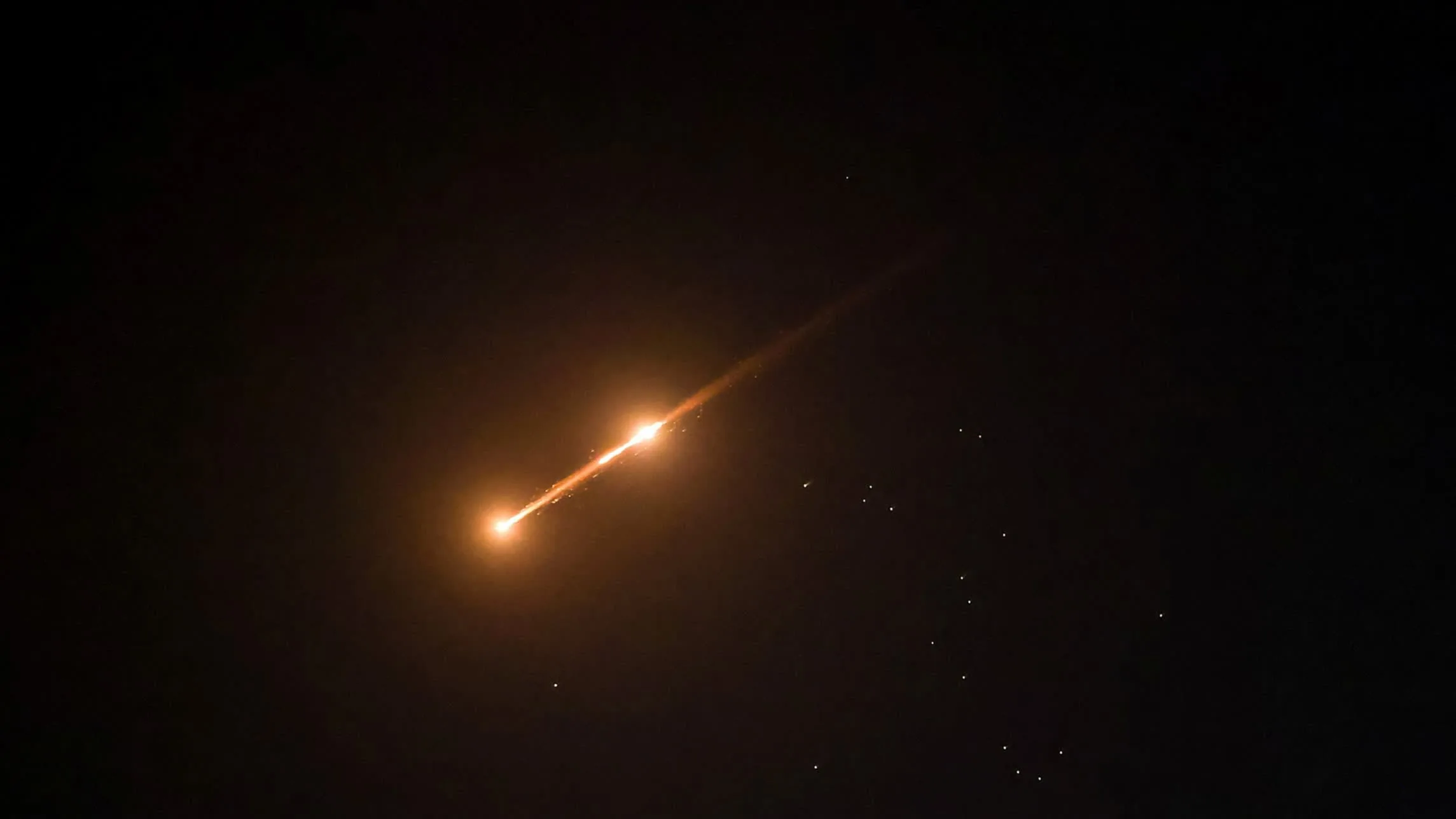
The potential for a seismic shift in American foreign policy is beginning to crystallize as former President Donald Trump signals a willingness to "wind down" United States military operations directed at Iran. This prospective realignment, rooted in the "America First" doctrine, suggests a departure from decades of conventional interventionism and "maximum pressure" tactics that have defined Washington’s stance toward Tehran. While the proposal aims to reduce the fiscal and human costs of Middle Eastern engagements, it introduces a complex array of variables for global energy markets, regional security architectures, and the overarching stability of international trade routes.
For the global economy, the most immediate impact of a reduced US military footprint in the Persian Gulf would be felt in the energy sector. The Strait of Hormuz, a narrow waterway through which approximately 20% of the world’s total oil consumption passes, remains the most sensitive chokepoint in the global energy supply chain. Historically, the presence of the US Fifth Fleet has served as a psychological and physical deterrent against Iranian interference with tanker traffic. A perceived vacuum left by a US withdrawal could lead to a temporary spike in the "geopolitical risk premium" on Brent crude. Market analysts suggest that even a minor disruption in the strait could push oil prices well above $100 per barrel, fueling inflationary pressures that central banks across the G7 are currently struggling to contain.
However, a long-term de-escalation could have the opposite effect. If a military drawdown is accompanied by a diplomatic "Grand Bargain" or a loosening of the stringent sanctions regime that has sidelined Iranian crude since 2018, the global market could see an influx of Iranian oil. Iran possesses the world’s fourth-largest proven oil reserves and the second-largest natural gas reserves. Currently producing around 3.2 million barrels per day (bpd), Tehran has the technical capacity to scale up to nearly 4 million bpd relatively quickly. A reintegration of Iranian energy into the global fold would provide a significant supply cushion, potentially lowering energy costs for European and Asian manufacturing hubs that have been battered by the fallout of the Russia-Ukraine conflict.
The fiscal rationale for winding down operations is equally compelling from a domestic economic perspective. The United States has spent trillions of dollars on Middle Eastern security over the last two decades. By reducing active military posture against Iran, the US government could potentially reallocate billions from the Department of Defense’s operational budget toward domestic infrastructure, emerging technologies, or deficit reduction. This "peace dividend," though difficult to realize in an era of heightened great-power competition with China and Russia, remains a core tenet of the isolationist-leaning wing of the Republican Party.
Yet, the strategic risks are profound. Regional allies, most notably Israel and Saudi Arabia, have long viewed the US military umbrella as the primary guarantor of their national security. A US retreat could compel these nations to pursue more aggressive independent defense strategies or, conversely, seek new security guarantees from alternative powers. We are already witnessing a period of "strategic hedging" in the Middle East. Saudi Arabia’s recent normalization of ties with Iran, brokered by China, illustrates a regional trend toward pragmatic diplomacy in the absence of absolute American dominance. A formal US military drawdown would likely accelerate this trend, potentially elevating China’s role as the new mediator of Middle Eastern stability—a development with long-term consequences for US influence in the global South.
From a trade perspective, the security of the Red Sea and the Gulf of Aden is inextricably linked to Iranian influence. The ongoing attacks by Houthi rebels on commercial shipping have demonstrated how non-state actors, backed by Iranian technology and intelligence, can disrupt global logistics. A US decision to wind down military operations would require a new framework for maritime security. If the US is no longer the primary enforcer of freedom of navigation in these waters, the burden would fall on a coalition of international actors or regional powers. This shift could lead to a fragmentation of maritime security, increasing insurance premiums for shipping companies and lengthening delivery times for goods moving between Asia and Europe.
Furthermore, the impact on the US defense industrial base cannot be ignored. Major contractors such as Lockheed Martin, Raytheon, and Boeing have historically benefited from the demand for advanced missile defense systems and surveillance technology tailored for the Middle Eastern theater. A pivot away from active military containment of Iran would likely shift procurement priorities toward high-end capabilities suitable for the Indo-Pacific, such as long-range stealth bombers, hypersonic missiles, and autonomous undersea vehicles. While the total defense budget might remain high, the composition of spending would undergo a radical transformation, forcing a restructuring within the aerospace and defense sectors.
Expert insights suggest that a "winding down" of military operations does not necessarily equate to a complete withdrawal. Instead, it may manifest as a shift toward "offshore balancing." In this model, the US would maintain a minimal footprint on the ground while relying on over-the-horizon strike capabilities and intelligence sharing to prevent any single regional power from achieving hegemony. This approach seeks to maintain a balance of power without the high costs of permanent deployment. However, critics argue that such a posture lacks the deterrent effect of a visible naval and aerial presence, potentially emboldening Iran to accelerate its nuclear enrichment program—a move that would trigger a nuclear arms race in the region, involving Saudi Arabia and Turkey.
The economic impact on Iran itself would be transformative. Decades of isolation have crippled the Iranian economy, leading to chronic inflation, a devalued currency (the rial), and high unemployment among its youth population. A reduction in military tension could open the door for foreign direct investment (FDI), particularly from China and India, who are eager to tap into Iran’s vast mineral wealth and strategic location as a transit hub for the International North-South Transport Corridor (INSTC). For Tehran, a "winding down" of US operations represents a survival lifeline, potentially stabilizing the domestic political situation and allowing the regime to pivot from a war footing to an economic development model.
Globally, the move would be viewed through the lens of the broader US-China rivalry. Beijing has long advocated for a "non-interference" policy and has criticized US military presence in the Middle East as a source of instability. If the US follows through on a drawdown, it would effectively be testing China’s willingness and ability to provide the public goods—such as security and mediation—that Washington has provided for nearly a century. This transition could redefine the concept of a "superpower" in the 21st century, moving away from military hegemony toward economic and diplomatic leverage.
In conclusion, the prospect of the United States winding down its military operations against Iran is more than a simple policy change; it is a fundamental reassessment of America’s role in the world. The economic benefits of reduced spending and lower energy prices are balanced against the risks of a regional power vacuum, increased maritime instability, and the potential for a nuclear-armed Middle East. As the global order shifts from unipolarity to multipolarity, the Persian Gulf remains the ultimate testing ground for whether economic pragmatism can truly replace military might as the primary currency of international relations. Investors, policymakers, and global citizens alike will be watching closely to see if this pivot leads to a new era of regional prosperity or a descent into further volatility.