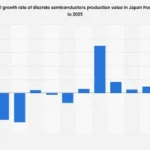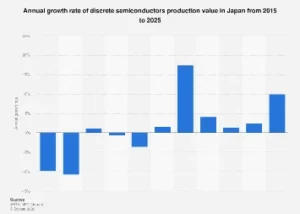


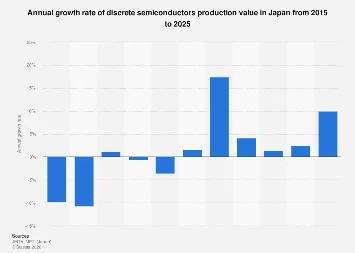
The discrete semiconductor market in Japan is projected to experience a period of sustained, albeit moderate, expansion in its production value leading up to and including 2025. While specific, granular data points for future growth percentages are subject to proprietary access, available industry analysis indicates a positive trajectory for this vital segment of Japan’s advanced manufacturing landscape. This trend underscores the enduring importance of discrete semiconductors, fundamental components that regulate electrical signals, in a wide array of modern technologies.
Discrete semiconductors, comprising individual components like diodes, transistors, and thyristors, form the bedrock of countless electronic devices. Unlike integrated circuits (ICs) that contain multiple components on a single chip, discrete devices perform specific, singular functions. Their reliability, cost-effectiveness, and specialized performance characteristics ensure their continued relevance across diverse industries, from automotive and industrial automation to consumer electronics and telecommunications infrastructure. Japan, with its long-standing expertise in precision manufacturing and materials science, remains a significant global player in the production of these critical electronic building blocks.
The anticipated growth in Japan’s discrete semiconductor production value is a testament to the sector’s resilience and adaptability. Several key factors are likely contributing to this positive outlook. Firstly, the ongoing global digital transformation continues to fuel demand for electronics. As more devices become "smart" and interconnected, the need for discrete components to manage power, signal amplification, and switching functions escalates. This pervasive trend ensures a steady baseline demand.
Secondly, specific growth drivers are emerging within sectors where Japan holds a competitive advantage. The automotive industry, for instance, is undergoing a profound shift towards electrification and autonomous driving. These advanced vehicles rely heavily on sophisticated power management systems, where discrete semiconductors play a crucial role in handling high voltages and currents efficiently and safely. As the production of electric vehicles (EVs) and advanced driver-assistance systems (ADAS) accelerates, so too does the demand for specialized discrete components tailored to these demanding applications. Japanese manufacturers are well-positioned to capitalize on this trend due to their established reputation for quality and innovation in automotive electronics.
Furthermore, industrial automation and the Internet of Things (IoT) are significant growth engines. Factories are increasingly adopting automated processes and smart sensors to enhance efficiency and productivity. These systems require robust and reliable discrete semiconductors for control circuits, power supplies, and sensor interfaces. The global push for Industry 4.0, with its emphasis on data-driven manufacturing and interconnected machinery, directly translates into increased demand for discrete semiconductor solutions.
The telecommunications sector also remains a key consumer of discrete semiconductors, particularly with the ongoing rollout of 5G networks and the continuous evolution of mobile devices. While much attention is often focused on the complex baseband processors and RF ICs, discrete components are essential for signal conditioning, power regulation, and other critical functions within these advanced communication systems.
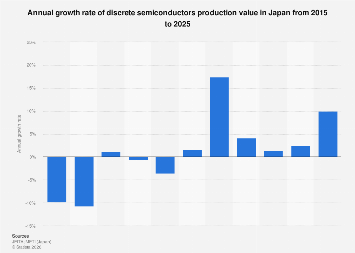
However, the growth in the discrete semiconductor market is not without its challenges and nuances. The industry is characterized by intense global competition, with significant manufacturing capabilities present in other Asian nations, particularly China and South Korea. Japanese manufacturers must continuously invest in research and development to maintain their technological edge and differentiate their offerings through superior performance, reliability, and specialized functionalities.
Supply chain dynamics also present a complex operating environment. The semiconductor industry, in general, is susceptible to fluctuations in raw material availability, geopolitical tensions, and the impacts of global events. While discrete semiconductors may not face the same acute shortages sometimes seen with leading-edge logic chips, ensuring a stable and cost-effective supply chain remains paramount for sustained production. Japanese companies are known for their meticulous supply chain management, which can offer a competitive advantage in navigating these complexities.
Moreover, the average selling prices (ASPs) of discrete semiconductors can be influenced by market dynamics. While demand is growing, the commoditized nature of some discrete components means that price pressures can exist. Japanese manufacturers often focus on higher-value, specialized discrete devices that command premium pricing, rather than competing solely on volume for basic components. This strategy allows them to maintain profitability even in a competitive landscape.
Looking at the broader economic context, the performance of Japan’s discrete semiconductor sector is intrinsically linked to the overall health of the global economy and key end-user industries. A robust global economic environment, characterized by strong consumer spending and business investment, would naturally translate into higher demand for electronics and, consequently, discrete semiconductors. Conversely, economic downturns or geopolitical instability could temper growth projections.
Industry analysts often point to the importance of innovation in maintaining market share. This includes the development of new materials that can improve performance, efficiency, and thermal management, as well as advancements in packaging technologies that enable smaller, more integrated solutions. The pursuit of higher power densities and improved energy efficiency are particularly critical for applications in EVs and industrial power systems.
In terms of global comparisons, while Japan remains a significant producer, the landscape of semiconductor manufacturing is diverse. South Korea and Taiwan are dominant forces in integrated circuit production, while China has been rapidly expanding its capabilities across the entire semiconductor value chain. However, Japan continues to hold a strong position in niche areas and high-quality discrete components, often supplying critical parts for global supply chains that prioritize reliability and performance.
The projected growth for Japan’s discrete semiconductor production value through 2025, while subject to market forces, signifies a sector that is integral to the nation’s industrial prowess. Its continued relevance in the face of evolving technological demands, coupled with Japan’s commitment to quality and innovation, suggests a stable and expanding role for discrete semiconductors in powering the innovations of tomorrow. The ability of Japanese manufacturers to adapt to new market requirements, invest in cutting-edge research, and navigate the complexities of the global supply chain will be key determinants of their success in this dynamic and essential industry segment.