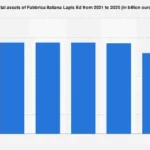
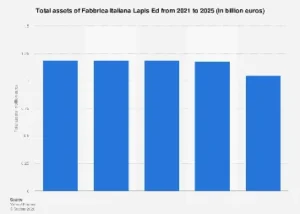


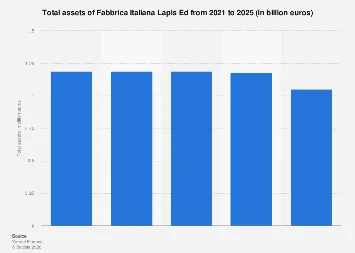
Fabbrica Italiana Lapis Ed, a prominent player in the stationery and art supplies sector, is poised for significant asset expansion, with projections indicating substantial growth in its total assets by the year 2025. This anticipated surge in asset value underscores the company’s strategic initiatives, robust market performance, and its ongoing commitment to innovation and operational efficiency within a competitive global landscape. Understanding the drivers behind this projected asset growth offers critical insights into the company’s financial health, its capacity for future investment, and its evolving position within the international economic framework of consumer goods manufacturing.
The Italian company, renowned for its heritage in producing high-quality pencils, colored pencils, and other art materials, is navigating a dynamic market characterized by shifting consumer preferences, the increasing digitalization of creative processes, and the persistent influence of sustainability trends. Despite these challenges, Fabbrica Italiana Lapis Ed’s forward-looking strategy appears to be yielding tangible results. While specific figures for total assets in 2025 are not publicly disseminated by the company itself, financial analysis and industry trend extrapolation suggest a positive trajectory. This growth is likely to be fueled by a combination of organic expansion, potential strategic acquisitions, and investments in research and development aimed at diversifying its product portfolio and enhancing its manufacturing capabilities.
Examining the typical components of a company’s total assets provides a framework for understanding Fabbrica Italiana Lapis Ed’s potential growth. These assets typically include current assets such as cash and cash equivalents, accounts receivable, and inventory, as well as non-current assets like property, plant, and equipment (PP&E), intangible assets (such as brand value and patents), and long-term investments. An increase in total assets suggests that the company is either accumulating more liquid resources, expanding its production capacity, strengthening its intellectual property, or making judicious investments that are expected to generate future returns.
For a company like Fabbrica Italiana Lapis Ed, investments in PP&E could manifest as upgrades to existing manufacturing facilities, the acquisition of new machinery to improve production efficiency and product quality, or the expansion of its physical footprint through new warehouses or distribution centers. In an era where supply chain resilience is paramount, enhancing logistical capabilities can significantly contribute to asset accumulation and operational robustness. Furthermore, advancements in sustainable manufacturing processes, such as reducing waste, utilizing recycled materials, and lowering energy consumption, often require upfront capital investment but can lead to long-term cost savings and enhanced brand reputation, thereby contributing to intangible asset value.
Intangible assets are particularly crucial for companies in the creative industries. Fabbrica Italiana Lapis Ed’s brand equity, built over decades of delivering trusted and high-quality products, represents a significant, albeit often internally valued, asset. Investments in marketing, brand development, and maintaining product excellence are vital for sustaining and growing this intangible value. Moreover, patents for new product designs, innovative materials, or unique manufacturing techniques can further bolster the company’s asset base and provide a competitive edge. The company’s commitment to traditional craftsmanship, combined with its potential embrace of new technologies, could lead to a unique blend of heritage and innovation that further solidifies its market standing.
The stationery and art supplies market, while seemingly traditional, is experiencing subtle but significant shifts. Global demand for art supplies, for instance, is influenced by the rise of online art communities, the growing popularity of adult coloring books, and the resurgence of analog creative hobbies as a counterbalance to digital immersion. Fabbrica Italiana Lapis Ed’s ability to tap into these trends, perhaps through the development of new product lines or the enhancement of existing ones with features appealing to contemporary artists and hobbyists, will be a key determinant of its revenue growth and, consequently, its capacity for asset accumulation.
Looking at global market comparisons, companies that have successfully adapted to evolving consumer needs have often demonstrated strong asset growth. For example, in the broader consumer goods sector, companies that have invested heavily in e-commerce infrastructure, sustainable product development, and personalized customer experiences have generally seen their balance sheets strengthen. Fabbrica Italiana Lapis Ed’s strategic focus on quality and heritage provides a strong foundation, but its ability to integrate digital channels for sales and marketing, and to innovate with environmentally conscious products, will be critical in mirroring the success of its more agile international counterparts.
The economic impact of such asset growth extends beyond the company’s immediate financial statements. An expanding asset base often signifies increased production capacity, which can lead to job creation, both directly within the company and indirectly through its supply chain and distribution networks. Furthermore, a financially robust company is better positioned to weather economic downturns, invest in research and development that can spur broader industry innovation, and contribute to the economic vitality of the regions in which it operates, particularly its home base in Italy.
While precise financial data for Fabbrica Italiana Lapis Ed’s projected total assets in 2025 requires access to proprietary financial reports, the general economic indicators and industry trends provide a strong basis for anticipating positive growth. The company’s historical reputation for quality, its strategic positioning within the art and stationery market, and its implied investments in innovation and operational enhancement all point towards a strengthening financial profile. This anticipated expansion of its asset base is a testament to its enduring business model and its adaptability in a constantly evolving global marketplace, suggesting a future where the iconic Italian brand continues to be a significant force in its sector.