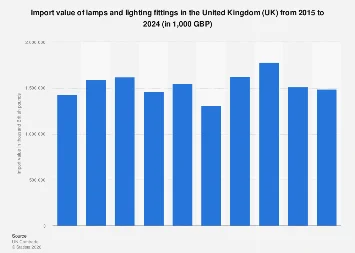
The United Kingdom’s import landscape for lamps and lighting fittings has undergone significant evolution over the past decade, reflecting shifts in consumer preferences, technological advancements, and global economic dynamics. Data compiled for the period spanning 2015 to an anticipated 2024, offers a granular view into the UK’s reliance on international markets for its illumination needs, revealing patterns of growth, potential plateaus, and the underlying factors driving these changes. This analysis delves into the nuances of these import figures, examining their implications for domestic industries, international trade relationships, and the broader economic context.
Historically, the UK has maintained a robust appetite for lighting products, encompassing a vast array of items from decorative chandeliers and functional task lighting to energy-efficient LED solutions and specialized industrial fixtures. The period under review, particularly the initial years from 2015 onwards, likely saw a steady increase in import volumes. This growth can be attributed to a number of concurrent trends. A burgeoning construction sector, fueled by both residential and commercial development projects, created a consistent demand for new lighting installations. Simultaneously, a strong renovation and home improvement market, often spurred by rising disposable incomes and a desire for updated aesthetics, contributed to a steady flow of imported lighting products.
The global lighting market itself has been a dynamic arena, characterized by rapid technological innovation, particularly the widespread adoption of Light Emitting Diodes (LEDs). The transition from traditional incandescent and fluorescent bulbs to energy-efficient LED technology has been a dominant theme throughout this period. This shift not only impacts energy consumption and environmental considerations but also influences the types of lighting fittings being imported. As consumers and businesses increasingly prioritize sustainability and cost savings associated with lower energy bills, the demand for LED-compatible fixtures and integrated LED lighting solutions has surged. This has, in turn, reshaped the product mix within the UK’s import statistics, with a growing proportion of imports likely comprising LED-based products.
Examining the period leading up to the present day, one must also consider the significant global events that have inevitably influenced trade flows. The COVID-19 pandemic, commencing in early 2020, introduced unprecedented disruptions to global supply chains. Lockdowns, factory closures, and transportation challenges led to significant delays and increased costs for imported goods across all sectors, including lighting. The UK, like many nations, experienced temporary shortages and price hikes for certain lighting products as a direct consequence. While the immediate impact was disruptive, it also prompted a re-evaluation of supply chain resilience and, for some, a renewed interest in diversifying import sources or even exploring opportunities for domestic production.
Following the initial pandemic shockwaves, the global economic environment has continued to present challenges. Rising inflation, geopolitical instability, and currency fluctuations have all played a role in shaping international trade. For the UK, the depreciation of the Pound Sterling against major currencies can make imported goods more expensive, potentially dampening demand or forcing importers to absorb some of the cost increase. Conversely, a weaker Pound can make UK exports more competitive, though this is a separate consideration from import dynamics. The cost of raw materials used in lighting production, such as metals, plastics, and electronic components, also fluctuates, impacting the landed cost of imported finished goods.
The geographical sources of the UK’s lighting imports are also a critical aspect of this analysis. China has long been a dominant player in the global lighting manufacturing sector, offering economies of scale and a vast product range. It is highly probable that China remains a primary supplier for the UK, providing a significant share of lamps and lighting fittings. However, the UK’s import strategy may also involve sourcing from other key manufacturing hubs, potentially including countries within the European Union, Southeast Asia, and beyond, depending on product specialization, cost-effectiveness, and specific trade agreements. The nature of the UK’s trading relationships, particularly post-Brexit, will have undoubtedly influenced import patterns and sourcing decisions. New trade deals, or the absence thereof, can create new opportunities or impose additional barriers, affecting the competitiveness of imports from various origins.
The impact of these import trends extends beyond the mere volume of goods. For domestic retailers and distributors, managing an increasingly complex global supply chain is paramount. The ability to forecast demand accurately, secure reliable sourcing, and navigate fluctuating shipping costs and lead times directly influences their profitability and market share. For domestic manufacturers of lighting products, the competitive pressure from imports is a constant factor. While some may specialize in high-end, bespoke, or niche products that are less susceptible to direct import competition, others may face challenges in competing on price with mass-produced goods from overseas.
Furthermore, the growing emphasis on sustainability and the circular economy is likely to shape future import trends. Regulations concerning energy efficiency, product lifespan, and end-of-life management for electrical and electronic equipment are becoming more stringent globally. This could lead to a shift in import demands towards products that meet higher environmental standards, potentially favouring manufacturers who invest in sustainable production practices and materials. The UK government’s own environmental targets and policies will also play a crucial role in dictating the types of lighting products that are favoured in the domestic market.
Looking towards the anticipated 2024 figures, several overarching themes are likely to persist. The continued dominance of LED technology is almost a certainty, with advancements focusing on smart lighting capabilities, enhanced color rendering, and greater integration into building management systems. The economic climate, both domestically and internationally, will continue to exert influence, with factors such as consumer confidence, interest rates, and global trade tensions shaping purchasing power and import costs. Supply chain resilience will remain a key concern, potentially leading to greater diversification of sourcing or increased regionalization of production for certain components or finished goods.
In conclusion, the UK’s import statistics for lamps and lighting fittings from 2015 to 2024 paint a picture of a market responding to technological innovation, evolving consumer demands for efficiency and aesthetics, and the undeniable impact of global economic and geopolitical shifts. The trend data, when available in its entirety, will offer valuable insights for businesses operating within the lighting sector, policymakers, and economists seeking to understand the intricate web of international trade and its contribution to the UK’s economic landscape. The journey of imported illumination into the UK is a testament to the interconnectedness of the global economy and the continuous adaptation required to meet the ever-changing needs of consumers and industries alike.