In the unforgiving landscape of modern global commerce, where competitive advantage is fleeting and market shifts are relentless, the internal machinery of an organization — its teams — has become the ultimate determinant of success. Yet, for many enterprises, the promise of collaborative synergy often devolves into a quagmire of unproductive debates, stalled initiatives, and missed opportunities. The traditional focus on skills, experience, and strategic alignment, while crucial, frequently overlooks a potent, often unseen, variable: the intricate interplay of individual personalities within a collective. This oversight can translate into tangible economic costs, from delayed product launches and eroded market share to heightened employee turnover and a significant drain on executive bandwidth.
Consider the predicament of Medita Holdings, a diversified family-owned conglomerate operating across Southern Europe. Their executive leadership, despite being highly engaged and seemingly harmonious, found themselves perpetually gridlocked. Strategic decisions were repeatedly questioned without resolution, and critical discussions frequently veered off-topic, leading to a chronic inability to focus and execute. While initial assessments might have pointed to a weak CEO or a flawed strategy, the astute head of HR suspected a deeper, more systemic issue. Her intuition proved correct: the root cause of their perpetual debates and analytical paralysis was a shared, pronounced trait among the senior team – an exceptionally strong intellectual curiosity. While valuable in isolation, this collective intensity, when unchecked, manifested as endless ideation without sufficient drive towards closure, effectively stifling the company’s ability to respond to rivals pursuing aggressive growth and forging new partnerships. This internal friction translated directly into a tangible deceleration of business momentum, jeopardizing Medita’s competitive standing and shareholder value.
The Medita case is far from an isolated incident. Across industries and geographies, organizations grapple with similar dynamics. Project teams, tasked with navigating complex challenges, often find themselves struggling not due to a lack of individual competence, but because of underlying personality clashes or convergences that create friction, communication breakdowns, or decision paralysis. Research indicates that teams with unresolved interpersonal tensions can experience up to a 25% reduction in productivity, alongside increased absenteeism and a higher incidence of project failures. This silent erosion of efficiency represents a substantial economic burden, particularly in knowledge-intensive sectors where collaborative innovation is paramount.
The challenge is exacerbated by the evolving nature of work. The proliferation of ad hoc project teams, often assembled rapidly to address emerging opportunities or crises, leaves little time for organic relationship building. Furthermore, the global shift towards remote and hybrid work models, while offering flexibility, has intensified the transactional nature of professional interactions. Virtual meetings, predominantly task-focused, offer scant opportunity for the informal rapport-building and nuanced interpersonal understanding that once characterized office environments. As Ian Roberts, CTO at Swiss plant equipment manufacturer Bühler, aptly observed, "slogging your way to a better relationship with colleagues" through trial and error is an inefficient, often painful, and ultimately unsustainable approach in today’s fast-paced corporate climate. This environment demands a more deliberate and structured methodology for understanding and leveraging team psychology.
Over the past decade, a more sophisticated approach has emerged, championed by organizational psychologists and leadership experts like Ina Toegel and Jean-Louis Barsoux, who have refined a methodology over eight years, working with thousands of executives across hundreds of teams. This innovative method integrates a widely accepted psychometric tool – the "Big Five" personality assessment – with structured, facilitated discussions to unlock team potential and defuse latent tensions. The Big Five, also known as the Five-Factor Model (FFM), measures five broad dimensions of personality: Openness to experience, Conscientiousness, Extraversion, Agreeableness, and Neuroticism (often framed as Emotional Stability). Unlike some proprietary assessments, the Big Five is rigorously validated by decades of academic research, establishing its robustness and cross-cultural applicability in predicting workplace behaviors and team dynamics.

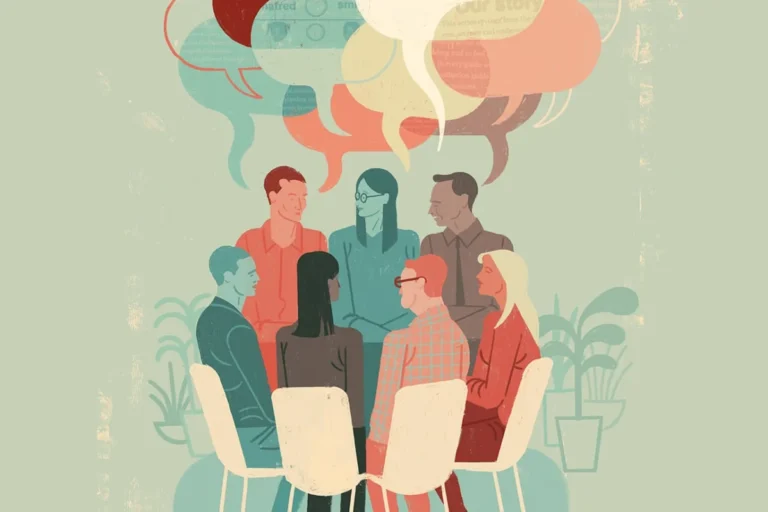
The power of this approach lies not merely in identifying individual personality traits, but in making the collective personality profile of a team explicit. For instance, a team predominantly high in Openness might excel at brainstorming and embracing new ideas but struggle with the meticulous planning and execution required for implementation if also low in Conscientiousness. Conversely, a team high in Conscientiousness but low in Openness might be highly efficient but resistant to disruptive innovation. When these profiles are understood collectively through a facilitated discussion, team members gain a shared vocabulary to articulate their differences and similarities. This process moves beyond anecdotal observations of "difficult" colleagues or "poor communication" to a data-informed understanding of underlying behavioral predispositions.
The facilitated discussion aspect is critical. It transforms individual assessment results from mere data points into actionable insights. A skilled facilitator guides the team through an interpretation of their collective Big Five profiles, linking specific trait combinations to observed team behaviors and performance challenges. For the Medita Holdings team, this process revealed that their shared high intellectual curiosity, without a complementary balance of traits focused on closure and execution, was leading to analysis paralysis. By understanding this collective predisposition, they could then consciously implement strategies to mitigate its negative effects – perhaps by assigning specific roles for "devil’s advocacy" balanced with "decision closure," or by setting stricter time limits for ideation phases.
For newly formed teams, this methodology offers an accelerated path to cohesion. Instead of enduring a prolonged "storming" phase, where individuals unconsciously navigate interpersonal differences, teams can proactively address potential friction points from the outset. By understanding each other’s natural inclinations – who is more inclined to take charge (Extraversion), who prefers harmony (Agreeableness), who thrives on detail (Conscientiousness), or who embraces ambiguity (Openness) – members can adapt their communication styles and work processes to optimize collaboration. This early psychological alignment can reduce the time-to-productivity significantly, a critical advantage in agile project environments where rapid deployment and iteration are key.
The economic implications of improved team dynamics are substantial. Companies that effectively manage team personality dynamics report higher rates of innovation, faster decision-making cycles, and significantly enhanced project success rates. A well-functioning team, grounded in a clear understanding of its collective psychological makeup, fosters psychological safety – an environment where individuals feel comfortable taking risks, sharing ideas, and admitting mistakes without fear of retribution. This, in turn, fuels continuous learning and adaptability, essential traits for navigating volatile markets. Furthermore, enhanced team cohesion and reduced interpersonal conflict contribute directly to higher employee engagement and retention, significantly lowering recruitment and training costs associated with turnover, which can amount to 1.5 to 2 times an employee’s annual salary for specialized roles.
In a globalized economy, where cross-cultural collaboration is the norm, understanding personality dynamics becomes even more nuanced. While the Big Five traits are considered universal, their expression and interpretation can vary across cultural contexts. A facilitator can help diverse teams bridge these gaps, fostering a deeper appreciation for different working styles that might otherwise be misinterpreted as incompetence or insubordination. For multinational corporations, this insight is invaluable in building resilient global teams capable of seamless execution across disparate cultural landscapes.
However, the implementation of such a program is not without its caveats. The success hinges on the expertise of the facilitator, who must navigate sensitive discussions with impartiality and skill, preventing the weaponization of personality insights or the creation of stereotypes. Organizations must also cultivate a culture of psychological safety to ensure that participants feel secure in sharing and discussing their traits openly. When deployed thoughtfully and ethically, this data-driven approach to understanding team personality offers a potent antidote to pervasive organizational dysfunction. It represents a strategic investment in human capital, transforming latent interpersonal friction into a powerful lever for enhanced productivity, accelerated decision-making, and sustainable competitive advantage in an increasingly complex world. The future of organizational effectiveness lies not just in what teams do, but fundamentally, in how they are constituted and how well they understand themselves.