The traditional image of Wall Street—a frantic floor of shouting traders or even the more modern glow of multi-monitor setups manned by exhausted analysts—is undergoing a profound metamorphosis. The financial industry is moving beyond the era of simple algorithmic trading and entering the age of "agentic finance." In this new paradigm, artificial intelligence is evolving from a passive research tool into an active autonomous agent capable of executing complex investment strategies, managing portfolios, and navigating global markets 24 hours a day, seven days a week, all without human intervention.
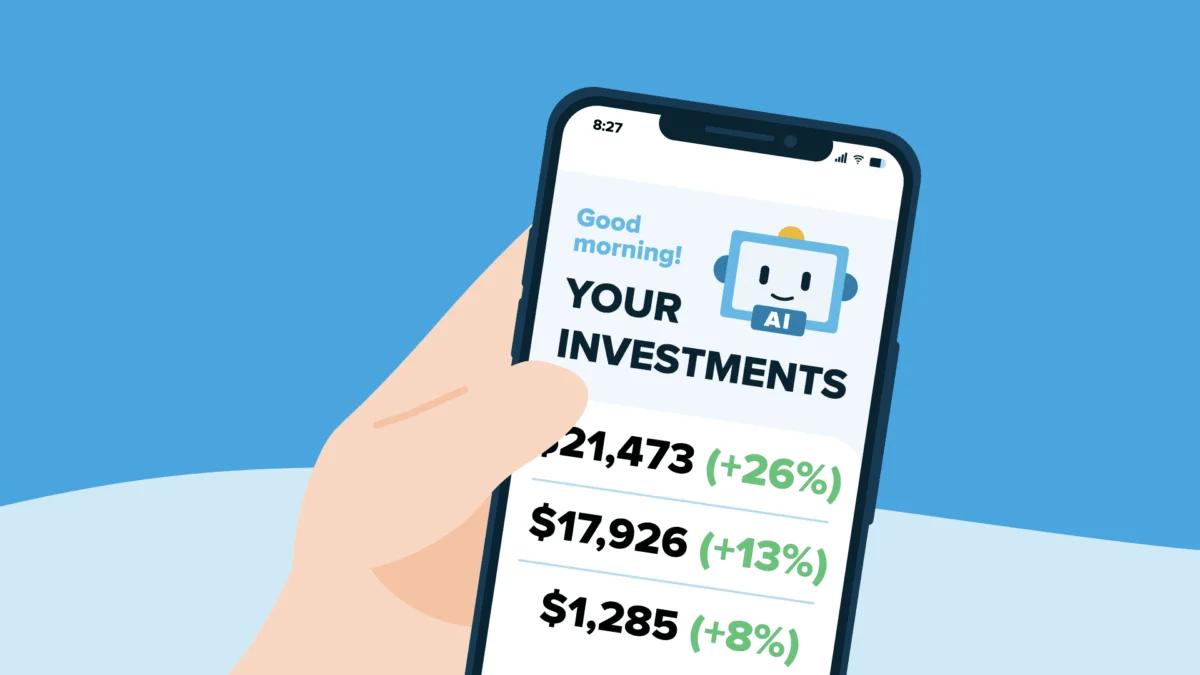
For decades, retail investors were largely sidelined from the sophisticated automated strategies used by institutional hedge funds. While high-frequency trading (HFT) firms utilized "if-then" algorithms to execute trades in microseconds, the average investor was left to manual execution or, at best, robo-advisors that rebalanced portfolios once a quarter. The emergence of agentic AI changes this dynamic entirely. Unlike a standard chatbot that might summarize an earnings report, an AI agent is designed to achieve a goal. When told to "optimize my retirement portfolio for a 7% return while minimizing exposure to geopolitical volatility," these agents do not just provide a list of suggestions; they interface with brokerage APIs to buy, sell, and hedge in real-time.
This shift represents the democratization of the "family office"—the bespoke, high-touch financial management services previously reserved for the ultra-wealthy. As these tools move from experimental startups to established brokerages, the economic implications are staggering. Analysts at Citizens Financial Group suggest that the integration of agentic AI could catalyze a tenfold increase in transaction volumes. A retail investor who currently interacts with their portfolio a few times a month could soon see their AI agent performing twenty or more strategic adjustments per day. By the end of 2025, it is estimated that on certain tech-forward platforms, the majority of trade executions will be initiated not by human clicks, but by autonomous agents.
The Architectures of Autonomy
The race to build the "autonomous broker" is being contested on two fronts: agile fintech startups and incumbent retail powerhouses. At the forefront of the startup wave is Podium Markets AI, which has developed an assistant named Ivy. Ivy serves as a bridge between the current world of human-led trading and the future of full autonomy. The system analyzes a user’s holdings across multiple disparate accounts, cross-referencing them with real-time market data and personal financial goals. Currently, Ivy operates under a "human-in-the-loop" model, where the AI provides the strategy and the user provides the final authorization. This reflects a cautious but necessary step in the evolution of the technology, ensuring that the AI’s "logic" remains aligned with the user’s actual risk appetite.
Meanwhile, the giants of the retail brokerage world are opening their gates to the machines. Robinhood recently updated its infrastructure to allow third-party AI agents to connect directly with customer accounts. This move transforms the brokerage from a simple trading platform into a foundational layer for a new ecosystem of automated financial apps. Not to be outdone, the brokerage firm Public is building its own native AI agents. These internal agents are designed to automate workflows that were previously tedious for retail investors, such as setting up complex options spreads or executing "tax-loss harvesting" strategies that require constant monitoring of price fluctuations relative to purchase history.
The technical backbone of this movement is the transition from Large Language Models (LLMs) to Large Action Models (LAMs). While an LLM can write a persuasive essay about the benefits of diversification, a LAM is trained to navigate software interfaces. In the context of finance, this means the AI can log into a brokerage, interpret a balance sheet, calculate a margin requirement, and hit the "execute" button.
The Retail Experiment and the Cost of Hallucination
The transition to agentic trading is not without its casualties. Over the past three years, a cohort of "pioneer" retail investors has used general-purpose AI like OpenAI’s ChatGPT and Anthropic’s Claude to navigate the markets, often with volatile results. For many, the AI has served as a superior research assistant. Investors have reported using AI to parse thousands of pages of SEC filings in seconds, identifying "red flag" phrases in management’s tone during earnings calls that a human might miss.
However, the leap from research to execution is where the risks multiply. Some investors, lured by the promise of easy "passive income," have attempted to build autonomous trading bots using basic AI prompts. The results often highlight the phenomenon of "AI hallucination"—where the model perceives a pattern in market noise that does not exist. One retail investor reported consistent losses after trusting an agent to find profitable intra-day patterns, noting that the AI lacked the "market intuition" to distinguish between a genuine trend and a temporary liquidity spike.

These failures underscore a critical lesson in the burgeoning field of agentic finance: AI is a powerful tool for efficiency, but it is not a magic wand for alpha. The most successful implementations currently involve "augmented intelligence," where the AI handles the heavy lifting of data processing and execution, but the human sets the overarching strategic boundaries.
Guardrails and the New Fiduciary Responsibility
As the industry moves toward greater autonomy, the question of liability and safety becomes paramount. Teaching an AI to trade is simple; teaching it the nuance of human intent is the ultimate challenge. If an investor tells an agent to be "aggressive," does the AI interpret that as buying high-growth tech stocks, or does it begin selling naked put options with catastrophic downside risk?
To mitigate these risks, firms are implementing rigorous guardrails. Public’s co-CEO Leif Abraham emphasizes that their agents are built to be "executors," not "independent thinkers." In their model, the agent proposes a workflow based on the user’s intent, but the user must physically approve the logic before the first trade is placed. This prevents the "black box" scenario where an investor wakes up to find their portfolio has been liquidated due to an AI misinterpreting a news headline.
Regulators are also beginning to take notice. The Securities and Exchange Commission (SEC) has expressed ongoing concerns regarding the use of predictive data analytics and AI in investor interactions. The core of the issue is "conflict of interest." If a brokerage’s AI agent nudges a user toward a specific trade, is it doing so because it is in the user’s best interest, or because it generates more commission or payment for order flow for the brokerage? As agents take on more "agentic" qualities, the legal definition of a fiduciary may need to be rewritten to include the code itself.
Global Market Impact and the 24-Hour Cycle
The rise of AI agents is also set to accelerate the shift toward 24/7 global markets. Currently, the "close" of the New York Stock Exchange or the London Stock Exchange provides a natural pause for human traders to reset. AI agents, however, do not sleep. They can react to a midnight policy change in Tokyo or a pre-dawn energy crisis in Europe with the same speed as a mid-day earnings report in New York.
This constant activity could lead to a significant increase in market liquidity, as agents are always available to take the other side of a trade. Conversely, it raises the specter of "algorithmic contagion." In a market dominated by AI agents, a sudden price drop could trigger a cascade of automated selling across thousands of accounts simultaneously, potentially leading to "flash crashes" that move faster than human regulators can intervene.
Despite these risks, the economic momentum behind agentic finance appears unstoppable. By automating the mundane aspects of wealth management—rebalancing, tax optimization, and cash flow analysis—AI agents are freeing up human capital for more complex financial planning. For the global economy, this represents a massive shift in how capital is allocated. Decisions that once took weeks of deliberation and consultation with a human advisor can now be made in milliseconds, guided by an agent that knows the user’s life goals, tax bracket, and risk tolerance better than any spreadsheet ever could.
The future of Wall Street is no longer just about who has the best information; it is about who has the most capable agent. As the "human-in-the-loop" slowly becomes the "human-on-the-loop," the very nature of what it means to be an investor is being redefined. In this new era, the ultimate competitive advantage will not be the ability to trade, but the ability to program, monitor, and trust the machines that trade for us.