

The global financial community is bracing for the release of the July employment report from the Bureau of Labor Statistics (BLS), a document that traditionally serves as the definitive pulse check for the American economy. As the Friday release date approaches, a notable divergence has emerged between traditional institutional forecasts and the real-time sentiment captured by prediction market participants. While Wall Street economists, surveyed by Dow Jones, have coalesced around a consensus estimate of 85,000 new jobs for the month, the "wisdom of the crowd" on platforms like Kalshi suggests a significantly more pessimistic outlook. This gap highlights a growing anxiety regarding the durability of the U.S. labor market in an era of sustained high interest rates and shifting corporate priorities.
On the Kalshi platform, where speculators trade contracts based on the outcome of economic data releases, the sentiment is decidedly cooler than the official consensus. Current trading data reveals that participants place only a 47% probability on the economy adding more than 80,000 jobs in July. The skepticism deepens as the thresholds rise; the likelihood of a "beat"—defined here as exceeding 90,000 jobs—is currently pegged at just 41%. Even more telling is the sentiment regarding a robust recovery: only one in three traders believes the economy will see a return to six-figure job growth this month. Conversely, the market sees a 33% chance that the final figure will plummet below 60,000, a level that would signal a sharp deceleration in hiring.
This bearish tilt among retail and institutional speculators is not without historical precedent or contextual weight. In the previous month, prediction markets were notably more optimistic than the eventual reality. For the June report, Kalshi traders had assigned a 63% probability to a print exceeding 125,000 jobs, comfortably above the then-consensus of 115,000. However, the actual data delivered a sobering shock to the system, with the BLS reporting a mere 57,000 jobs added. That significant miss has likely recalibrated market expectations, leading to the current cautious stance. The June disappointment served as a stark reminder that the post-pandemic hiring boom may have finally hit a structural ceiling, replaced by a "wait-and-see" approach among major employers.
The broader economic backdrop further complicates the narrative. Beyond the headline payroll numbers, economists are closely monitoring the labor force participation rate, which has recently hovered near its lowest levels in half a century, excluding the anomalous volatility of the COVID-19 lockdowns. This contraction in the labor pool is a multifaceted issue, driven by an aging demographic, the early retirement of the "Baby Boomer" generation, and a potential mismatch between available skills and the demands of an increasingly digitized economy. When fewer people are actively seeking work, the headline unemployment rate can appear deceptively low, masking underlying weaknesses in total labor output and consumer spending power.
From a central banking perspective, the July jobs data represents a critical input for the Federal Reserve’s upcoming policy decisions. For much of the past two years, the Fed has been laser-focused on its price stability mandate, aggressively raising interest rates to combat stubborn inflation. However, as inflation figures begin to moderate toward the 2% target, the "dual mandate"—which also requires the Fed to promote maximum sustainable employment—is returning to the forefront of the conversation. A significantly weak jobs report could provide the necessary justification for the Federal Open Market Committee (FOMC) to consider a more aggressive path toward rate cuts, shifting their stance from restrictive to neutral in an effort to prevent a "hard landing."
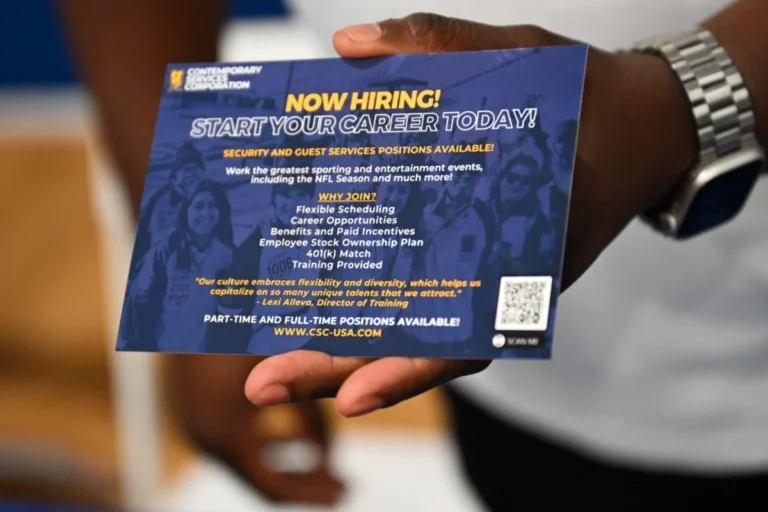
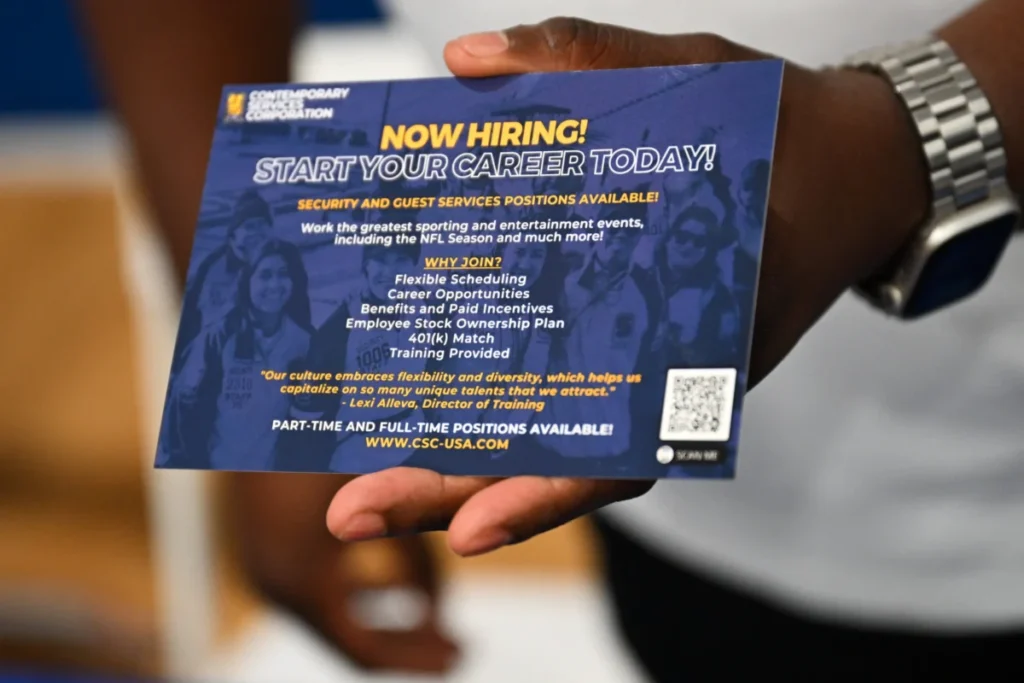
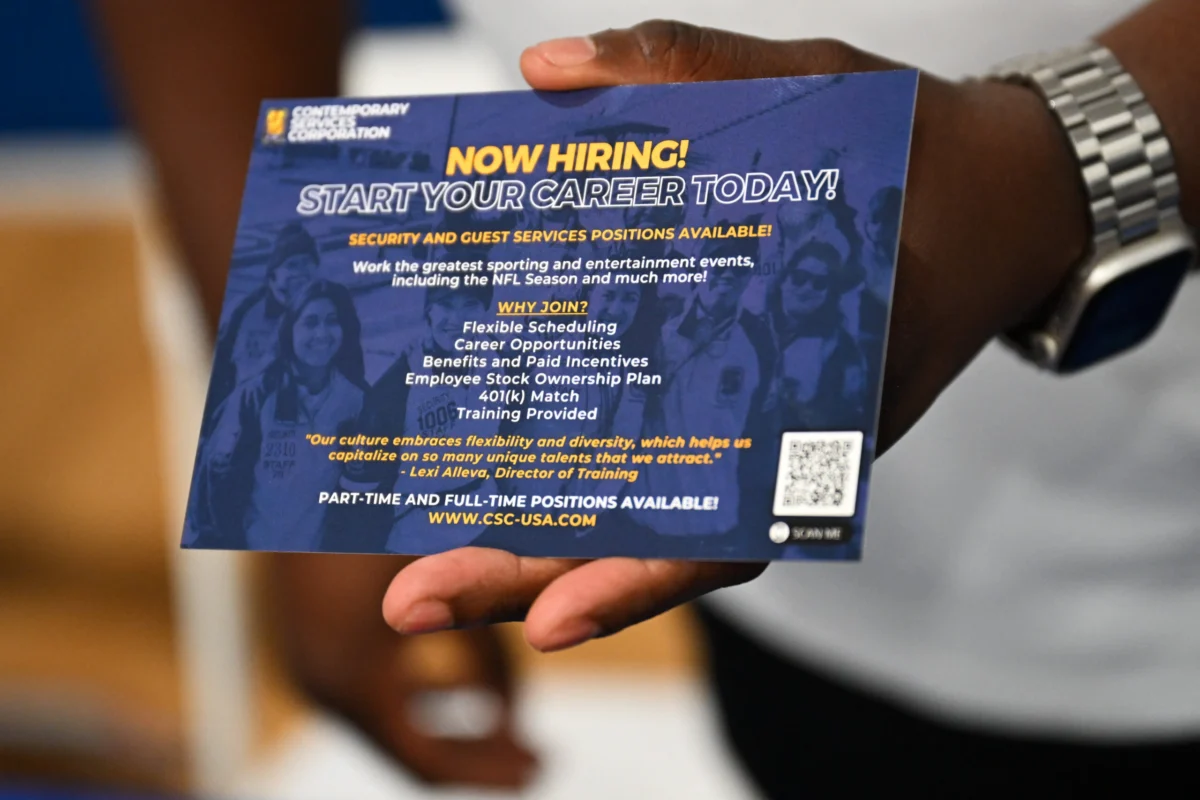
Market analysts are also viewing the labor data through the lens of corporate earnings and sector-specific health. In recent months, the service sector, long the engine of American job growth, has shown signs of fatigue. While events and hospitality industries continue to hire—evidenced by local job fairs and security guard recruitment efforts in major hubs like Los Angeles—the tech and manufacturing sectors have faced headwinds. High borrowing costs have curtailed capital expenditure, leading many firms to prioritize automation and operational efficiency over headcount expansion. This "hiring freeze" sentiment is particularly prevalent in mid-sized enterprises that are more sensitive to credit market fluctuations than their blue-chip counterparts.
The international implications of a cooling U.S. labor market cannot be overstated. As the world’s largest economy, a slowdown in American hiring often presages a reduction in global consumer demand. This has a direct impact on export-heavy economies in Europe and East Asia. Furthermore, the U.S. Dollar’s strength is intrinsically tied to the health of the labor market and the resulting interest rate environment. If the July report confirms the bearish outlook of prediction markets, it could lead to a softening of the Greenback, providing some relief to emerging market currencies but also complicating the inflation-fighting efforts of other central banks, such as the European Central Bank (ECB) and the Bank of England, who are navigating their own delicate balancing acts.
Expert insights into the mechanics of prediction markets suggest that these platforms often capture "tail risks" that traditional economic models might overlook. Economists typically rely on lagging indicators, such as unemployment insurance claims and historical seasonal adjustments. In contrast, traders on prediction markets often incorporate real-time anecdotes, corporate sentiment, and alternative data sets, such as credit card spending and mobility metrics. While not infallible—as seen in the June overestimation—these markets provide a dynamic gauge of investor psychology that can sometimes lead the official data.
The discrepancy between the 85,000 consensus and the sub-80,000 market sentiment also points to a broader debate about the "Sahm Rule"—a recession indicator that triggers when the three-month moving average of the unemployment rate rises by 0.50 percentage points or more above its low during the previous 12 months. While the U.S. is not yet in a technical recession, the creeping rise in unemployment and the slowing pace of payroll additions have put economists on high alert. If the July number comes in at the lower end of expectations, near the 60,000 mark, it would likely intensify fears that the window for a "soft landing" is rapidly closing.
As Friday approaches, the stakes for the July employment picture are exceptionally high. A "beat" would suggest that the U.S. economy remains resilient despite the highest interest rates in decades, potentially delaying rate cuts and strengthening the dollar. A "miss," as predicted by the majority of Kalshi traders, would likely trigger a rally in the bond market as investors price in an imminent Fed pivot, while simultaneously sparking concerns about the underlying health of the American consumer.
In summary, the transition from a red-hot labor market to a "slightly cooler" one is a delicate phase of the economic cycle. The 85,000-job expectation from economists represents a hope for stability, while the 70,000 to 80,000 range favored by prediction markets reflects a more cynical, perhaps more realistic, assessment of current headwinds. Regardless of the final tally, the July report will serve as a pivot point for market strategy in the second half of the year, dictating everything from equity valuations to the trajectory of global trade. The divergence between experts and speculators underscores the uncertainty of the current moment, where every data point is a potential catalyst for a significant shift in the global economic narrative.