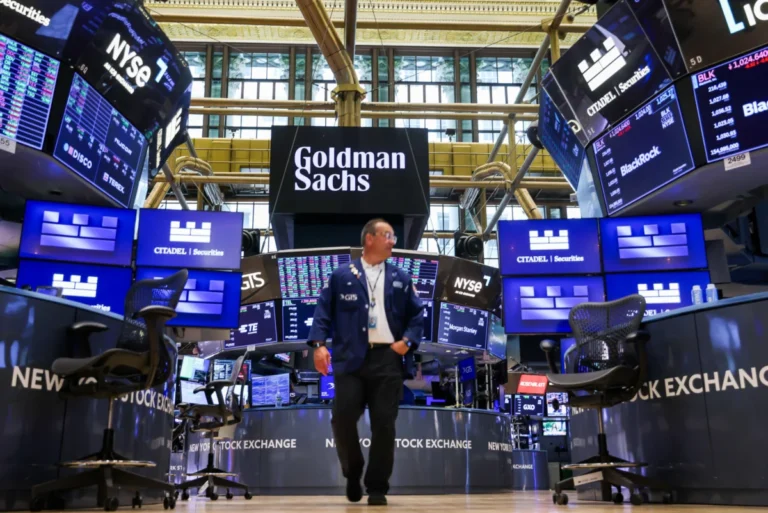



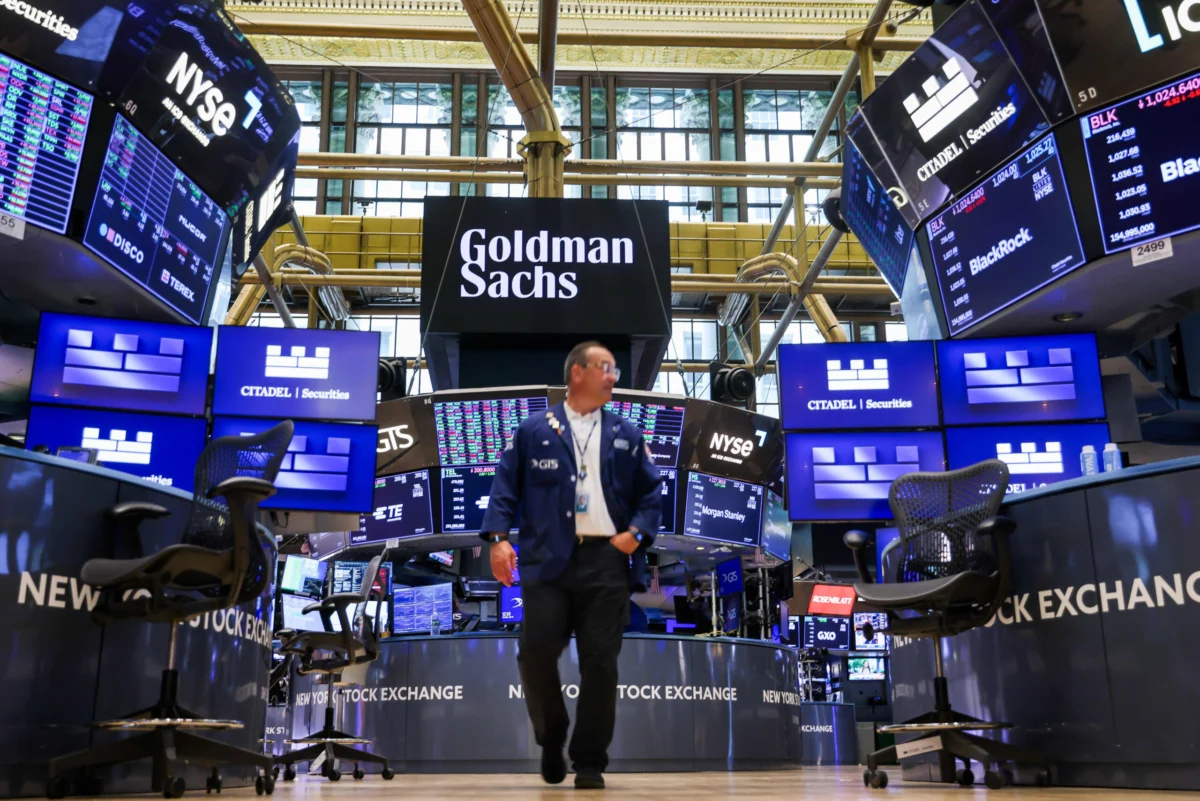
The storied trading floors of 200 West Street are humming with a level of activity not seen since the post-pandemic stimulus boom, as Goldman Sachs Group Inc. positions itself to potentially eclipse its previous revenue benchmarks. After a period of internal restructuring and a strategic retreat from consumer banking, the firm has refocused its formidable resources on its historical bread and butter: Global Banking & Markets. This pivot is paying dividends, with the firm’s traders navigating a complex landscape of shifting interest rates, geopolitical tensions, and a resurgence in corporate deal-making to put the bank on pace for a historic fiscal performance.
The resurgence of Goldman’s trading dominance is not merely a product of favorable market conditions, but rather the result of a calculated multi-year transformation. Under the leadership of CEO David Solomon, the bank has integrated its investment banking and trading operations into a singular powerhouse. This "One Goldman Sachs" initiative was designed to break down the silos that historically separated the people who advise on mergers from those who execute high-frequency trades. By fostering a more collaborative environment, the firm has been able to capture a larger share of the "wallet" from its top institutional clients, providing a seamless suite of services ranging from risk management to complex financing.
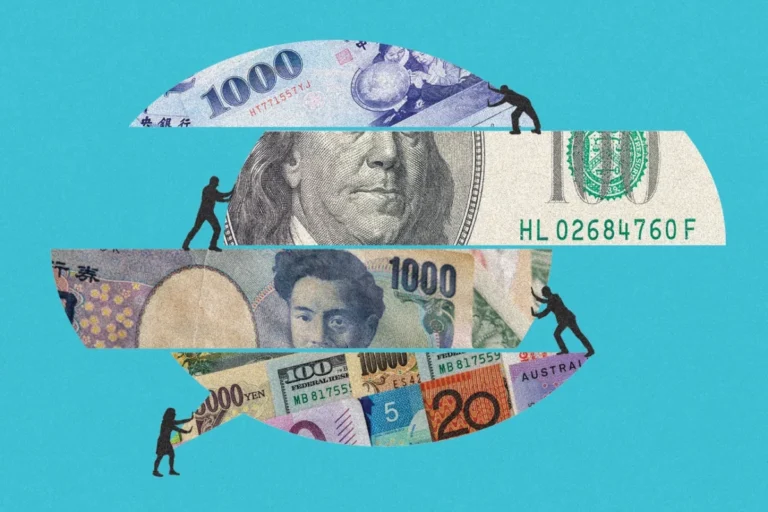
At the heart of this year’s performance is the Fixed Income, Currencies, and Commodities (FICC) division. Historically the engine of Goldman’s profitability, FICC has thrived in an environment characterized by "higher-for-longer" interest rates and the subsequent pivot toward central bank easing. The volatility inherent in the Federal Reserve’s quest for a "soft landing" has created a fertile ground for macro traders. As inflation data fluctuates and employment reports surprise the upside or downside, the demand for hedging products—interest rate swaps, options, and treasury futures—has skyrocketed. Goldman’s ability to provide liquidity in these moments of uncertainty has solidified its position as the preferred partner for hedge funds and sovereign wealth funds globally.
Equities trading has been equally robust, buoyed by the relentless momentum of the technology sector and the broader adoption of artificial intelligence as a market catalyst. Goldman’s equities desk has benefited significantly from its massive investment in prime brokerage services. By lending to and clearing trades for the world’s largest hedge funds, the bank generates a steady stream of financing revenue that acts as a stabilizer against the more erratic nature of pure execution trading. Market data indicates that Goldman has successfully defended its market share against rivals like Morgan Stanley and JPMorgan Chase, particularly in the lucrative space of algorithmic and high-touch electronic trading.
The economic backdrop of the past twelve months has provided the perfect "alpha" environment for Goldman’s proprietary strategies and client-facing desks. Global elections, particularly in the United States and Europe, have introduced layers of policy uncertainty that traders crave. Furthermore, the decoupling of global supply chains and the shifting dynamics of the energy market have revitalized the commodities desk. Goldman’s analysts and traders have been at the forefront of navigating the transition from traditional hydrocarbons to green energy metals, leveraging their deep expertise in oil, gas, and copper to advise clients on navigating a fragmented global economy.
However, the path to a record year has not been without its obstacles. The regulatory landscape remains a significant headwind. The "Basel III Endgame" proposals, which seek to increase the amount of capital banks must hold against their trading activities, have been a point of contention between Wall Street and Washington. Goldman has been vocal about the potential for these regulations to curb market liquidity and increase costs for corporate America. Despite these concerns, the firm has optimized its balance sheet with surgical precision, shedding non-core assets and focusing on high-return-on-equity (ROE) businesses to ensure that every dollar of capital is working at its maximum capacity.
A critical component of Goldman’s recent success is the shift in revenue composition. For decades, trading revenue was viewed by investors as "low quality" because of its inherent volatility. To combat this perception, Goldman has aggressively expanded its financing business within the trading division. By providing credit to institutional clients and facilitating complex structured finance deals, the bank has increased the proportion of its income that is recurring and predictable. This "durable" revenue now accounts for a significant portion of the Global Banking & Markets total, earning the firm a higher valuation multiple from analysts who previously viewed the bank as a "black box" of risk.
Comparisons with its peers highlight Goldman’s unique positioning. While JPMorgan Chase boasts a larger balance sheet and a more diversified retail footprint, Goldman’s concentration on institutional finance allows it to be more agile. When market volatility spikes, Goldman’s smaller, more specialized teams can often move faster than their counterparts at "universal" banks. Conversely, when compared to Morgan Stanley, which has pivoted heavily toward wealth management, Goldman remains more tethered to the pulse of the capital markets. This dedication to the "Wall Street" side of the business means that during periods of high market activity, Goldman’s upside is arguably greater than any of its competitors.
The technological edge cannot be overstated. The firm has spent billions of dollars on its "Marquee" platform, which gives clients direct access to Goldman’s data, analytics, and execution capabilities. By democratizing access to the tools that were once the exclusive domain of the bank’s internal traders, Goldman has created a "sticky" ecosystem. Once a client integrates Marquee into their daily workflow, the friction of moving to a competitor becomes substantial. This digital-first strategy has allowed the firm to scale its operations without a commensurate increase in headcount, driving the efficiency ratio to levels that are the envy of the industry.
Expert insights suggest that the current momentum is sustainable, provided the macroeconomic environment does not shift into a period of prolonged stagnation. "What we are seeing is a return to the classic Goldman Sachs playbook, but with modern guardrails," noted one veteran banking analyst. "They are taking calculated risks where they have a clear informational advantage, and they are backing those risks with a world-class financing operation. It is a formidable combination."
Looking ahead, the final quarters of the year present both opportunity and risk. The potential for a "hard landing" in the economy could lead to a spike in credit defaults and a contraction in trading volumes. Furthermore, the cooling of the IPO market and a slower-than-expected recovery in M&A could limit the cross-selling opportunities that have been so vital to the trading desk’s success. However, Goldman’s leadership remains optimistic. The firm’s ability to pivot its focus—moving from distressed debt to equity derivatives or from currency hedging to commodity financing—ensures that it can find profit centers regardless of the direction of the wind.
The impact of this performance extends beyond the bank’s internal balance sheet. As a primary dealer and a global liquidity provider, Goldman’s success is often a bellwether for the health of the global financial system. A profitable and well-capitalized Goldman Sachs is generally viewed as a sign of market resilience. The record-breaking pace of its traders suggests that, despite the myriad of global challenges, the capital markets remain a robust engine for economic activity.
In conclusion, the record year on the horizon for Goldman Sachs is a testament to the firm’s resilience and its ability to execute a long-term strategic vision. By doubling down on its core strengths, embracing technological innovation, and evolving its revenue model to include more stable financing income, the bank has silenced many of its skeptics. As the year draws to a close, the industry will be watching closely to see if the traders at 200 West Street can cross the finish line and set a new standard for excellence in the modern era of global finance. The synergy of human expertise and algorithmic precision has created a platform that is not just surviving the current market volatility, but thriving because of it.